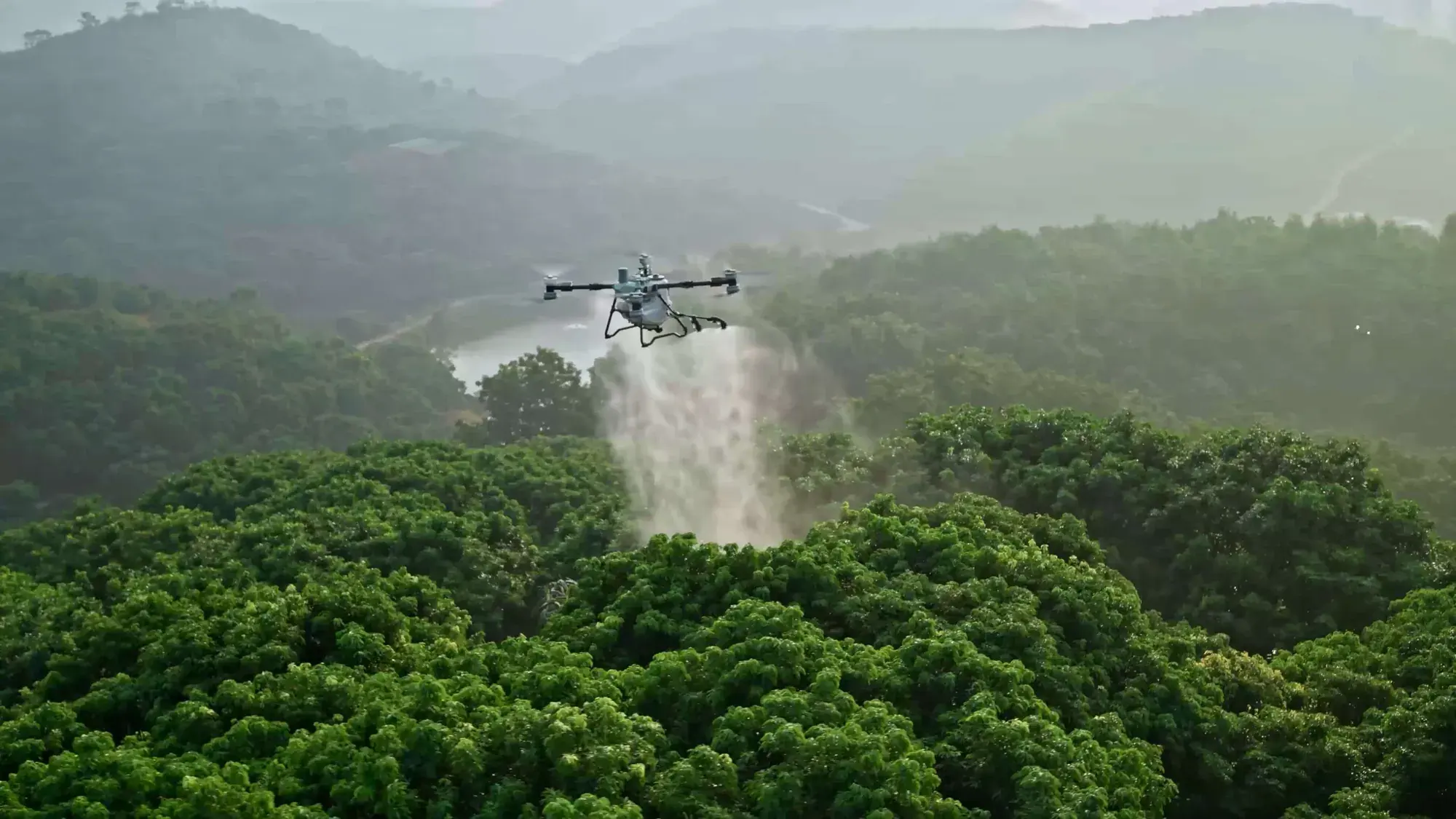
What does sustainable mean in a farm drone decision?
A farm drone decision treats travel and mobilization, job geography, weather downtime, usable payload, loader and refill availability, charging, number of operators, cleaning, maintenance, waiting, repeat passes and recordkeeping as cost drivers. The agriculture drone overview starts from the measured work cycle, not from the aircraft.
Measure the complete cycle
Measuring complete cycle time covers flight, refill, battery handling, equipment checks, returns, setup, cleaning and records. A catalogue maximum cannot account for travel, refills, batteries, local permissions, weather or the crew's working day.
Where the evidence stops
Public forums raise questions that an aircraft specification cannot answer, including how applied material breaks down in different soils and rainfall and whether drone trade-offs have been rigorously evaluated. Buyers in public forums also name flight time, battery performance, sensor cost, noise, data privacy and rural charging as practical barriers. The drone advantages and disadvantages page keeps those trade-offs in view.
What would I actually use a drone for?
A drone fits when it solves a defined timing, access, mapping or distribution problem your current method handles worse. Scouting and field mapping, cover-crop seeding, granular spreading and eligible liquid application are separate jobs with separate checks. Each task is evaluated before any equipment is chosen.
Four jobs, four different tests
The task decides the aircraft and the acceptance test, so treat each row as its own decision.
| Task | Aircraft to evaluate | What decides fit |
|---|---|---|
| Field boundaries and crop scouting | DJI Mavic 3M mapping | Repeatable imagery and ground observations set the interpretation |
| Cover-crop seeding and granular fertilizer | DJI Agras T50 or DJI Agras T100 with the correct spreader | Crop and seed biology, safe distribution, access and establishment window |
| Eligible liquid application | An Agras T50 or T100 with spray hardware | Current label, operating plan and calibrated rate |
Passes, traffic and inputs fall only when the cycle supports it
Fewer passes, less soil traffic and lower input waste are possible outcomes, not automatic ones. Battery rotations are planned against observed cycle times, with compatible charger input, generators or mains, refill capacity and water where relevant, plus transport, restraint and safe cable handling. A job that needs more refills than the work window allows does not cut passes, whatever the aircraft can carry. The field kit planning page covers the supporting equipment around the aircraft.
Should I map first, then apply?
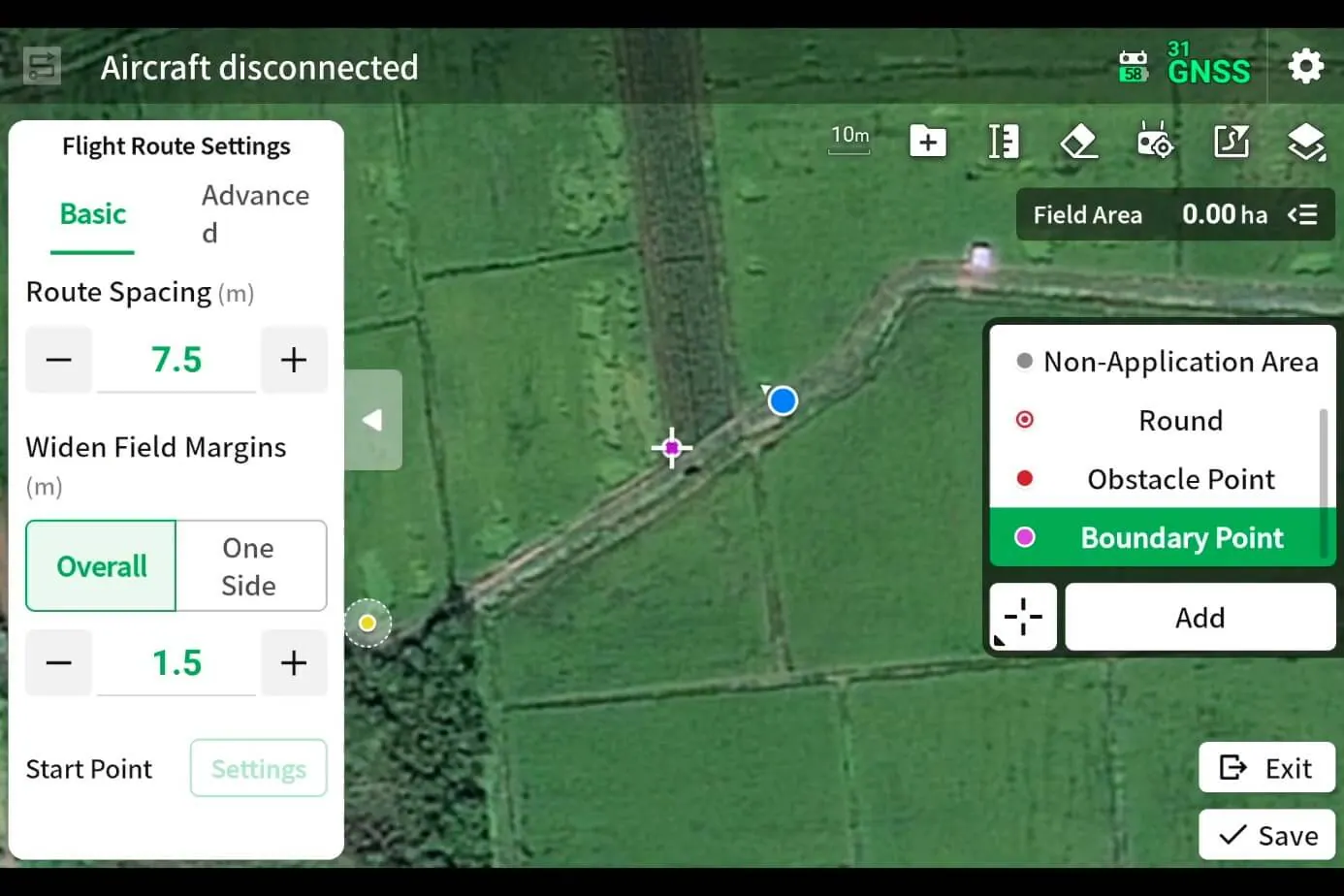
Mapping first pays when imagery leads to verified ground observations, an authorised prescription and a tested application route. The Mavic 3M captures imagery, and an Agras T50 or T100 applies compatible material. Linking the two helps when a validated map changes how material goes on, and not before.
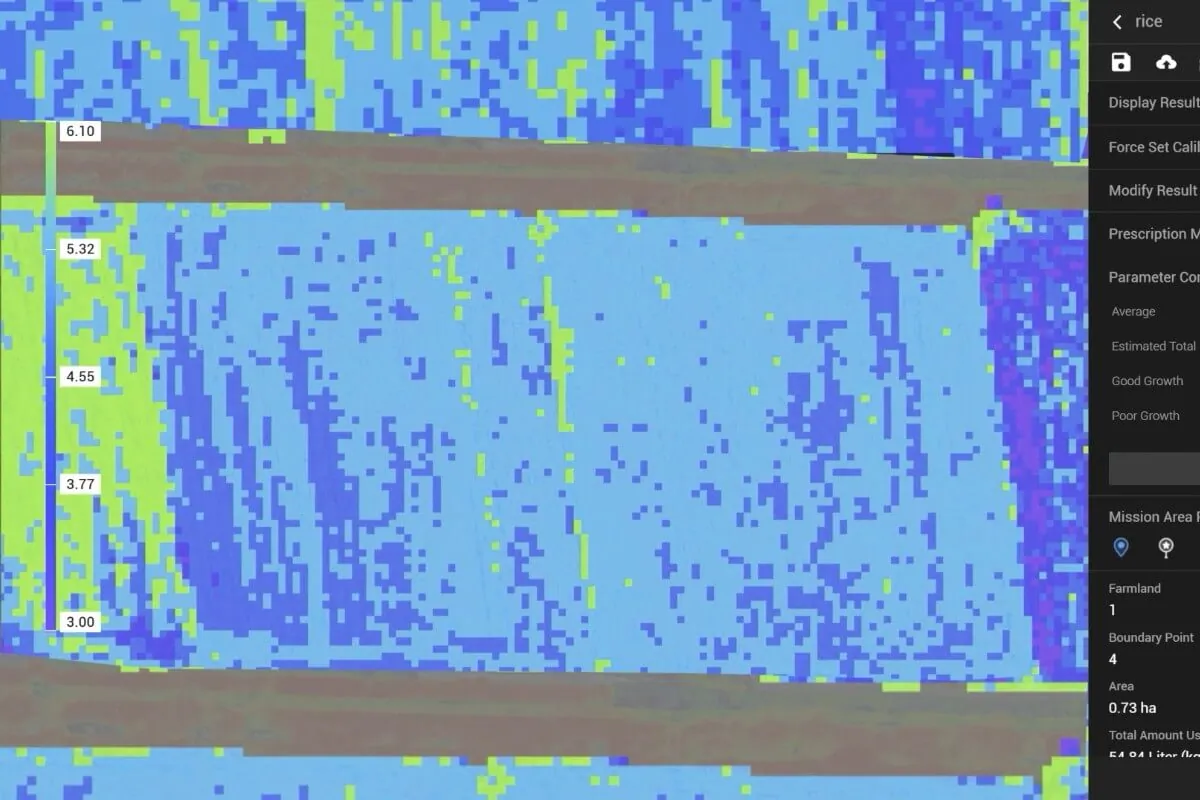
What has to be true between image and application
The crop scouting and mapping route runs through five checks, and each one can stop the job.
- Capture begins with an agreed crop question, map area, resolution, overlap, illumination, positioning and ground sample plan.
- Processing records the imagery date, settings, checkpoints, quality issues and field observations.
- A competent agronomy reviewer assigns the rates and no-application areas under the actual product and site conditions.
- Transfer confirms projection, units, format, controller and firmware support, then a representative test verifies calibration.
- Application keeps approval records, an as-applied log, deviations and physical checks, and discrepancies are investigated before the next pass.
A map is not a diagnosis or a permit
Agricultural drones capture vegetation indices that show relative signals, and ground observations determine the interpretation. Mapping outputs are not used to certify structural, legal or agronomic conditions without qualified verification. An application platform connects to a map only with an approved prescription, a supported file format, agreed units, sign-off and post-job validation. The Mavic 3 Multispectral review sets out what the aircraft maps and what it cannot.
What makes a drone job legal and defensible in Canada?
A drone job is defensible only when the aviation, product, provincial, site and record checks each pass for the exact aircraft and material. A product specification, flight certificate or pesticide registration on its own does not clear a job. A failed gate stops the regulated scope. The drone spraying regulations page collects the Canadian checks.
Aviation and site checks
Aviation checks cover actual operating weight with material and attachments, registration, pilot and observer requirements, operation category, airspace, distances and site conditions. An operation above 150 kg actual operating weight requires an SFOC-RPAS, and dangerous payload restrictions are checked separately under CAR 901.43. A T100 configuration above 150 kg operating weight follows the SFOC-RPAS path. Site checks cover landowner permission, people, livestock, traffic, power lines, water and nearby aerodromes, and the licence checker works through the licence side.
Labels, provinces and orchards
Pesticide work starts with the exact Canadian registration number and the current label for crop, site and pest. Health Canada permits remotely piloted application where the label includes applicable directions or allows aerial application without excluding drones, and a ground-only or prohibited label rules it out. Ontario's O. Reg. 63/09 section 73 addresses aerial land extermination, while a drone-specific licence and a farmer exemption were still proposals at the verification date. Québec identifies the C1 or D1 aerial permit for the business, the CD1 certificate or supervision for the applicator, and a map or aerial photo covering 300 m around the treatment area.
Every province and territory sets its own route, so confirm the requirement with the local authority in writing. The orchard and vineyard spraying page adds the deposition checks for tree and vine crops.
When does seeding or spreading help, and when doesn't it?
Broadcasting from a drone can help inside a narrow establishment window. Surface broadcasting gives limited control over placement depth and seed-to-soil contact. A drill or other feasible fallback stays in the plan wherever contact decides establishment.
Screening the material comes first
Material screening separates legal eligibility from mechanical compatibility. Seed, blends, granular fertilizer, pesticide, feed, medicated feed and unknown inputs are screened as separate categories. The exact lot, packaging, intended use, directions, moisture, size distribution, bulk density and flowability decide whether a spreader can deliver the material. Physical passage through a hopper proves neither authorization nor distribution.
Patterns are weighed, not assumed
Pass samples are collected and weighed to check mean rate and lateral variation against the target rate and a pre-agreed acceptance threshold, with lot, weather, settings, speed, spacing, useful load and failed tests recorded. The deliverable is a written fit, test or decline decision with the material and configuration identified. The spreader calibration guide sets out the steps.
Follow the strip through the season
An agreed strip is walked at an agreed crop stage and compared with a baseline for emergence and uniformity, with imagery used only to guide sampling. Seed rate, bulk density, narrow timing, repeat passes, travel, staging, loader capacity, charging and follow-up visits drive the cost. The cover crop seeding page covers the workflow.
Should I buy, hire a service or stay with my current method?
Owning, hiring a service and staying with the current method are compared on measured annual workload and complete costs, not acreage alone. SpeedyDrone hears from farms and researchers that they already own a sprayer, that their work is organic handwork, or that their acreage is too small for the aircraft they were shown.
Cost the complete option
A hire or purchase decision, or staying with the current method, includes annualized equipment and field kit, training, insurance, licences, software, storage, maintenance, pilot and crew time, travel, power, consumables, calibration, weather rework and data processing. Contracted work is compared through a written scope covering mobilization, minimum charge, unit rate, inclusions, weather terms and deliverables. The field area alone cannot resolve the purchase decision. The buy or hire tool and the spraying cost calculator work through the same comparison.
What buyers ask before they commit
Buyers who contact SpeedyDrone raise a small set of recurring points. Buyers ask how a spray reaches the inside of the trees from top to bottom, how the seeding rate is calibrated, what staffing and other equipment the work needs, and how long an aircraft stays relevant while technology changes. Buyers also ask whether broadcast seeding is cheaper than their current method unless the trial is free, and whether multispectral imagery adds anything over their tissue sampling. Buyers who reply comment on specific, quick written answers and on-site help rather than price.
Buyers say the model they want is out of their price range, that extra batteries cost more than expected, and that a bigger aircraft is hard to justify on a small acreage. Timing questions follow: whether a unit is in stock, what the lead time is, whether an employee can collect it this week, and whether it arrives before a winter close or a fiscal year-end. A list price is not a final price, and stock, lead time and configuration are confirmed in a written quote. The fiscal year order planner and the drone financing options pages cover budget and timing questions.
Research buyers follow a separate route through the research institution support page, where plots, sampling plans and imagery deliverables are scoped.
Where does SpeedyDrone fit for your farm?
SpeedyDrone suits Canadian growers, researchers and agricultural service providers who need equipment comparison, deployment planning, training coordination or a scoped field job. The company is a DJI Authorized Dealer, was founded in Toronto in 2025, and gives product advice, sales and local after-sales support for DJI Agras agricultural drones. Contract work is assessed first, then quoted, then dated.
What SpeedyDrone does on this question
- Spraying, seeding and granular spreading are assessed first, then quoted, then dated, with materials, lodging and extras listed separately. The drone spraying services page covers the service side.
- The Agras T50 is offered as a new aircraft only, a three-battery package and a pre-owned package; the T100 is a higher-capacity application aircraft, and the Mavic 3M is offered for scouting and research plots. Each pre-owned unit is quoted on its own and carries paid after-sales service.
- Certificate training runs with partner AlteX droneHUB in King, Ontario, and SpeedyDrone books the course and site; flight reviews are done by qualified reviewers, no pass is promised, and these are general flight courses rather than an Agras course. agricultural drone training
- Rentals are offered by project with or without one of our pilots, and wanting to try a drone goes to a demo request. The agricultural drone rental page asks for the job, dates and who will fly.
Who this suits and who should look elsewhere
SpeedyDrone Canada helps growers, researchers and agricultural service providers compare DJI equipment and plan a field setup around their work. Agronomic diagnosis, official examination and any job that fails a label, provincial, aviation or site gate belong elsewhere. The custom spraying business page covers the operator route, and the custom applicator support page covers crew and scheduling.
Describe the job on the SpeedyDrone contact page: crop or site, material and intended rate, field or plot size, and the work window. A written, itemised quote follows the assessment, and the same page takes a request to have the job flown for you.
Sources
- Health Canada remotely piloted aircraft guidance
- PMRA pesticide label registry
- Transport Canada drone operation categories
- Transport Canada SFOC applications
- Canadian Aviation Regulations
- CAR section 901.43
- Ontario O. Reg. 63/09
- Ontario aerial extermination proposal
- Québec pesticide application rules
- SpeedyDrone agriculture contact page
Frequently Asked Questions
What are the advantages of using drones on farms?
Farm drone advantages depend on the task, not on a fixed list. A mapping aircraft captures repeatable imagery, and an application aircraft delivers compatible material under an eligible operating plan. A useful equipment conversation starts with the operation you need to complete; some jobs involve distributing material, while others need a map or ground observations first.
Are drones eco-friendly?
Agricultural drone sustainability is a buyer question: buyers ask whether drones deliver benefits or shift burdens elsewhere, and how applied material breaks down across soils and rainfall for water quality. Buyers also ask whether benefits and tradeoffs have been rigorously evaluated, and about flight time, battery performance, sensor cost, noise, data privacy and rural charging infrastructure.
How much acreage do I need to justify an Agras?
Acreage alone cannot justify an Agras purchase. Start with the job that repeats, the field window and the cost of your current method, then estimate useful material per load and measure the full cycle including refill, battery changes, travel and crew time. A smaller farm or occasional use can still fit scouting or a scoped trial.
Can I apply a pesticide by drone in Canada?
Pesticide application by drone in Canada depends on the product label. Health Canada permits remotely piloted application where the label includes applicable directions or allows aerial application without excluding drones, and the current label governs rate, carrier volume, droplet size and buffers. A label with no aerial directions, or a prohibition, rules drone application out.
Can a T50 or T100 spread my cover-crop seed?
A T50 or T100 can spread cover-crop seed when the exact seed, its bulk density, size distribution and flowability suit the spreader and the establishment window works. Weighed catch-pan samples check mean rate and lateral variation against a pre-agreed threshold. Surface broadcasting gives limited control over placement depth and seed-to-soil contact, so a drill stays as fallback.
Will my feed work in an Agras spreader?
Feed and medicated feed follow a different route from seed and fertilizer, and a hopper test does not authorize a use. Seed, blends, granular fertilizer, pesticide, feed, medicated feed and unknown inputs are screened as separate categories. The exact lot, intended use, directions, moisture, size distribution, bulk density and safety data decide whether a spreader can deliver the material.