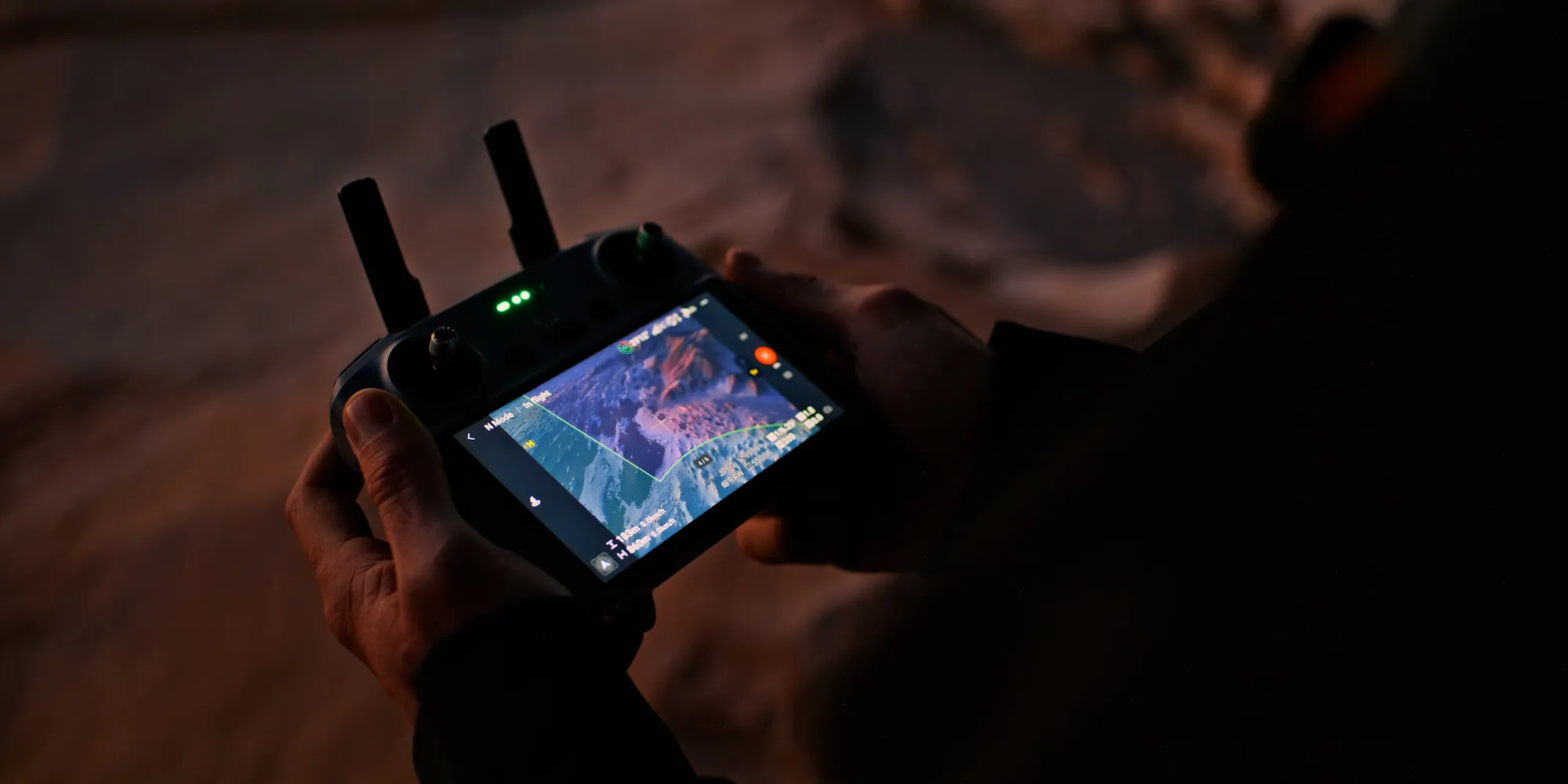
Drone licence in Canada
Basic, Advanced and what farms need
You need a Transport Canada pilot certificate to fly any drone of 250 g or more. Basic is an online exam; Advanced adds an in-person flight review and is the one spray drone pilots need.
The three drone pilot certificates
Transport Canada calls it a drone pilot certificate; most people search for a drone licence or drone license. There are three. Which one you need depends on what you fly, how close you fly to people and where you fly.
| Basic | Advanced | Level 1 Complex | |
|---|---|---|---|
| Minimum age | 14 | 16 | 18 |
| How to get it | Online exam | Online exam + flight review | Advanced exam, 20 h ground school, Level 1 Complex exam + flight review |
| Small drones (250 g–25 kg) | Yes | Yes | Yes |
| Medium drones (25–150 kg) | No | Yes, with the right declaration | Yes |
| Controlled airspace | No | Yes, with NAV CANADA permission | Yes |
| Within 30 m of bystanders | No | Yes, with a declared drone | Yes |
| Beyond visual line of sight | No | No | Yes, under an RPAS Operator Certificate |
Drones under 250 g need no certificate. Drones over 150 kg need a Special Flight Operations Certificate (SFOC) from Transport Canada. Certificates don't expire, but you must keep your skills current (recency) by passing an exam or flight review, or completing recurrent training, within the previous 24 months.
Source: Transport Canada drone categories.
Basic operations: the rules
You fly Basic operations when all of these are true:
- The drone weighs 25 kg or less.
- You can always see it.
- You stay more than 30 m (100 ft) horizontally from any person.
- You are in uncontrolled airspace, more than 5.6 km from the centre of a certified airport and 1.9 km from a heliport.
Break any one of these and you are in Advanced operations. Fines for individuals reach up to $1,000 for flying without a pilot certificate.
How to get your drone licence
Basic certificate
- Register on Transport Canada's Drone Management Portal.
- Study the knowledge requirements: air law, airspace, weather, human factors and flight operations.
- Pass the online Small Basic exam. The certificate is issued as soon as you pass.
Advanced certificate
- Pass the online Advanced exam.
- Book and pass an in-person flight review with a Transport Canada flight reviewer, flying a drone suited to the operation.
- Apply for the Advanced certificate in the portal and pay the issuance fee.
Level 1 Complex certificate
For flying beyond visual line of sight under an RPAS Operator Certificate: hold the Advanced certificate, complete 20 hours of ground school, then pass the Level 1 Complex exam and a flight review.
Whichever certificate you hold, register every drone of 250 g or more and mark the registration number on it.
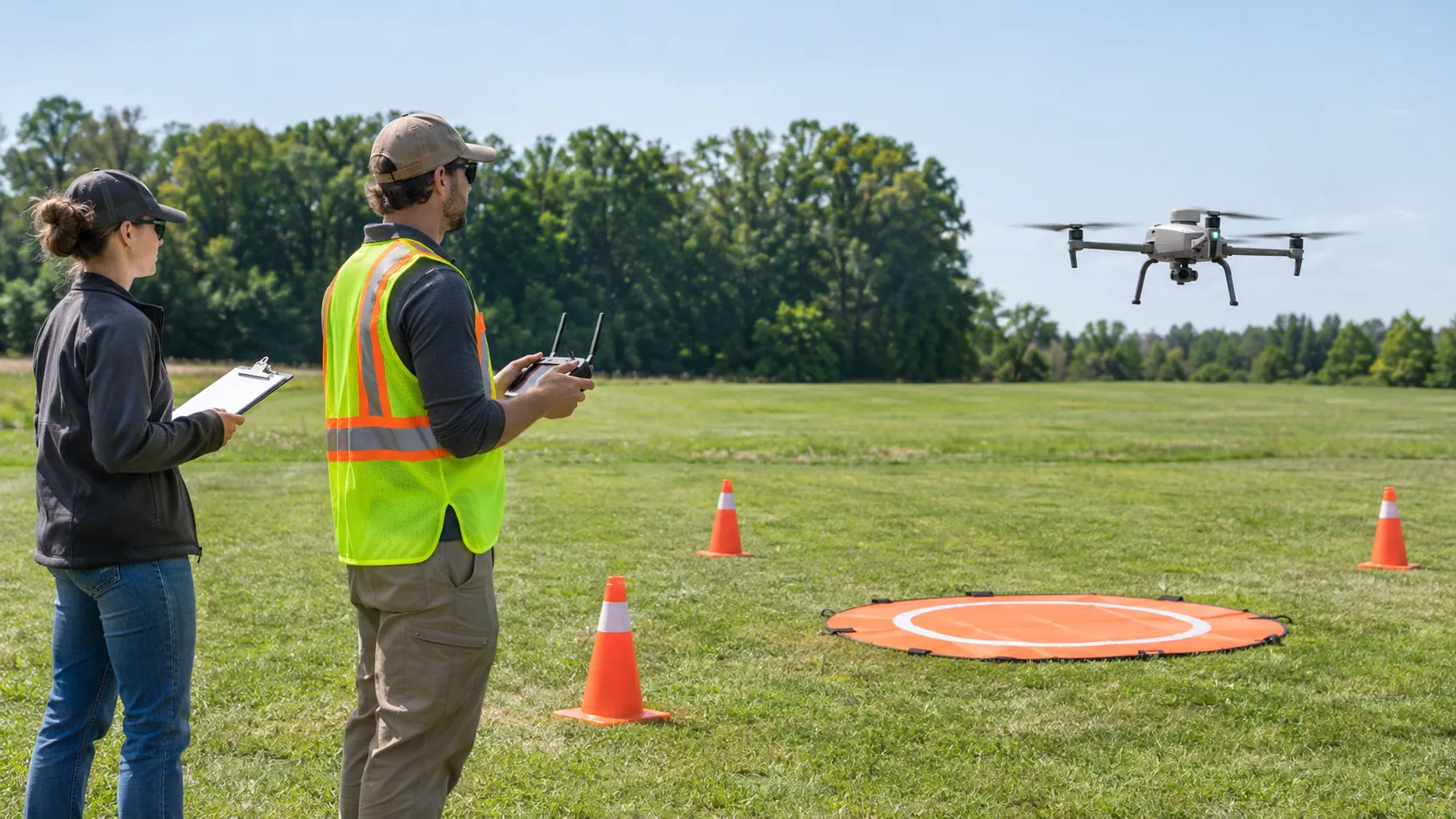
A field for practice and your flight review
We can provide a field for hands-on practice and for your flight review: open space to rehearse the pre-flight checks, normal and emergency procedures, away from crowds and buildings. The review itself is done by a flight reviewer recognized by Transport Canada; tell us whether you already have one booked. The flight review guide explains how it works.
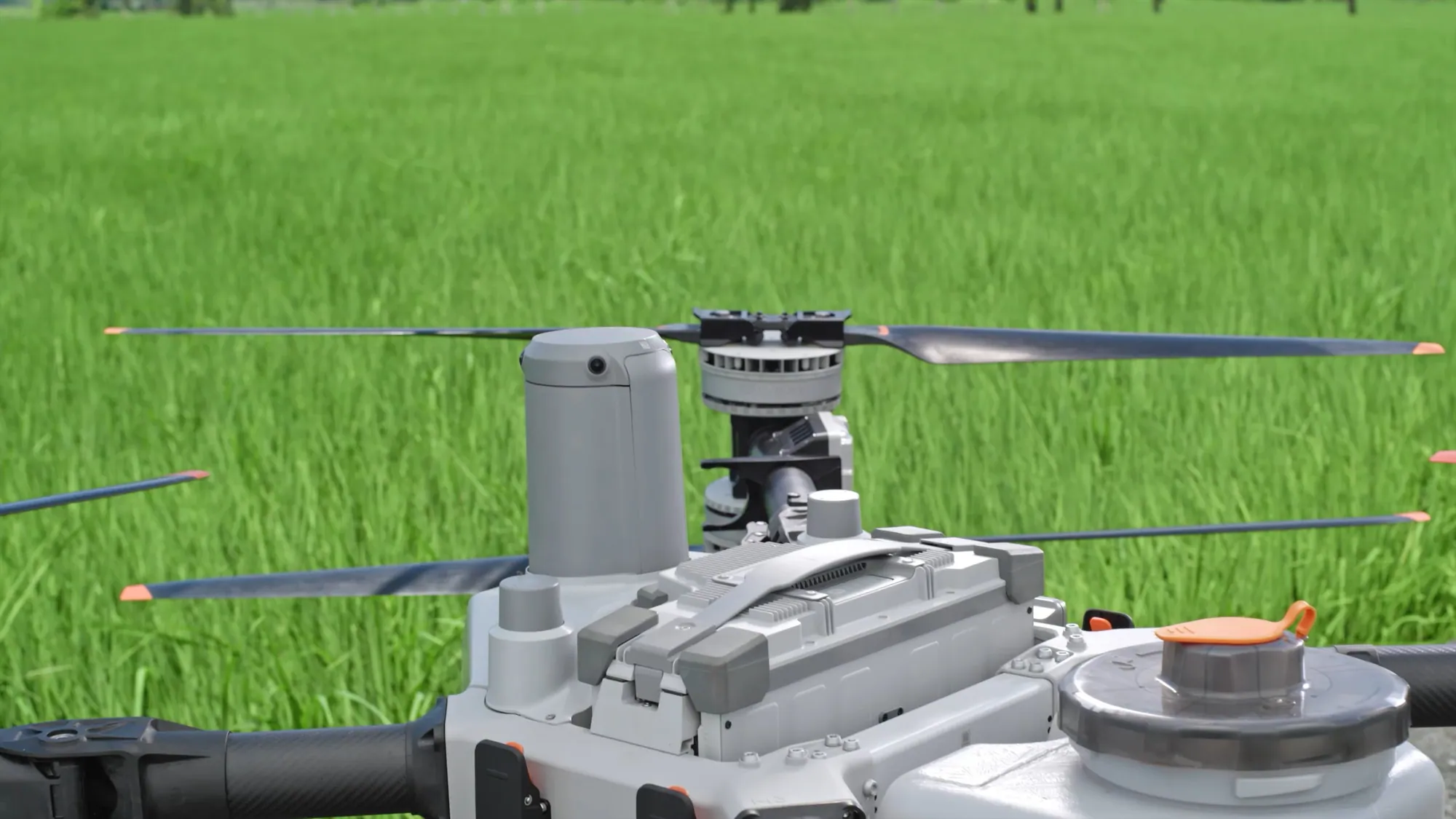
Why farm drone pilots need the Advanced certificate
A loaded Agras T50 or T100 weighs more than 25 kg, which makes it a medium drone. Every medium-drone operation is an Advanced operation, and the drone needs a safety assurance declaration for what you do with it:
| Medium drone (25–150 kg) in visual line of sight | Declaration needed |
|---|---|
| More than 500 ft (152.4 m) from anyone not involved | Declaration |
| Between 100 and 500 ft from people | Pre-validated declaration |
| Within 100 ft or over people | Pre-validated declaration |
| In controlled airspace | Declaration, plus NAV CANADA permission |
A declaration is the manufacturer's statement that a drone model meets Transport Canada's safety standard for that kind of flight; a pre-validated declaration is one Transport Canada has reviewed.
Spraying pesticide for hire also needs your province's aerial licence; some provinces exempt farmers on their own land. The drone spraying regulations guide covers that, and Agras training covers flying the drone itself. Looking for farm drone work? See the partner program.
Common mistakes
- Taking the Basic exam when you need Advanced. If you will fly an Agras, go straight to the Advanced path.
- Leaving the flight review late. Reviewers book up in spring; plan it before the drone arrives, and book field time to practise first.
- Assuming the certificate covers spraying. It covers flying. The product label and the provincial licence cover applying.
Frequently asked questions
Do I need a licence to fly a drone in Canada?
Yes, for any drone of 250 g or more: a Basic or Advanced pilot certificate from Transport Canada, and the drone must be registered. Drones under 250 g need no certificate but must still be flown safely.
What is the largest drone you can fly without a licence in Canada?
Under 250 g. From 250 g up you need a pilot certificate and registration.
How do I get my Advanced drone licence?
Pass the online Advanced exam, pass an in-person flight review with a Transport Canada flight reviewer, then apply for the certificate in the Drone Management Portal.
Do I need the Advanced certificate for a spray drone?
Yes. A loaded Agras weighs over 25 kg, which makes it a medium drone, and all medium-drone operations are Advanced operations. See Agras training.
Where can I do my drone flight review?
With any flight reviewer recognized by Transport Canada. We can provide a field for practice and for the review itself. See the flight review guide.
Does a drone pilot certificate expire?
No, but you must stay current: within the previous 24 months you need to have passed an exam or flight review, or completed recurrent training.
Is drone flying legal in Canada?
Yes, within Transport Canada's rules for your category: certificate, registration, distance from people, airspace and visual line of sight.
Are drone pilots in demand?
Agricultural spraying, mapping and inspection all need certified pilots, and farm drone work is growing as more products are registered for aerial use. See the partner program.
Ask about training
Tell us which certificate you're working toward and which drone you'll fly.
Tell us which certificate you're after
Your name and email are enough to start. A person from our Toronto team replies.