Custom applicators
Contracted acres in tight windows, where every refill trip costs billable time. See drones for custom applicators.
Questions about a project? Our team can help. Contact us →
The Agras T100 is DJI's largest agricultural drone, built for operators losing time to refills: a 100 L spray tank, a 150 L spreading system with four auger sizes, and an optional lifting system. In Canada its weight is the first question. Fully loaded it can pass the 150 kg line that requires a Special Flight Operations Certificate, so we size the payload, power and crew with you before quoting.
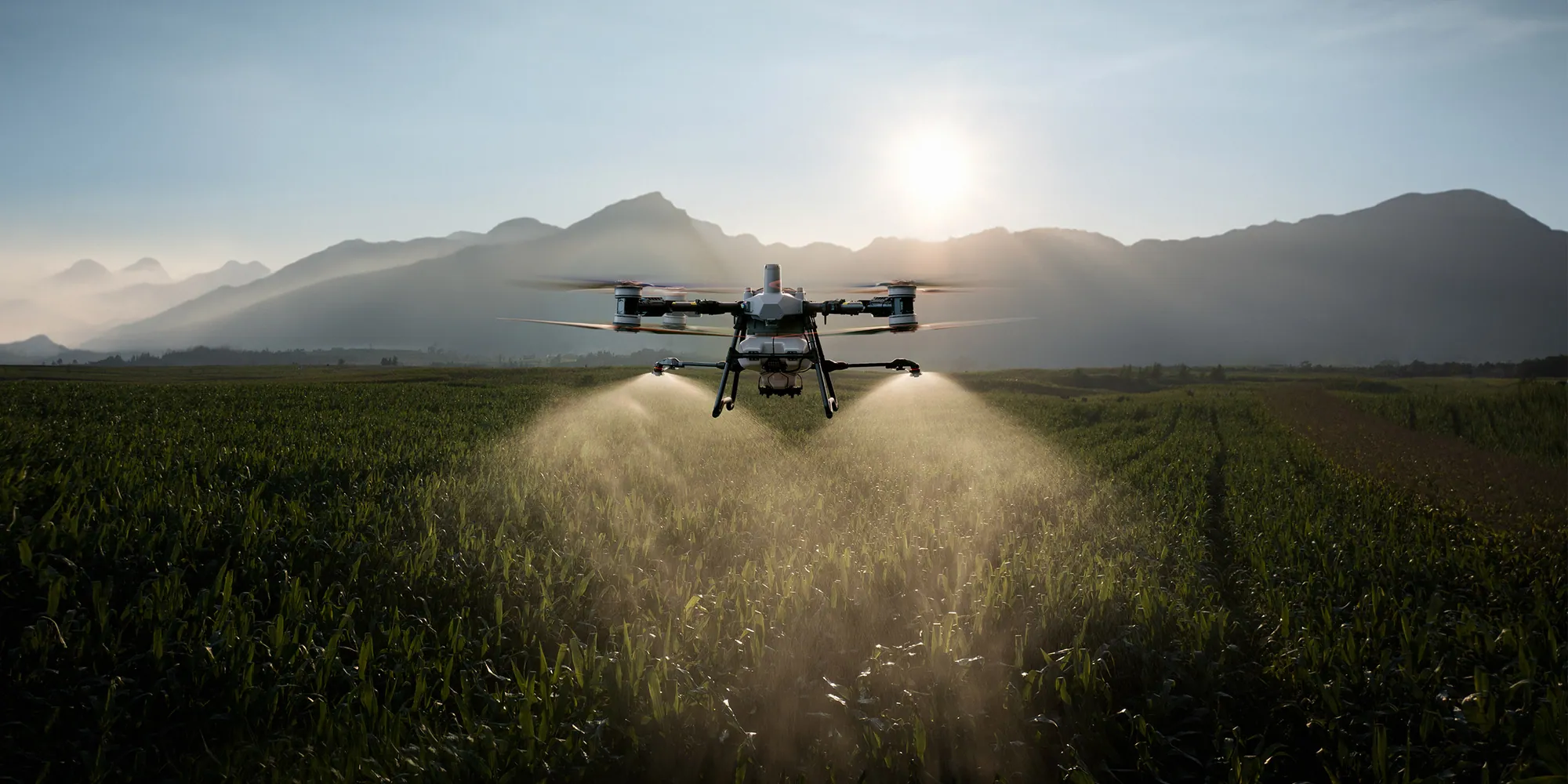
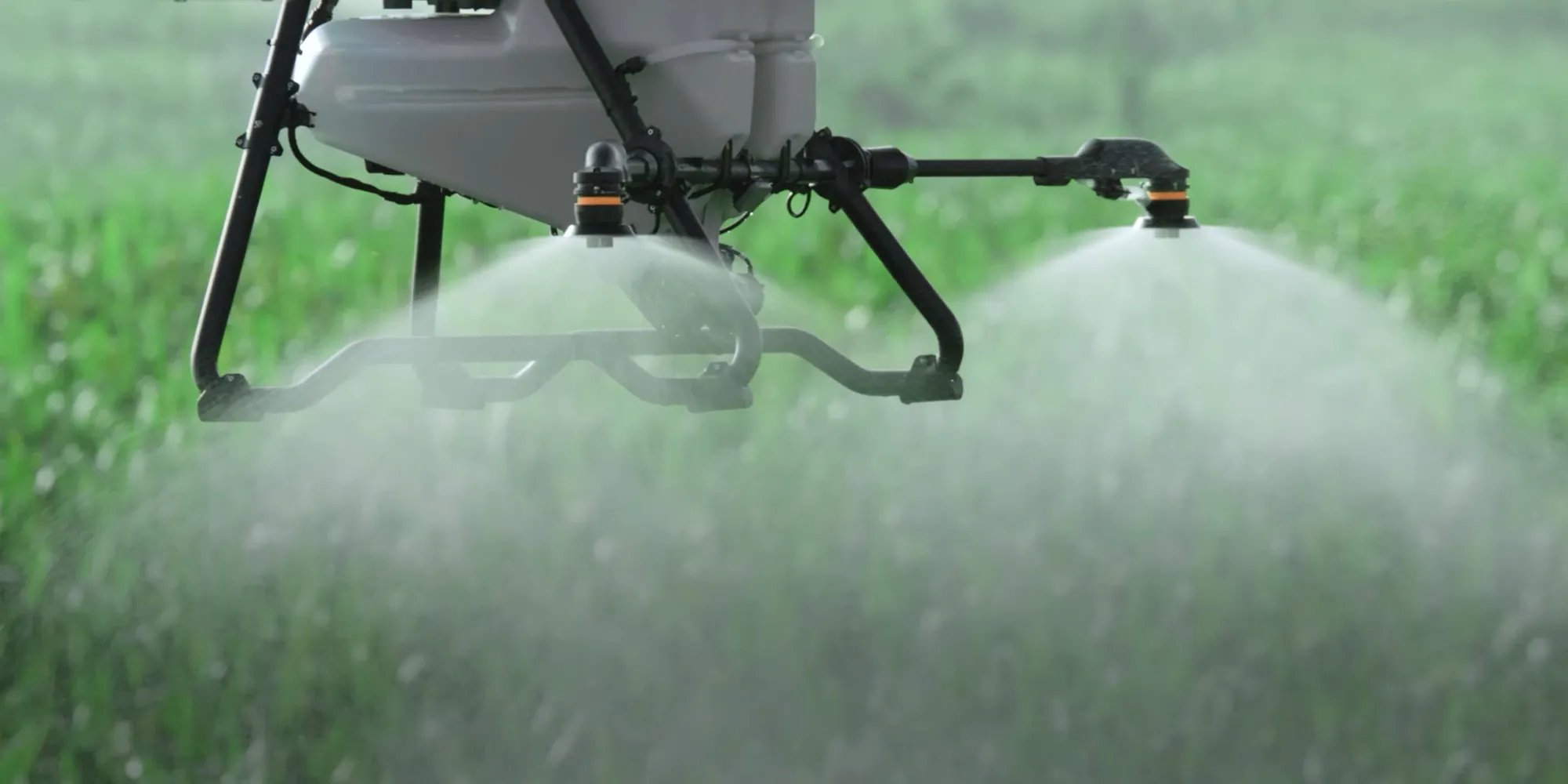
Two standard nozzles deliver 30 L/min and four optional mist nozzles reach 40 L/min across a 5–13 m swath. A full 100 L tank covers about 2 ha (5 acres) at 50 L/ha, but staying under 150 kg usually means about 75 L, or 1.5 ha (3.7 acres): almost twice a T50 load.
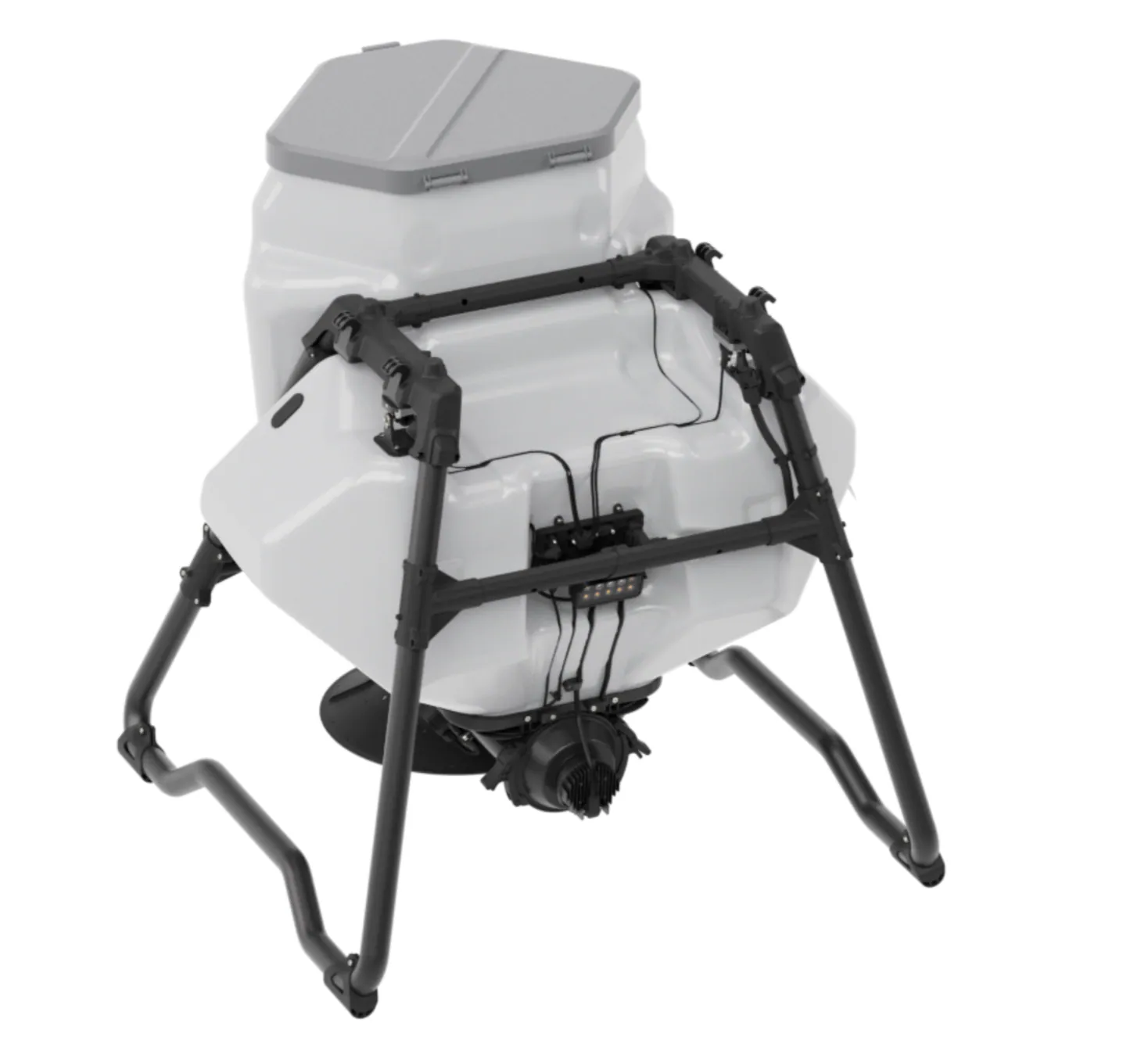
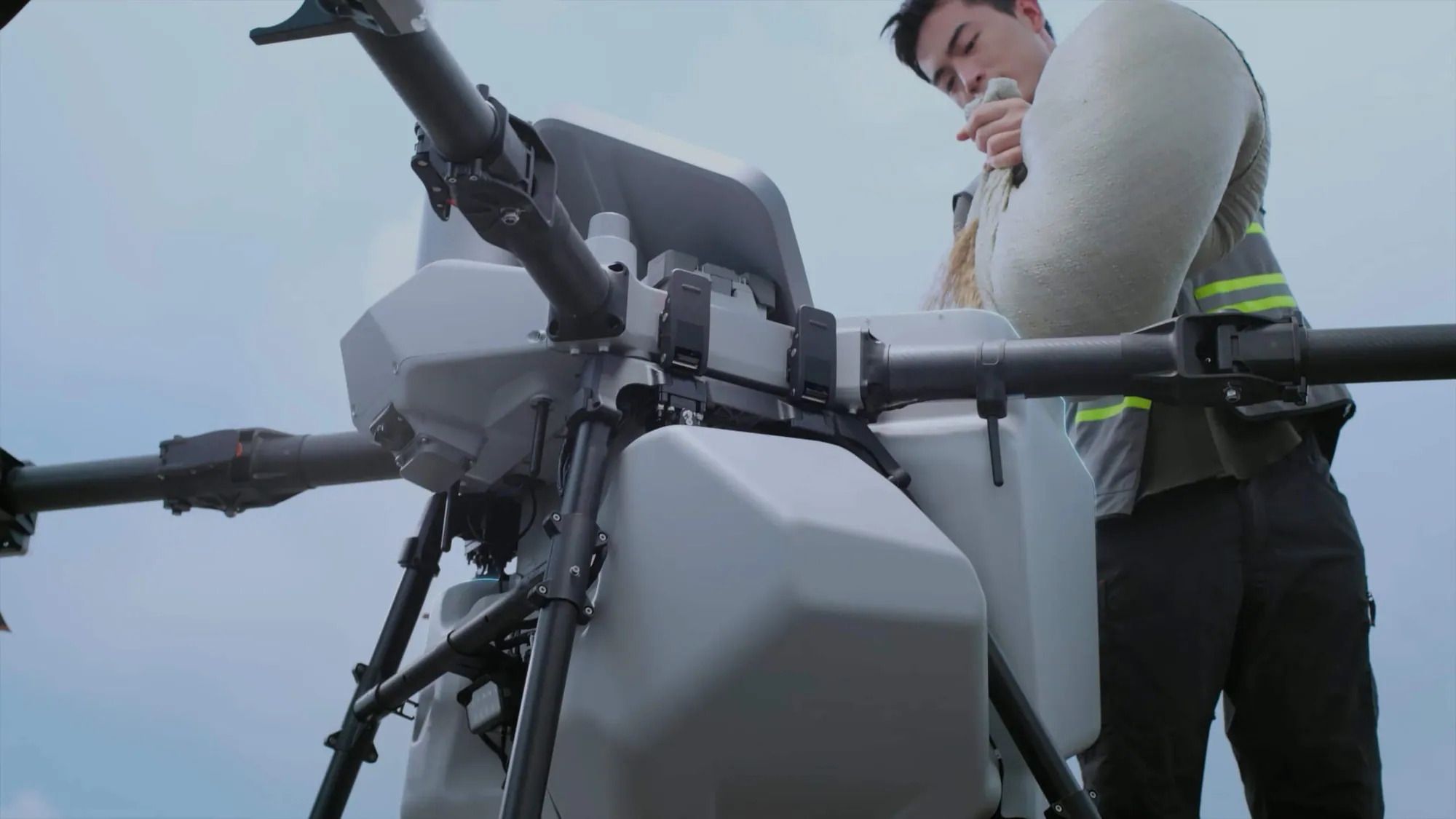
Spreading System 4.0 carries up to 100 kg and discharges up to 400 kg/min. Match the auger to the material: extra-large 0.5–10 mm (fertilizer, wheat), medium 4–6 mm, large 4–10 mm, or small 0.5–4 mm for canola-size seed and granular herbicide.
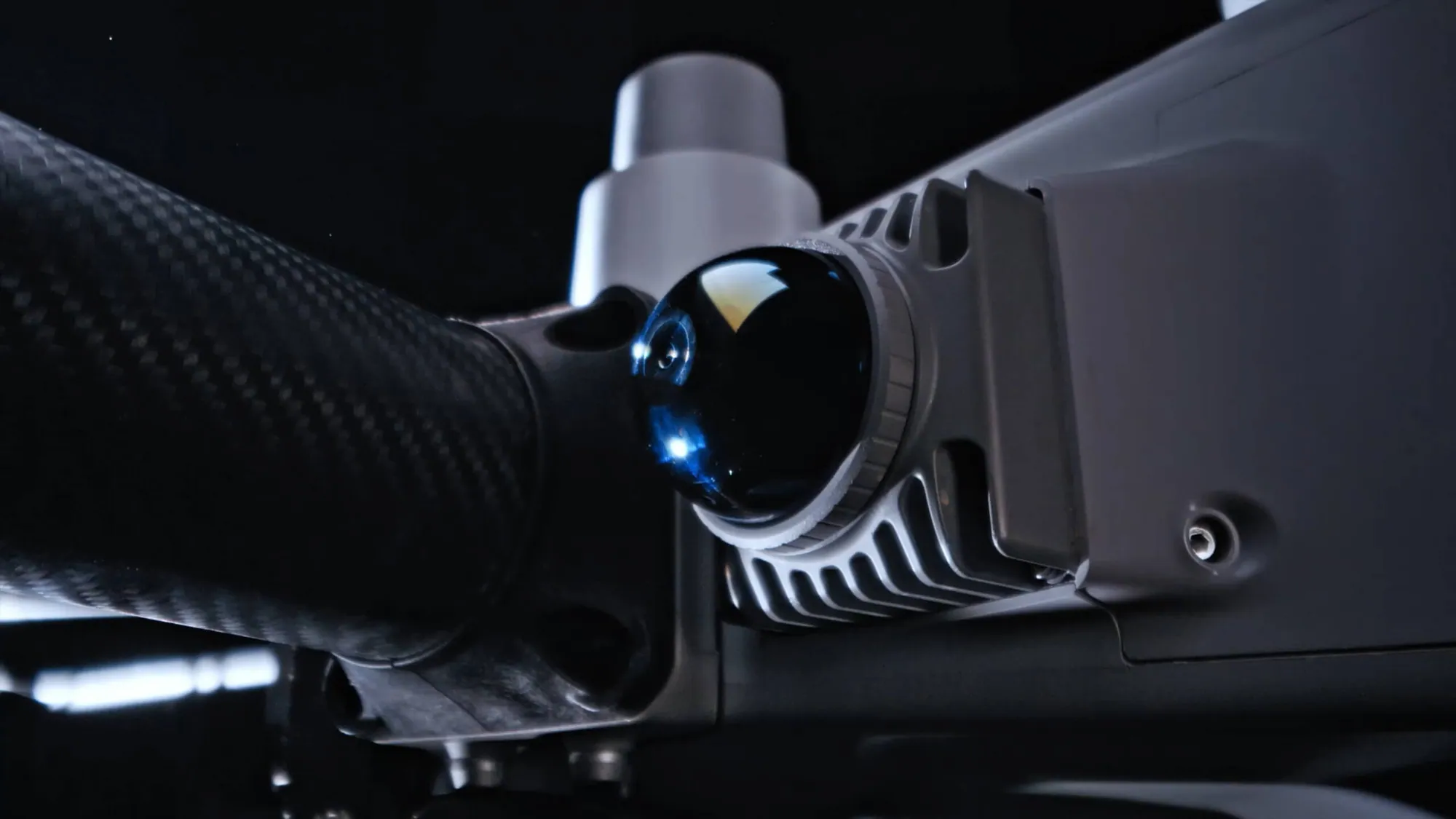
LiDAR, front, rear and downward radar and a quad vision system sense obstacles up to 60 m away. Hydro lines, guy wires and shelterbelt edges still need a walk-around before the first flight.
Swap the tank for a 100 kg lifting system on a 10 m cable, or 80 kg with the dual-battery version. In Canada a slung load is flown only as the system manual describes, or under an SFOC.
The C12000 charges a DB2160 battery from 30% to 95% in 8–9 minutes on three-phase power. On single-phase 220–240 V it is rated at 3,000 W, which is why many farms pair the T100 with the D14000iE generator.
DJI lists the spraying aircraft at 75 kg with a 175 kg maximum takeoff weight. Above 150 kg operating weight you need a Special Flight Operations Certificate (SFOC) from Transport Canada, so plan to carry about 75 kg of product, or 73 kg with the four-nozzle kit, and weigh your actual setup.
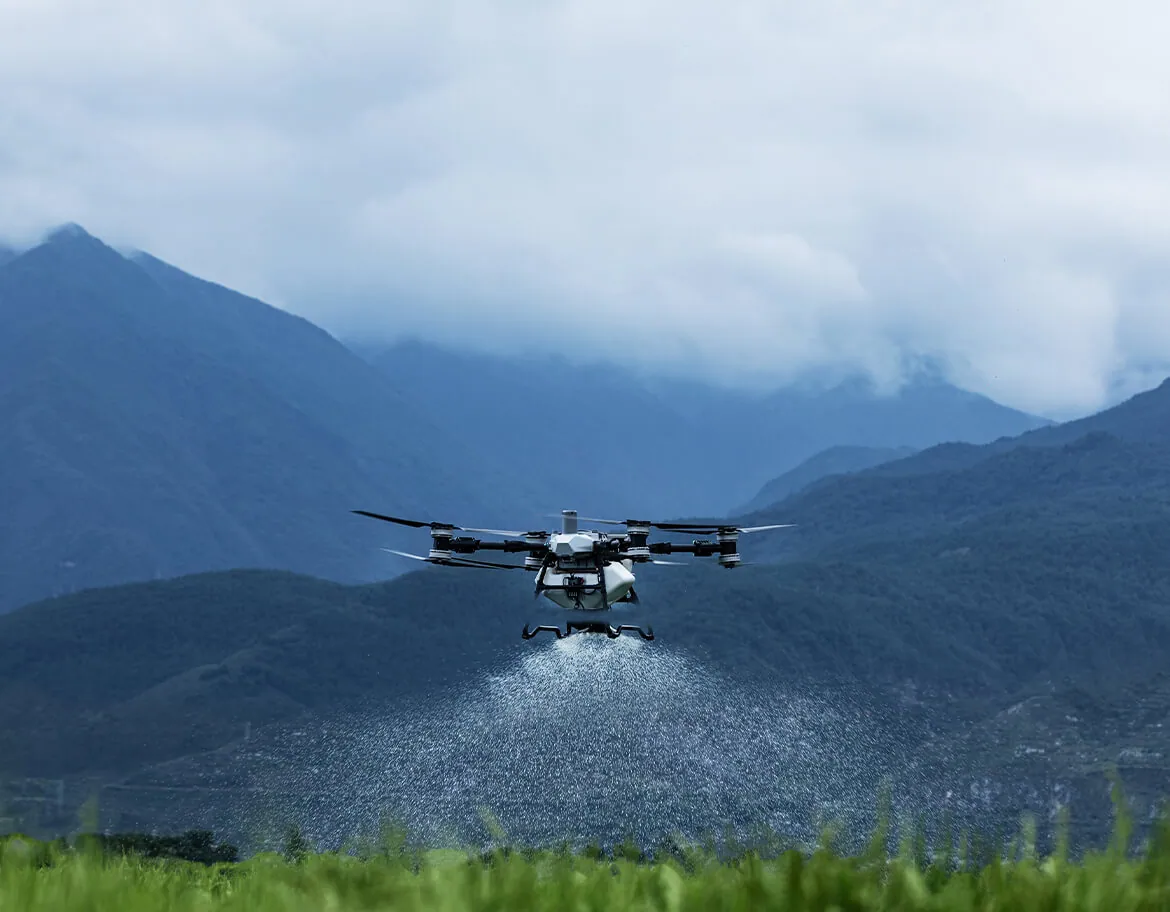
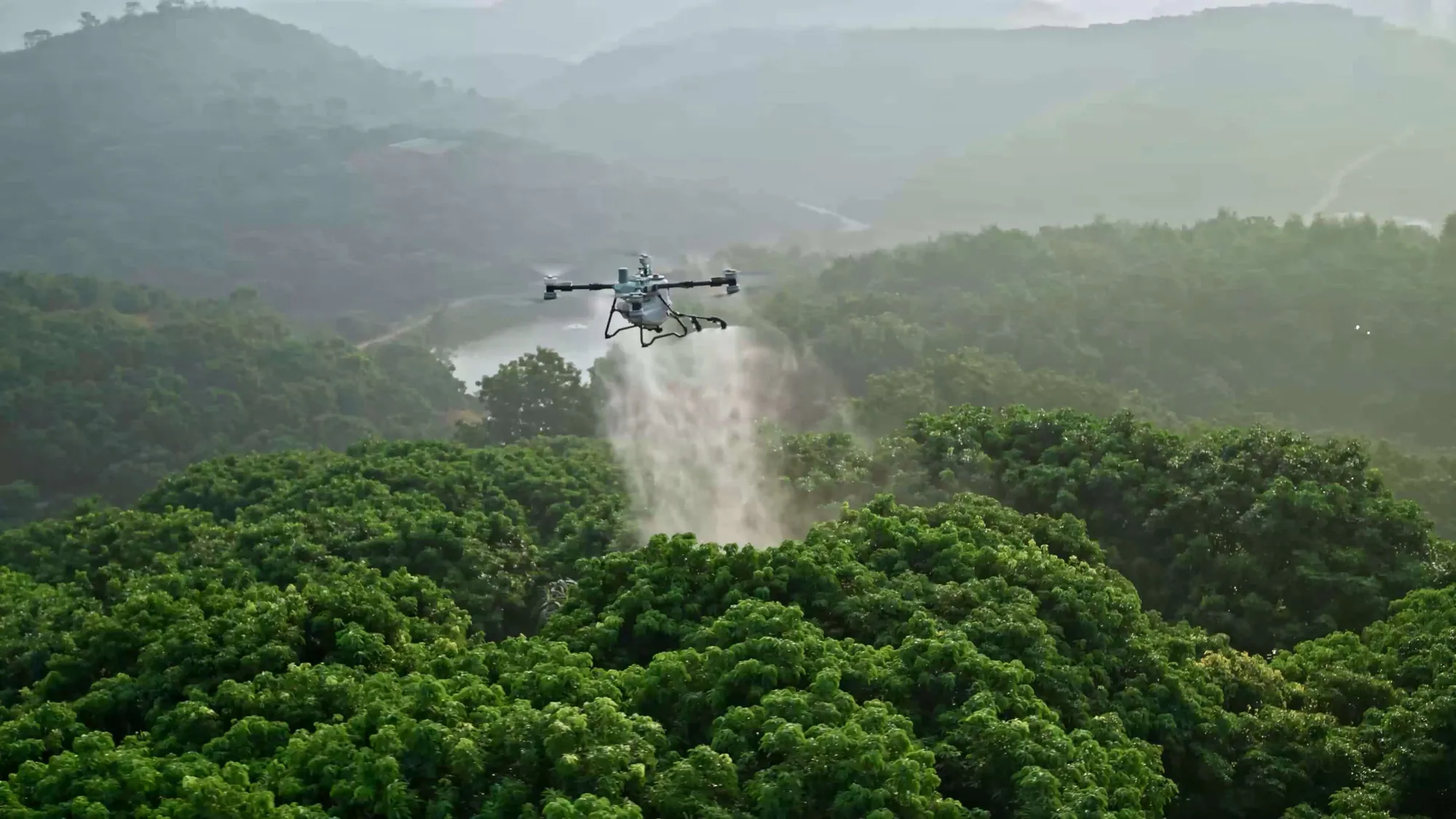
A bigger tank only helps if your crew can keep it full and charged. The T100 pays off for custom applicators and large farms whose measured bottleneck is refill trips, and who can handle a 75 kg aircraft, three-phase or generator charging, and Canada's 150 kg rule.
Contracted acres in tight windows, where every refill trip costs billable time. See drones for custom applicators.
Big blocks where a T50 can't finish a fungicide or fertilizer pass in the window.
Seed and fertilizer dealers adding drone application for customers who can't get a ground rig in. Pilots can join our partner program.
Large-plot trials and field days where the higher-capacity system is the one being evaluated.
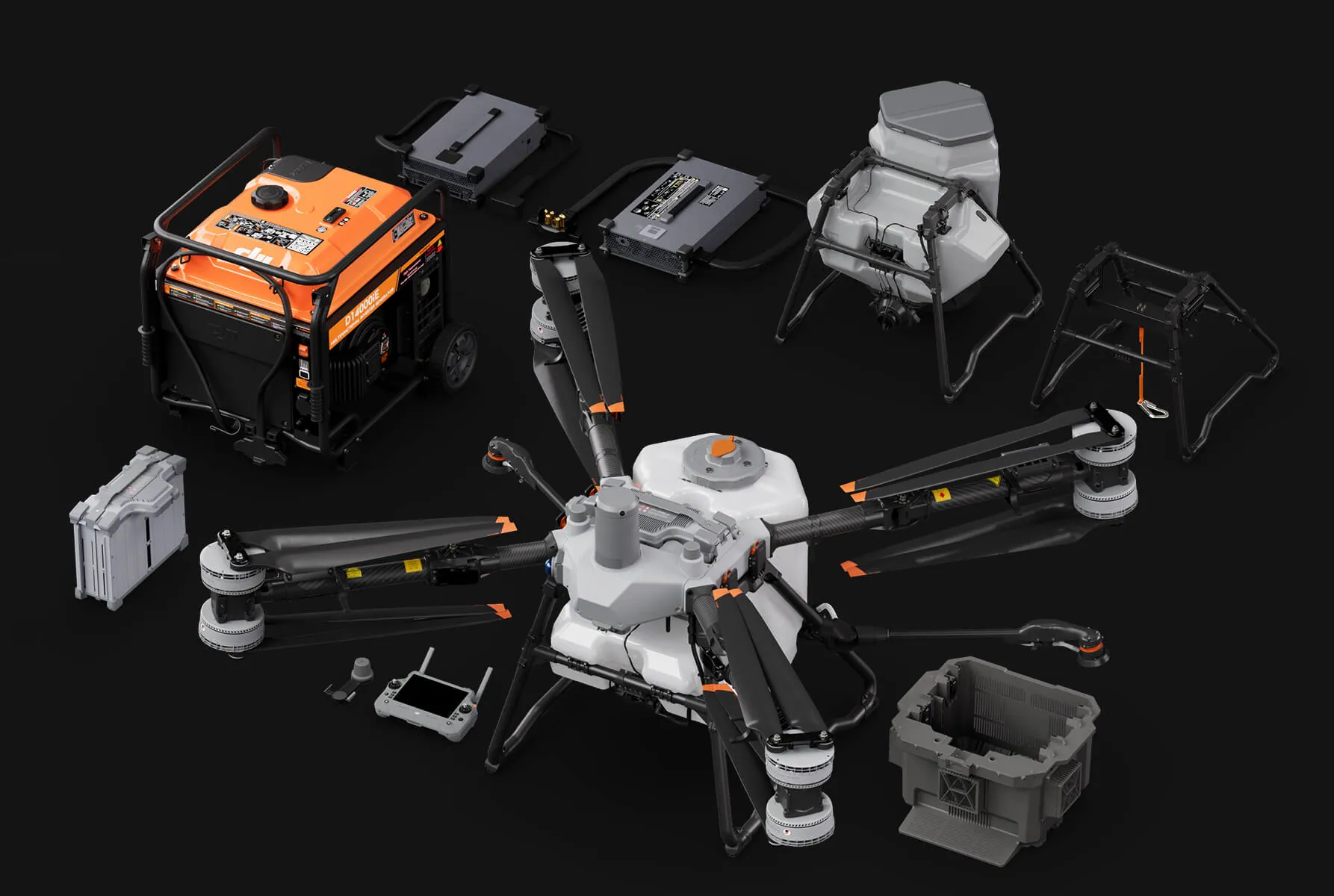
It depends on the build: spray or spreading system, how many DB2160 batteries, and whether you charge from a C12000 or a D14000iE generator. We send a dated, itemized quote with current availability. See financing and farm funding if you are spreading the cost.
Only if it flies above 150 kg. DJI lists the spraying aircraft at 75 kg and a maximum takeoff weight of 175 kg, so a full 100 kg load puts you over the line. Keep the total at or under 150 kg (about 75 kg of product, or 73 kg with the four-nozzle kit, weighed with the battery and attachments) and it is flown as a medium drone with an Advanced certificate and a declared model. Details on the regulations page.
The C12000 reaches 12,000 W only on three-phase power; on single-phase 220–240 V it is rated at 3,000 W, so DJI's 8–9 minute recharge needs three-phase or the D14000iE generator. Tell us what supply each yard and field has before you choose. The field kit page compares the options.
At a 50 L/ha label rate a full 100 L tank covers about 2 ha (5 acres), but a 75 kg load that stays under 150 kg covers about 1.5 ha (3.7 acres). Dry seed goes further: at 10 kg/ha a 75 kg load covers about 7.5 ha. Your refill and charging cycle sets the real daily total.
Buy the T100 when a measured day shows refills are your bottleneck and you can support a 75 kg aircraft, heavier batteries and its charging needs. If the Agras T50 finishes your work in the window, it is the simpler choice.
No. The T100 uses DB2160 batteries (41,000 mAh, about 14.7 kg each) with the C12000 charger or D14000iE generator. The T50 uses the DB1560.
Yes, with the lifting system: up to 100 kg on a 10 m cable, or 80 kg with the dual-battery lifting system. Canadian rules allow a slung load only as the system manual describes; anything else needs an SFOC.
Yes. Demonstrations use clean water and show the flight, refill and crew workflow. Ask for a demo with your location and dates, and we will check weather and airspace first.
The Agras T50 is DJI's mid-size agricultural drone: one aircraft that sprays from a 40 L tank or broadcasts seed and granules from a 75 L spreader. Canadian growers and custom applicators use it for fungicide passes, cover-crop interseeding and fertilizer top-dress where a ground rig can't get in or would cost an extra pass. We quote it as an itemized package and help you set it up for your fields.
Learn more →Batteries, power and accessories for Agras dronesBatteries and charging decide how much an Agras drone gets done. A T50 crew usually rotates three DB1560 batteries through a C10000 charger or a D12000iE generator; a T100 runs DB2160 batteries on a C12000 or D14000iE. We size the kit to your site power, daily acres and temperature, and add RTK, relays, spare propellers and nozzles so the aircraft isn't waiting on parts.
Learn more →Crop scouting and mapping droneThe Mavic 3M is a compact mapping drone with a 20 MP RGB camera, four 5 MP multispectral bands (green, red, red edge and near infrared) and a sunlight sensor for consistent readings. Growers, agronomists and researchers use it for NDVI and NDRE maps, to find problem areas and to build prescription maps for Agras application. It weighs under 1 kg and flies up to 43 minutes.
Learn more →Heavy-lift delivery droneThe FlyCart 100 is DJI's largest delivery drone: an eight-rotor aircraft that carries cargo on a 30 m winch or a 10 m lifting cable, flies up to 12 km on two batteries and has radar, LiDAR and a built-in parachute. It moves tools, parts and supplies across terrain trucks can't cross: hills, water, bush and steep slopes. In Canada, a drone over 150 kg needs a Special Flight Operations Certificate (SFOC), so plan on roughly 60 kg of cargo, not DJI's 85 kg rating.
Learn more →Demonstrations use clean water and show the flight, refill and crew workflow. Tell us your location and dates.