Pasture seeding by drone: frost seeding clover into thin pasture
Frost seeding broadcasts clover onto thin pasture in March and April and lets freeze and thaw work the seed into the soil. A drone does it when the ground is too soft or steep for a spinner; one 50 kg T50 load covers about 12 acres at 9 lb per acre.
Updated
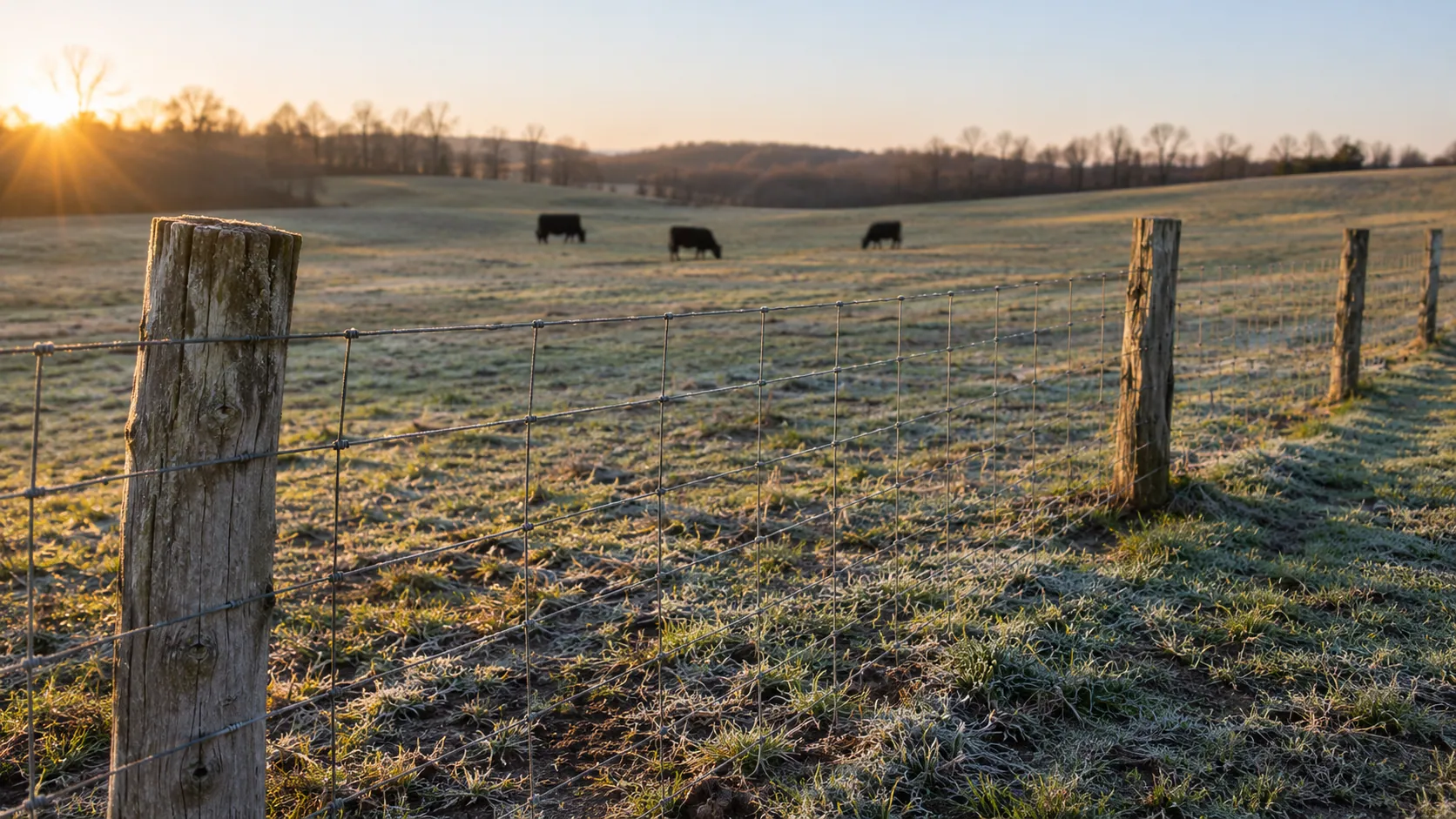
Thin pasture, and a seeding window on soft ground
Thin, weedy pastures lose yield and carrying capacity. Reseeding with a drill takes the field out of grazing, and frost seeding with a spinner or ATV needs to happen in March and early April, when the ground is soft, wet or snow-covered in places and hillsides are hard to drive.
Broadcast on frozen or wet ground, no ruts
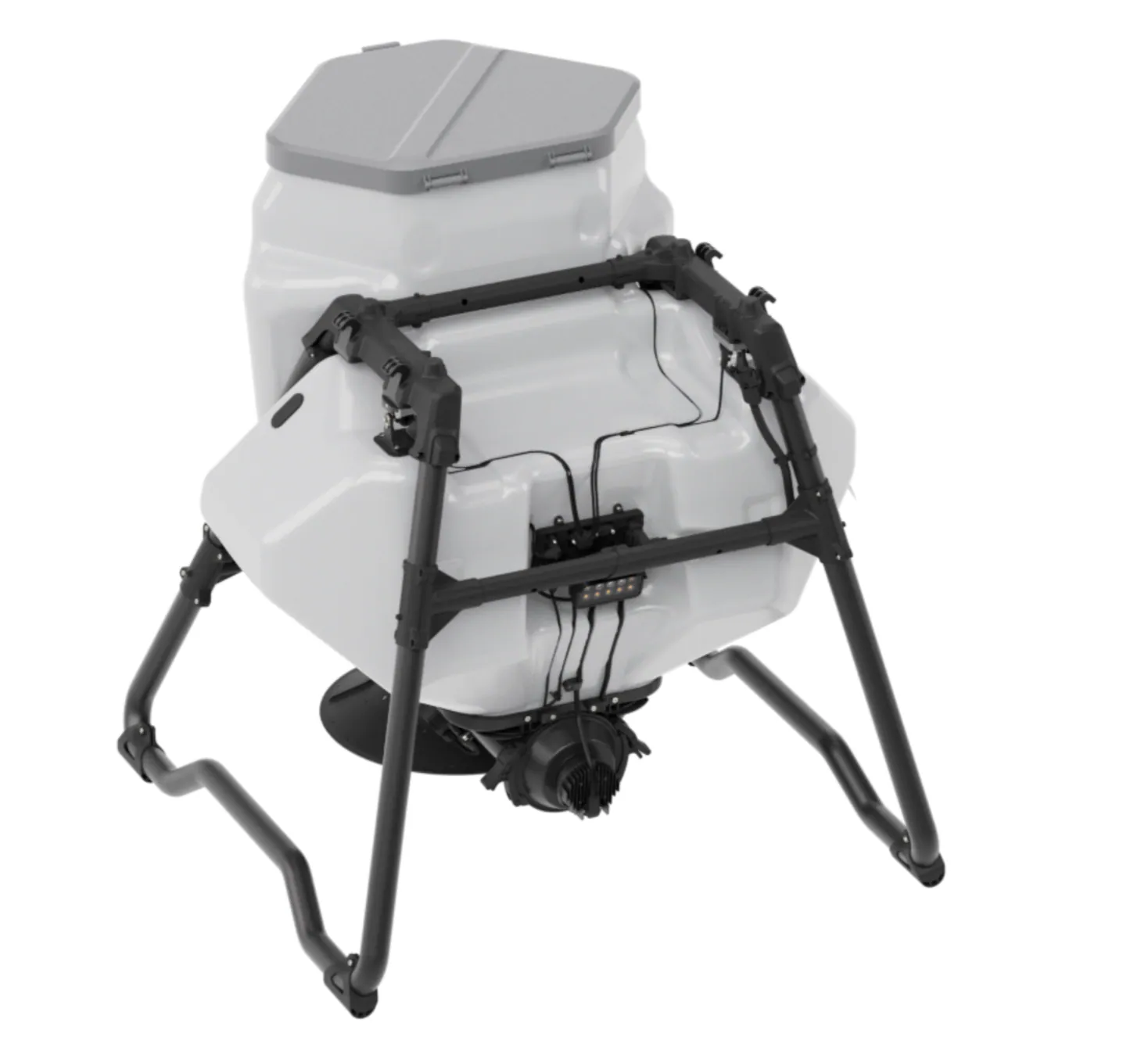
An Agras T50 with the spreading system broadcasts clover and other small seed from the air, on frozen or wet ground, without leaving ruts. Freeze-thaw cycles then work the seed into the soil. A Mavic 3 Multispectral map can show where the stand is thinnest, so seed goes where it's needed.
The sod decides, not the drone
Establishment depends on how open the sod is and on seed-to-soil contact, not on how the seed was spread. Expect clovers to take far better than grasses. Calibrate with your own seed, and check the stand in late spring.
What to frost seed, and how much
OMAFA's frost-seeding rates per acre:
| Species | Rate (lb/acre) | How it frost seeds |
|---|---|---|
| Red clover | 3–7 | The easiest and most reliable |
| White clover | 2–3 | Good |
| Birdsfoot trefoil | 3–6 | Good |
| Orchardgrass | 3–4 | Much harder |
| Italian ryegrass | 4–8 | Much harder |
| Bromegrass | 6–12 | Much harder |
| Alfalfa | — | Not suited to frost seeding |
1 lb/acre is about 1.12 kg/ha.
When to seed
- Ontario: mid-March to early April for most of the province, once the snow is all or nearly all gone. Two or three freeze-thaw cycles after seeding help the seed into the soil.
- Saskatchewan: you can also seed most legumes (not sweet clover) in late fall, from about mid-October to freeze-up, once soil stays at 5 °C or colder (2026 forage rejuvenation manual).
Prepare the sod
- Graze or clip hard the previous fall, to about 2 inches. Thick sod gives the worst results.
- Look for bare soil: OMAFA's 2026 frost-seeding FAQ suggests bare patches at least the size of a loonie.
- After the seed is down, hoof action from high-density grazing improves seed-to-soil contact (Saskatchewan manual).
- Fix fertility and drainage first if they caused the thin stand; see fertilizer by drone.
Setting up a drone for pasture seed
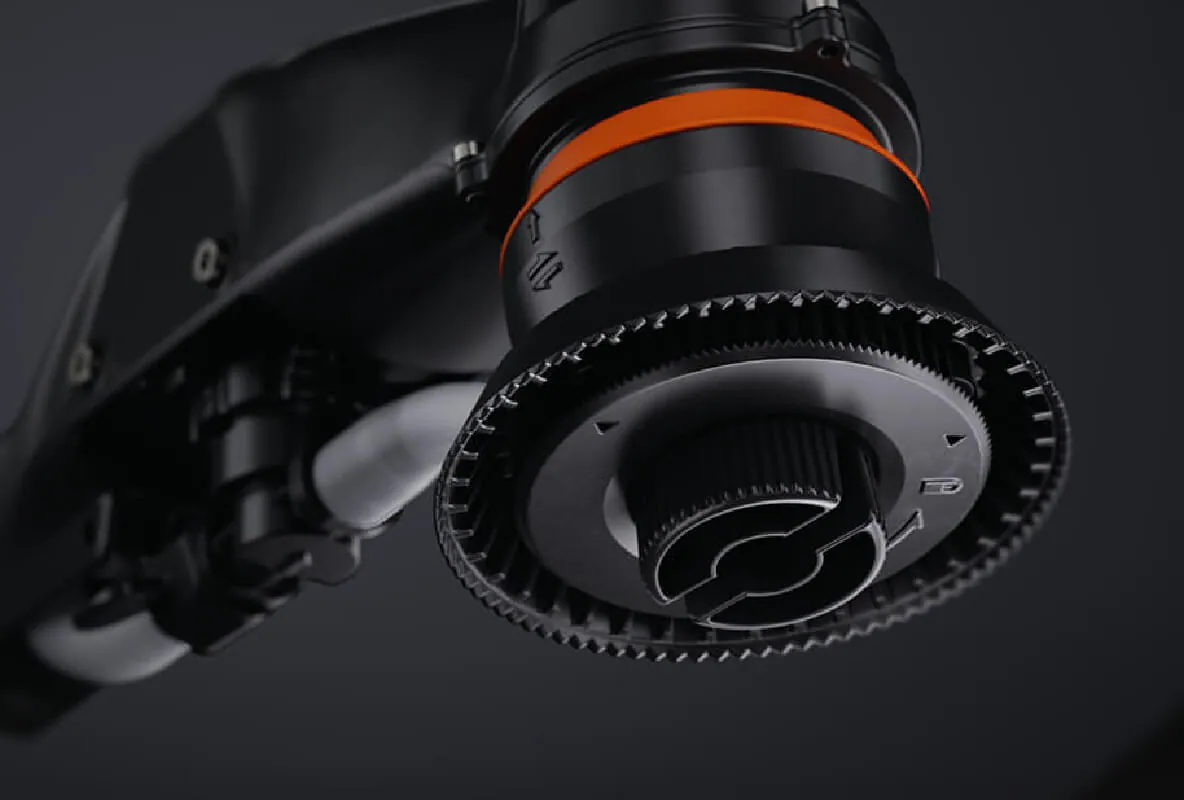
- Check the seed fits. The T50 spreader takes granules from 0.5 to 5 mm; coated and inoculated seed flows differently from bare seed.
- Calibrate on the ground with a scale, then over catch trays, at your target rate. Small seed at low rates is easy to over-apply.
- One load goes a long way. At 5 lb/acre (5.6 kg/ha), a full 50 kg load is enough seed for about 9 ha (22 acres) in theory, so refills matter less than in spraying.
- Mark fences, water points, power lines and livestock, and keep animals away from the loading area.
Seeding untreated seed is not a pesticide application, but a loaded Agras is a medium drone, so the pilot still needs a Transport Canada Advanced certificate. See the drone licence guide.
Drone forage seeding in Canada
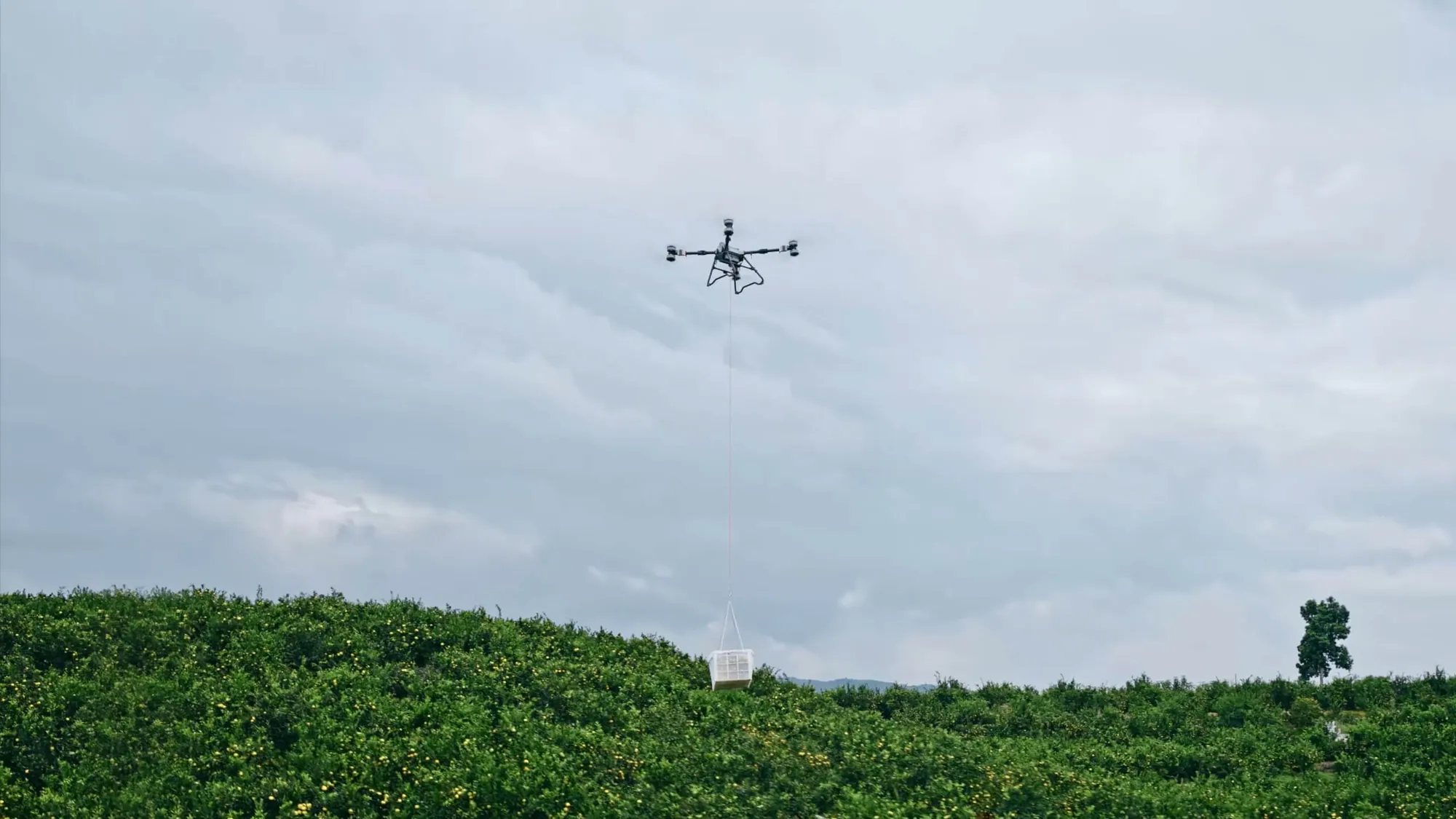
- Medicine Hat College (Alberta) is testing forage broadcast into standing silage corn with a DJI Agras T40, alongside multispectral imaging; results are not yet published.
- Olds College (Alberta) seeded a perennial forage stand by drone for the first time in June 2026, when the field was too wet for equipment.
For seeding into cereals and standing corn, see cover crop seeding. Want it flown for you this spring? Ask us to fly the job.
Common questions
Yes. An Agras T50 with the spreading system broadcasts clover and other small seed from the air, including on frozen or wet ground in March and April. Establishment still depends on the sod and on seed-to-soil contact.
Mid-March to early April for most of Ontario, once the snow is all or nearly all gone, so two or three freeze-thaw cycles can work the seed into the soil.
OMAFA gives 3–7 lb/acre for red clover, 2–3 for white clover and 3–6 for birdsfoot trefoil.
You can, but grasses such as orchardgrass, ryegrass and bromegrass establish much less reliably than clovers. Alfalfa is not suited to frost seeding.
Yes. Fields grazed or clipped to about 2 inches the previous fall do better, and thick sod gives the worst results. Hoof action after seeding helps too.
Seeding untreated seed is not a pesticide application, but a loaded Agras is a medium drone, so the pilot needs a Transport Canada Advanced certificate.
More Applications
Cover crop seeding with drones
A drone with a spreading system can broadcast clover, cereal rye or ryegrass into standing corn, soybeans or winter wheat before harvest. Establishment depends on moisture; one T50 load covers about 5 ha (12 acres) of clover at 10 kg/ha.
Fertilizer drones: spreading granular fertilizer by drone
A fertilizer drone spreads granular fertilizer on wet, soft or irregular fields and patches a ground spreader can't reach. At 100 kg/ha one T50 load covers about 0.5 ha (1.2 acres), so it is a precision tool, not a replacement for bulk spreading.
Multispectral drones for crop scouting and mapping
A multispectral drone maps crop health with light bands the eye can't see, so you can find where a field differs, compare dates and build prescription maps. The map shows where to look; a ground check tells you why.
Want to see a drone do this job on your farm?
Tell us the crop, the job and your timing. Demonstrations use clean water and show the flight, refill and crew workflow.
Book a demo