Farms with a timing problem
Wet springs, standing corn or a fungicide window a high-clearance sprayer misses. The T50 flies over the crop with no wheel tracks or compaction.
Questions about a project? Our team can help. Contact us →
The Agras T50 is DJI's mid-size agricultural drone: one aircraft that sprays from a 40 L tank or broadcasts seed and granules from a 75 L spreader. Canadian growers and custom applicators use it for fungicide passes, cover-crop interseeding and fertilizer top-dress where a ground rig can't get in or would cost an extra pass. We quote it as an itemized package and help you set it up for your fields.
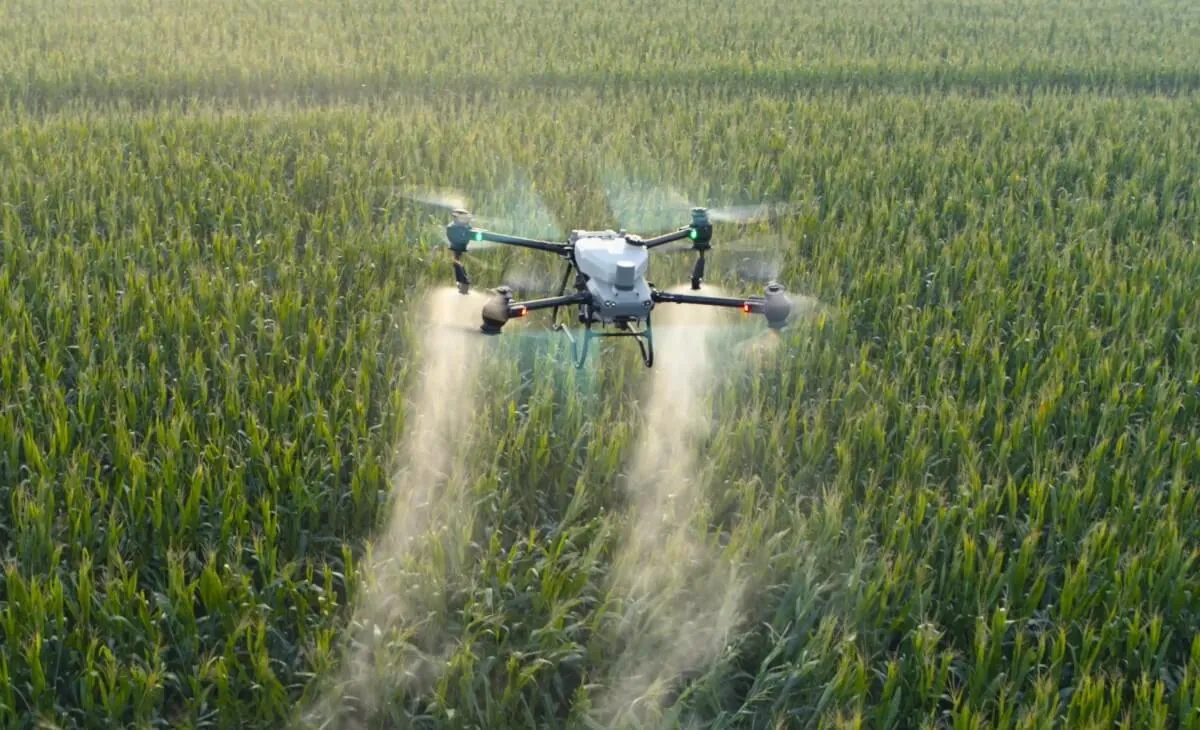
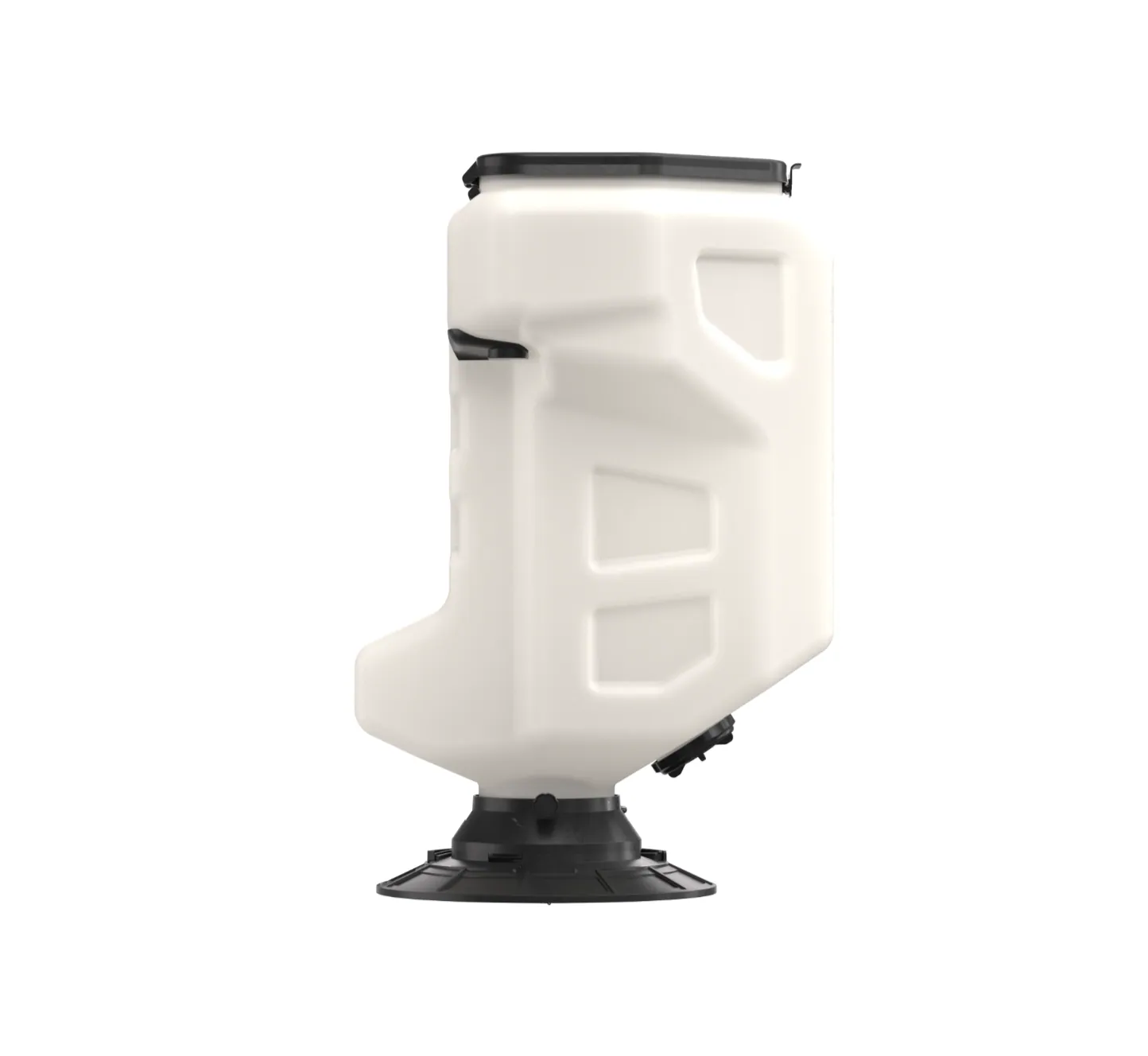
Run the 40 L spray tank for liquids, or fit the separate 75 L spreading system for cover-crop seed, granular fertilizer and pellets. If you plan to do both, make sure the spreader is a line on your quote.
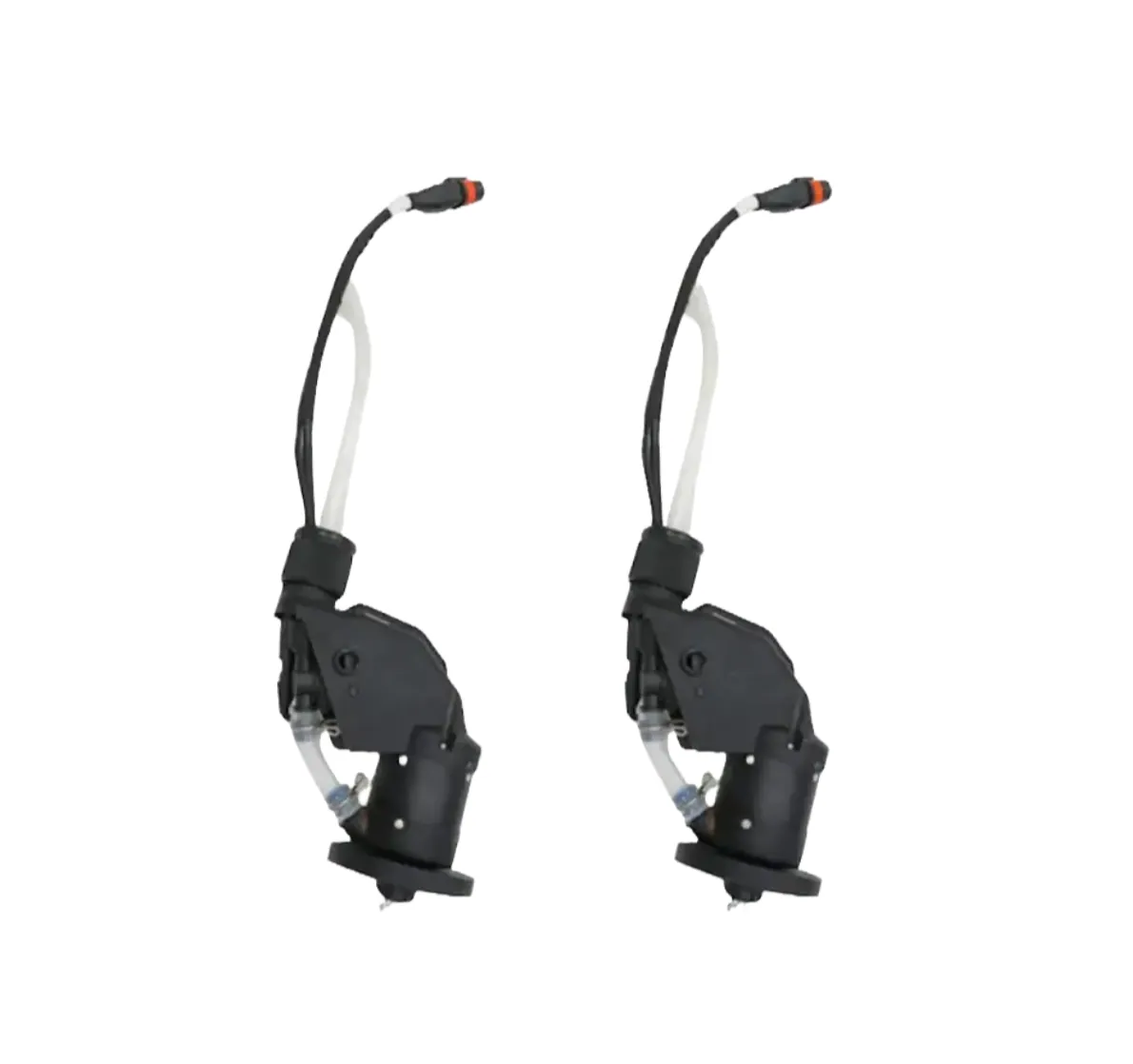
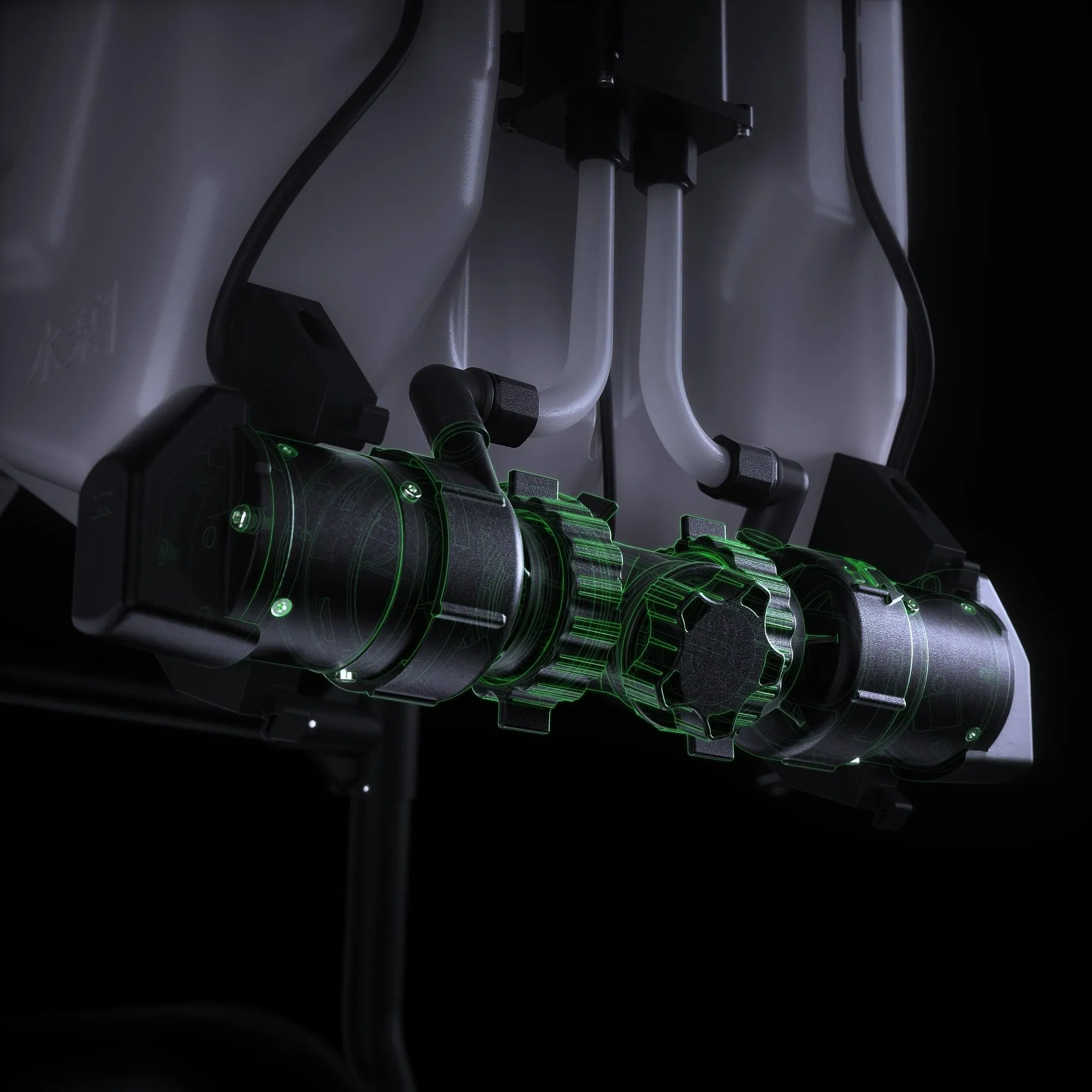
The standard pair of atomizing sprinklers delivers up to 16 L/min. The optional front pair raises that to 24 L/min for higher-volume work. A DJI dealer must install and calibrate the four-sprinkler kit. With it fitted, the drone no longer steers around obstacles on its own, so map every post and wire.
Choose droplets from 50 to 500 µm in the DJI Agras app to match the spray quality a label calls for and the drift risk at the field edge.
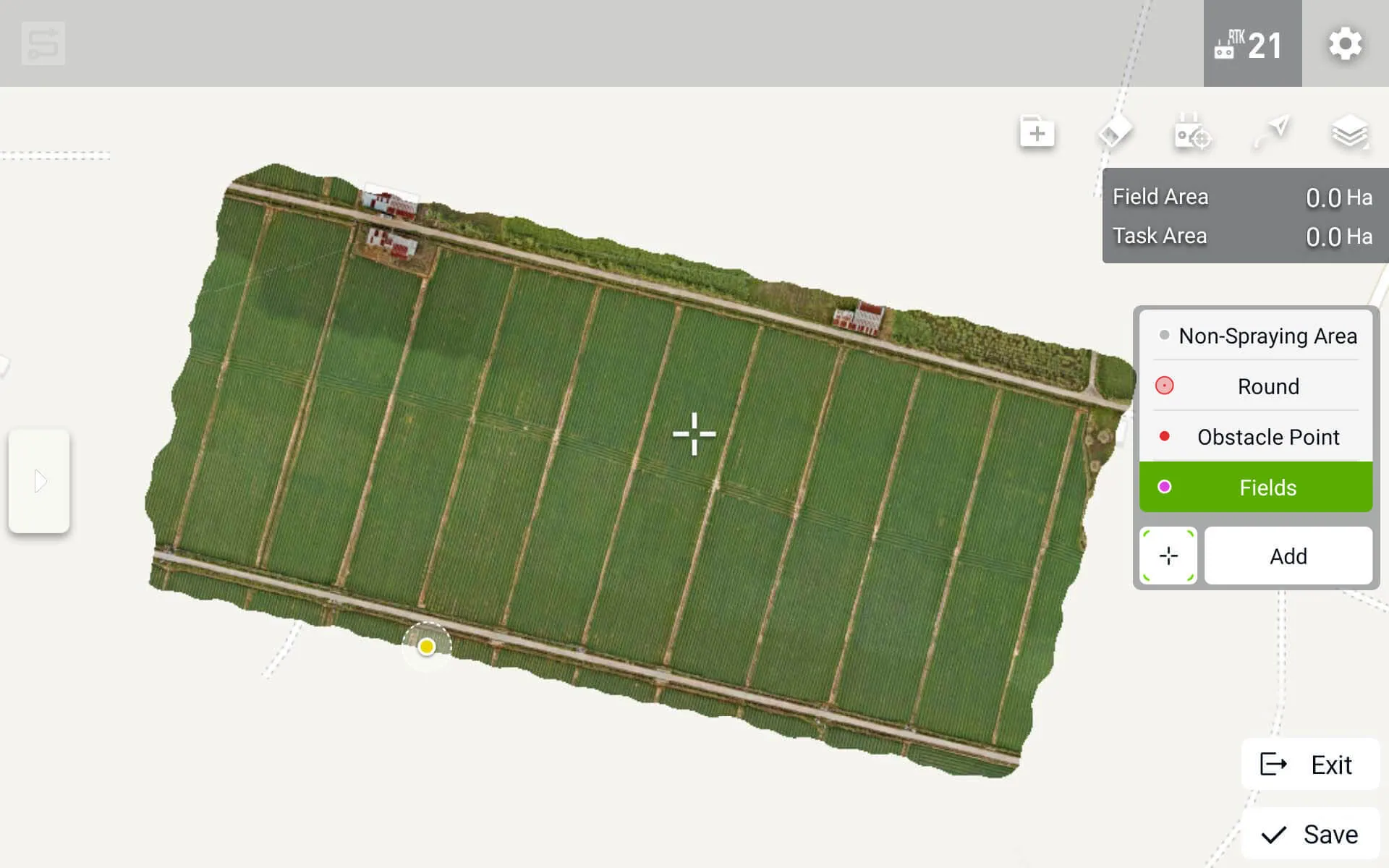
Front and rear phased-array radar and binocular vision sense obstacles 1 to 50 m away and follow terrain on slopes up to 50°. Shelterbelts, hydro lines and trellis wire still need a walk-around before the first flight.
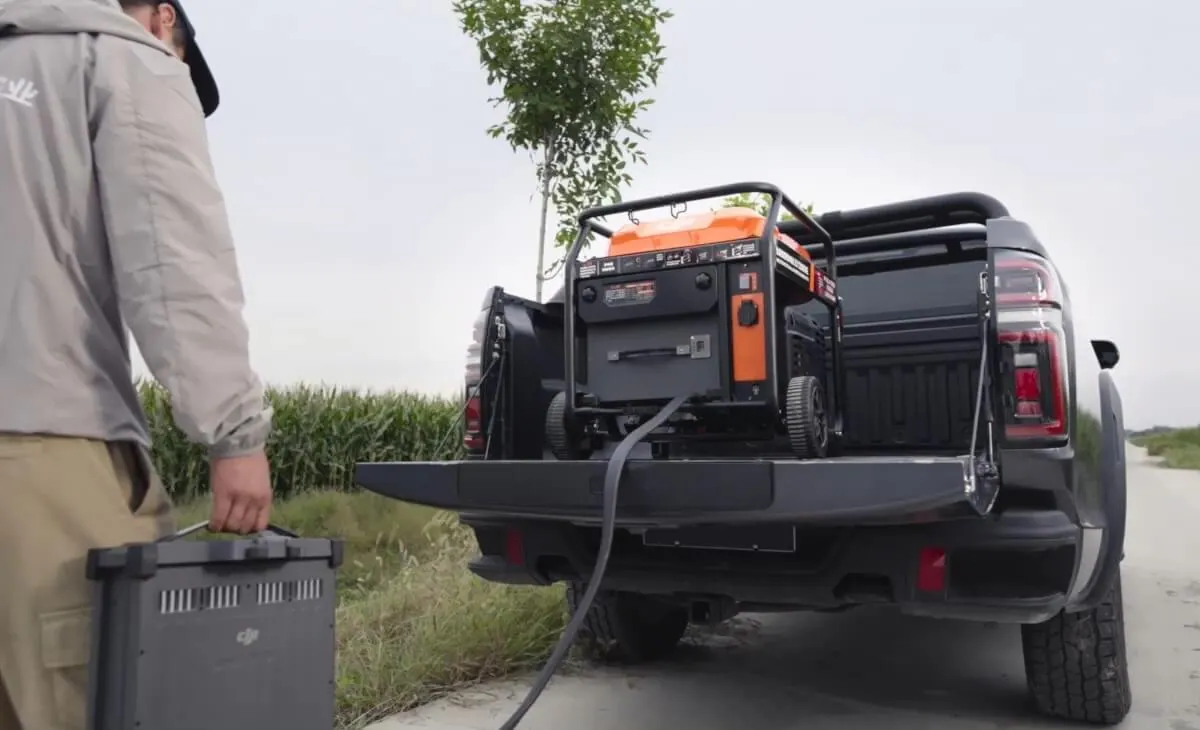
A DB1560 battery charges in 9 to 12 minutes on a C10000 fed with 240 V, or on the D12000iE generator. On a 120 V outlet the C10000 is limited to 3,000 W and charging is much slower, so plan power before you plan acres.
With RTK corrections the T50 holds position to ±10 cm, so seeding passes, plot trials and spray swaths line up season after season.
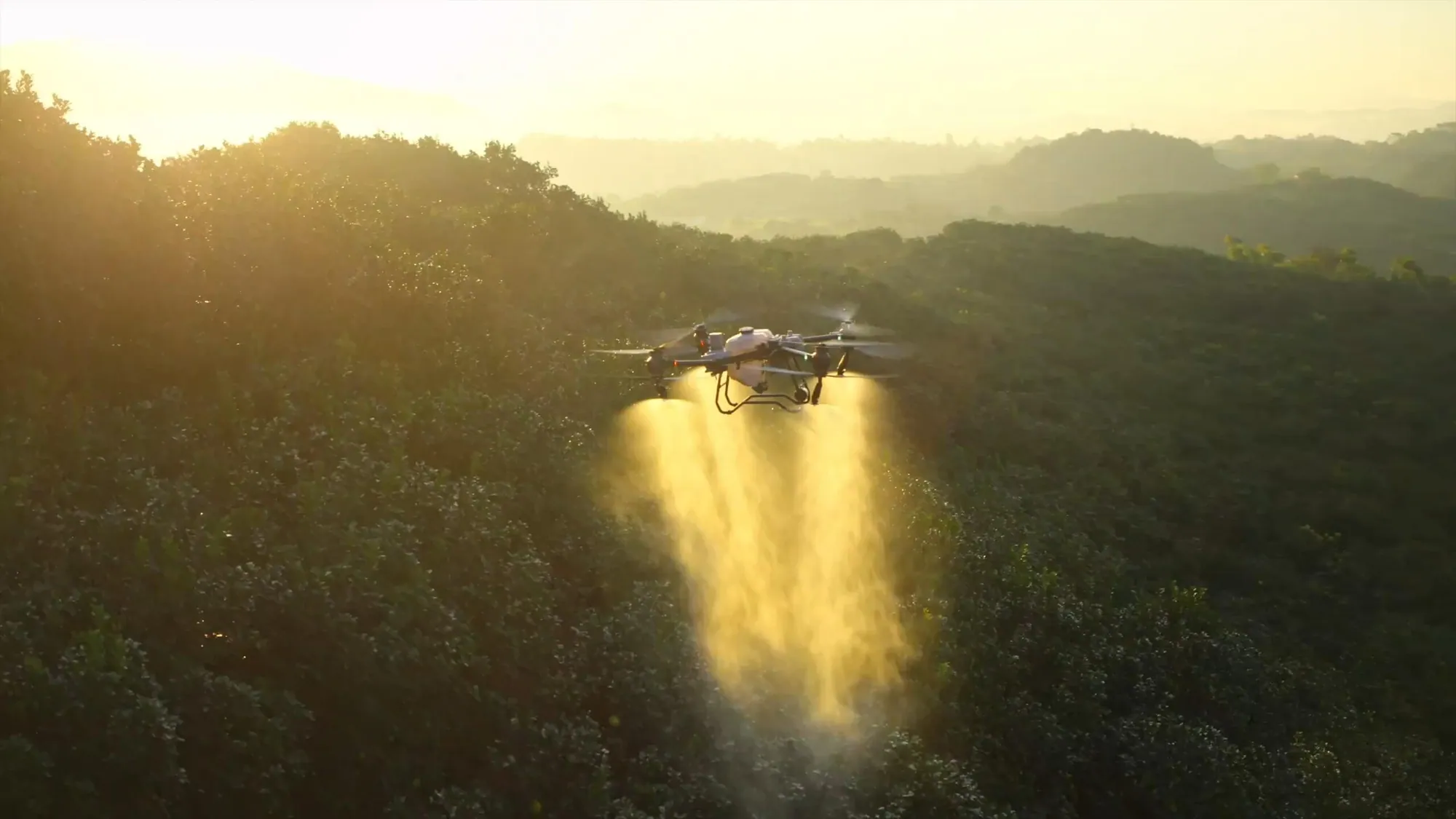
The T50 makes sense when the job comes back every season, the window is short, and a ground rig either can't get in or costs a pass you would rather not make. Start with the work: material, rate, acres per day and how fast your crew can refill.
Wet springs, standing corn or a fungicide window a high-clearance sprayer misses. The T50 flies over the crop with no wheel tracks or compaction.
Broadcast clover, cereal rye or ryegrass into standing corn, soybeans or winter wheat without waiting for harvest.
Terraces, hillside blocks and wet rows where an airblast sprayer is slow or unsafe; see orchard and vineyard spraying. Check canopy coverage with water-sensitive paper first.
A lighter system than the T100 that fits on a pickup or trailer and stays well under Transport Canada's 150 kg line. See starting a spraying business.
A Québec orchard needed to spray organic products through dense canopies and wanted to compare the T25P, T50 and T100, with warranty and financing answered before deciding.
We wrote a model-by-model comparison for that orchard: canopy, products, add-ons and the rules. The owner chose a T50 with the orchard sprinkler setup, added a spreading system for granular organic fertilizer, and paid in stages before delivery.
The T50 was delivered for the spring season, and the owner went on to earn the Transport Canada pilot certificate to fly it.
T25P · T50 · T100
Models compared
Orchard sprayers + spreader
Setup
Staged before delivery
Payment
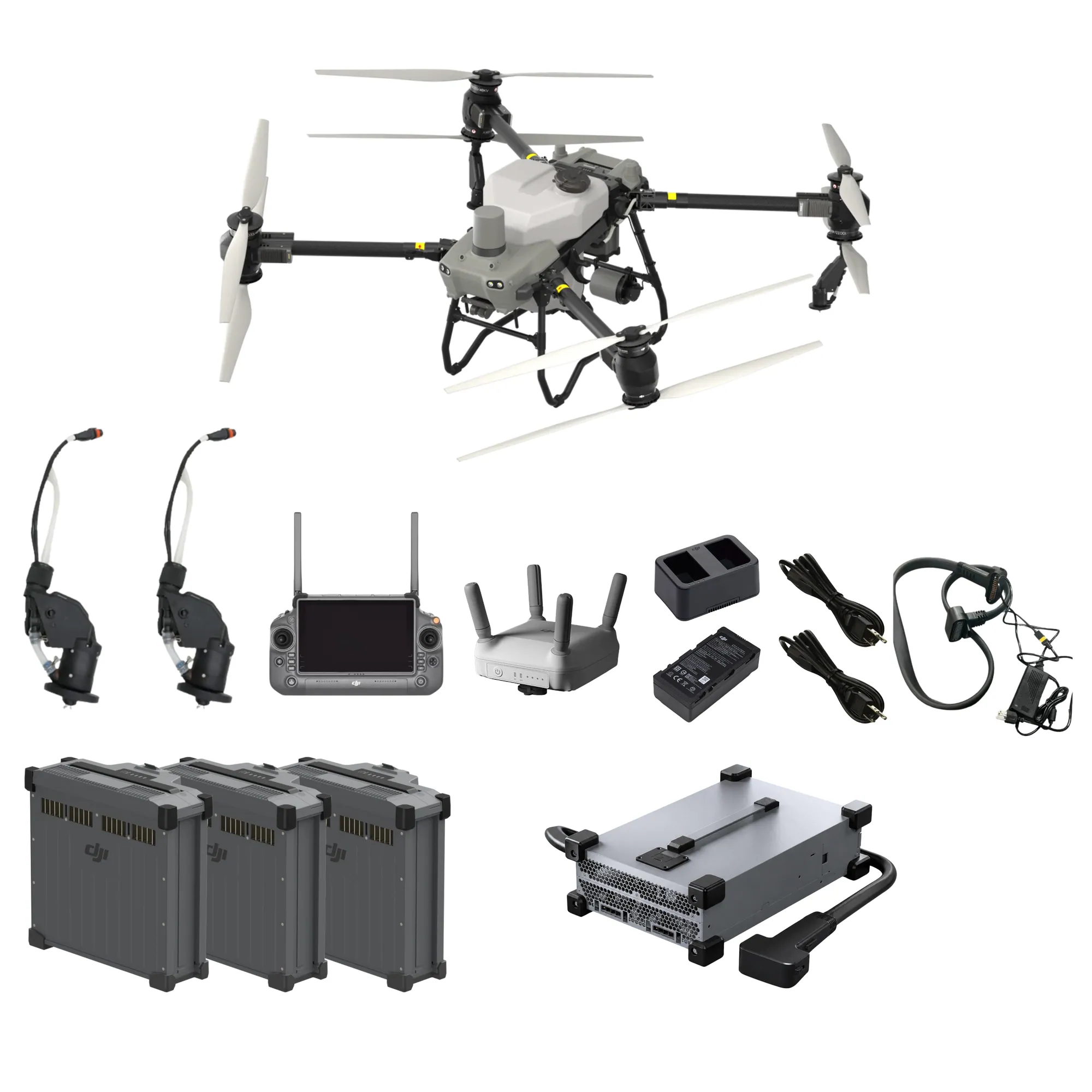
It depends on the package: aircraft only, a package with three batteries and a charger, or a pre-owned unit. Batteries, the spreading system, a generator and extra sprinklers are separate lines, and batteries are a large share of the total. We send a dated, itemized quote with current availability so you can compare packages line by line or attach it to a cost-share application. See financing and farm funding for ways to spread the cost.
The application rate decides it, not the tank. At a fungicide label minimum of about 45–50 L/ha, one 40 L tank covers roughly 0.8 ha (2 acres), so refills and battery swaps set the pace. Dry work goes further: at 10 kg/ha of clover seed, a 50 kg load covers about 5 ha. Time a full cycle on your own field to get a real daily number. The crop spraying guide walks through the maths.
Yes. The spray tank and the spreading system are interchangeable payloads on the same aircraft. The spreader is a separate kit, so check it is listed on your quote if you plan to seed cover crops or spread fertilizer.
Yes. With a battery and payload the T50 weighs more than 25 kg, so Transport Canada treats it as a medium drone. The pilot needs an Advanced pilot certificate, the drone must be registered, and the model needs a safety declaration that covers the operation. Applying a pesticide for hire also needs your province's aerial pesticide licence; some provinces exempt farmers spraying their own land. See drone spraying regulations in Canada and Agras pilot training.
No. A product can be applied by drone only if its label allows aerial application and doesn't say DO NOT apply by RPAS (the regulators' word for a drone), and only at or above the label's aerial water volume. Buying or configuring the drone does not authorize any product. Check the label for your crop and your provincial rules before you book a date.
Three or four DB1560 batteries, a C10000 charger on a 240 V supply or a D12000iE generator, a water source and mixing setup for liquids, a scale and catch trays for dry work, and a truck or trailer to move it all. The field kit page lists each piece.
It will, but slowly. DJI rates the C10000 at up to 9,000 W on a 220–240 V supply and 3,000 W on 100–120 V. To get the 9–12 minute recharge, run it from a 240 V circuit or the D12000iE generator.
Yes, certified pre-owned units that cost much less than new. Stock changes quickly and packages often mix used and new parts. Your quote lists which lines are new or used, battery cycle counts where known, and what support applies.
Yes. Demonstrations use clean water only, ideally timed for when your crop looks the way it will at application. A demo shows flight, refill and crew workflow, not how well any product works. Book a demo with your location and possible dates.
Choose the T50 if it can finish your work inside the window: it is lighter, runs on simpler power and stays well under the 150 kg line. Look at the Agras T100 when refills are clearly your bottleneck and you can handle its weight, its charging needs and, fully loaded, a Special Flight Operations Certificate.
The Agras T100 is DJI's largest agricultural drone, built for operators losing time to refills: a 100 L spray tank, a 150 L spreading system with four auger sizes, and an optional lifting system. In Canada its weight is the first question. Fully loaded it can pass the 150 kg line that requires a Special Flight Operations Certificate, so we size the payload, power and crew with you before quoting.
Learn more →Batteries, power and accessories for Agras dronesBatteries and charging decide how much an Agras drone gets done. A T50 crew usually rotates three DB1560 batteries through a C10000 charger or a D12000iE generator; a T100 runs DB2160 batteries on a C12000 or D14000iE. We size the kit to your site power, daily acres and temperature, and add RTK, relays, spare propellers and nozzles so the aircraft isn't waiting on parts.
Learn more →Crop scouting and mapping droneThe Mavic 3M is a compact mapping drone with a 20 MP RGB camera, four 5 MP multispectral bands (green, red, red edge and near infrared) and a sunlight sensor for consistent readings. Growers, agronomists and researchers use it for NDVI and NDRE maps, to find problem areas and to build prescription maps for Agras application. It weighs under 1 kg and flies up to 43 minutes.
Learn more →Demonstrations use clean water and show the flight, refill and crew workflow. Tell us your location and dates.