Potato late blight: spraying fungicide by drone on wet rows
A spray drone can apply potato fungicide when rows are too wet for a sprayer, if the label allows aerial use at its aerial water volume. It fills gaps in a late blight program; it doesn't replace your sprayer or your province's spray-interval advice.
Updated
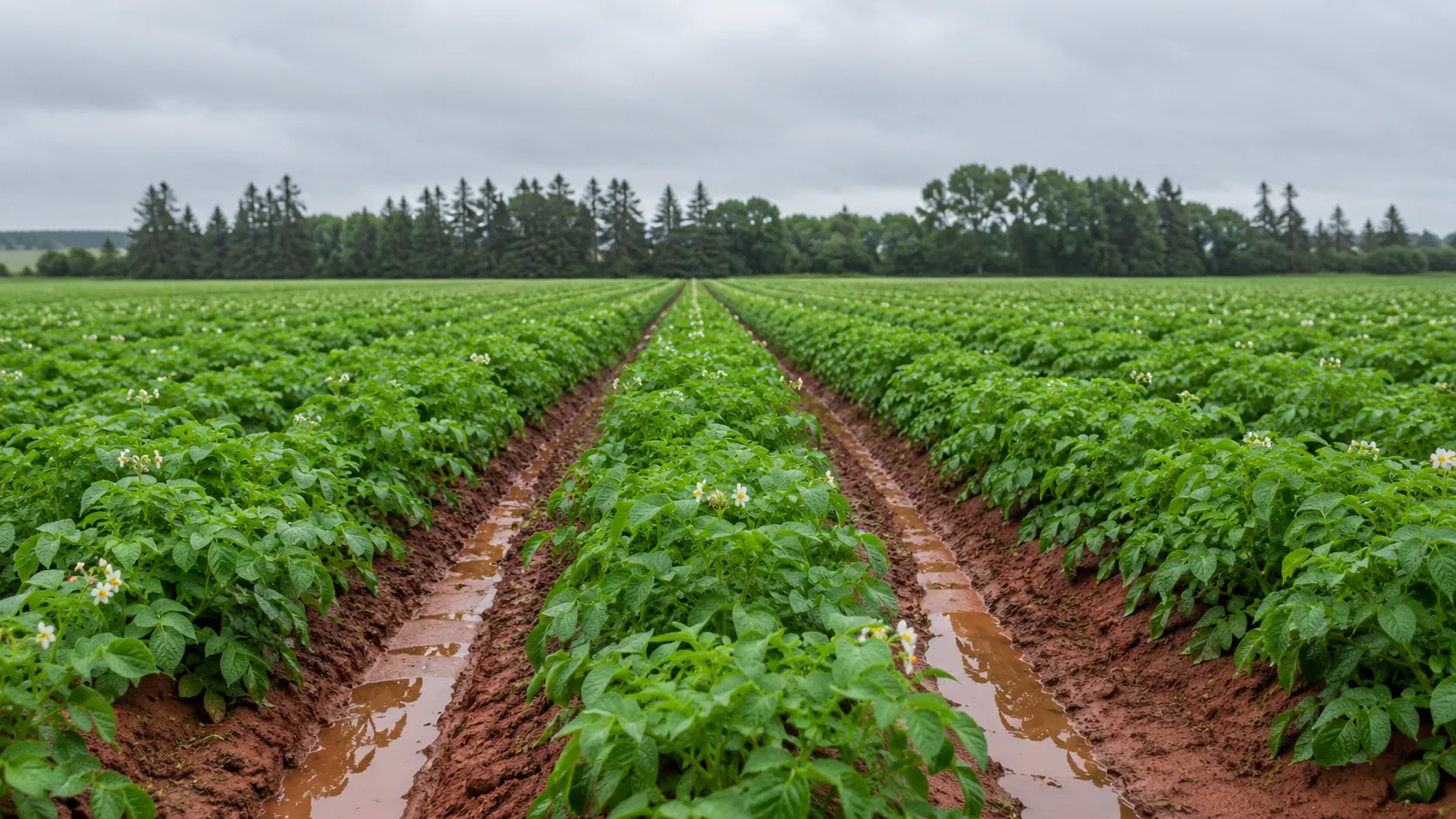
Blight weather is sprayer-stopping weather
Late blight (Phytophthora infestans) spreads fastest in cool, wet weather, the same weather that leaves potato rows too soft for a sprayer. Growers keep a protectant on every 7 to 10 days and tighten the interval after heavy rain, so a missed pass is a real risk. Wheel tracks in wet fields also damage hills and compact soil.
Keep the fungicide on when the field is wet
A drone such as the Agras T50 applies a labelled fungicide from the air without entering the field: on wet spells after heavy rain, on headlands and low corners where the sprayer gets stuck, and on small or irregular fields. It counts as aerial application, so the product must allow it and the water volume can't go below the label's aerial minimum.
A gap-filler, not the whole program
Expect timely coverage on the acres you couldn't reach, not a replacement for your sprayer. At an aerial rate of about 50 L/ha a T50 tank covers roughly 0.8 ha, so drones suit wet patches, edges and small fields. Check coverage in your own canopy with water-sensitive paper before relying on it; see how to set up a fungicide pass.
What the provinces advise on late blight
| Province | Spray program | Forecasting | Sanitation |
|---|---|---|---|
| Manitoba | Contact fungicides every 7–10 days, systemic every 10–14; use the shorter label interval when risk is high | Regional risk maps (disease severity values) and spore traps; in 2026 spores were caught at 10 of 14 sites by mid-July | Manage culls and volunteers |
| New Brunswick | A preventive program is always recommended; in high-risk years start at 80% emergence; shorten the interval after 20–25 mm of rain in 24 hours | Severity values published by parish | Bury cull piles before emergence; rogue or spray volunteers; report suspected cases |
| Prince Edward Island | Protectant program; a forecast-based schedule worked as well as a fixed 7-day one in an AAFC project | Daily blight forecasts to growers (Plant-Plus model) | From June 15 to August 31 the law bars uncovered cull potatoes and volunteers |
| Ontario | Once blight is found in cool, damp weather, OMAFA has advised spraying every 3–4 days | Spore traps used in tomatoes | Destroy cull piles; report suspected cases to the OMAFA potato specialist |
Sources: Manitoba Agriculture, the New Brunswick Potato Development Centre, Agriculture and Agri-Food Canada, OMAFA and PEI's Potatoes Regulations.
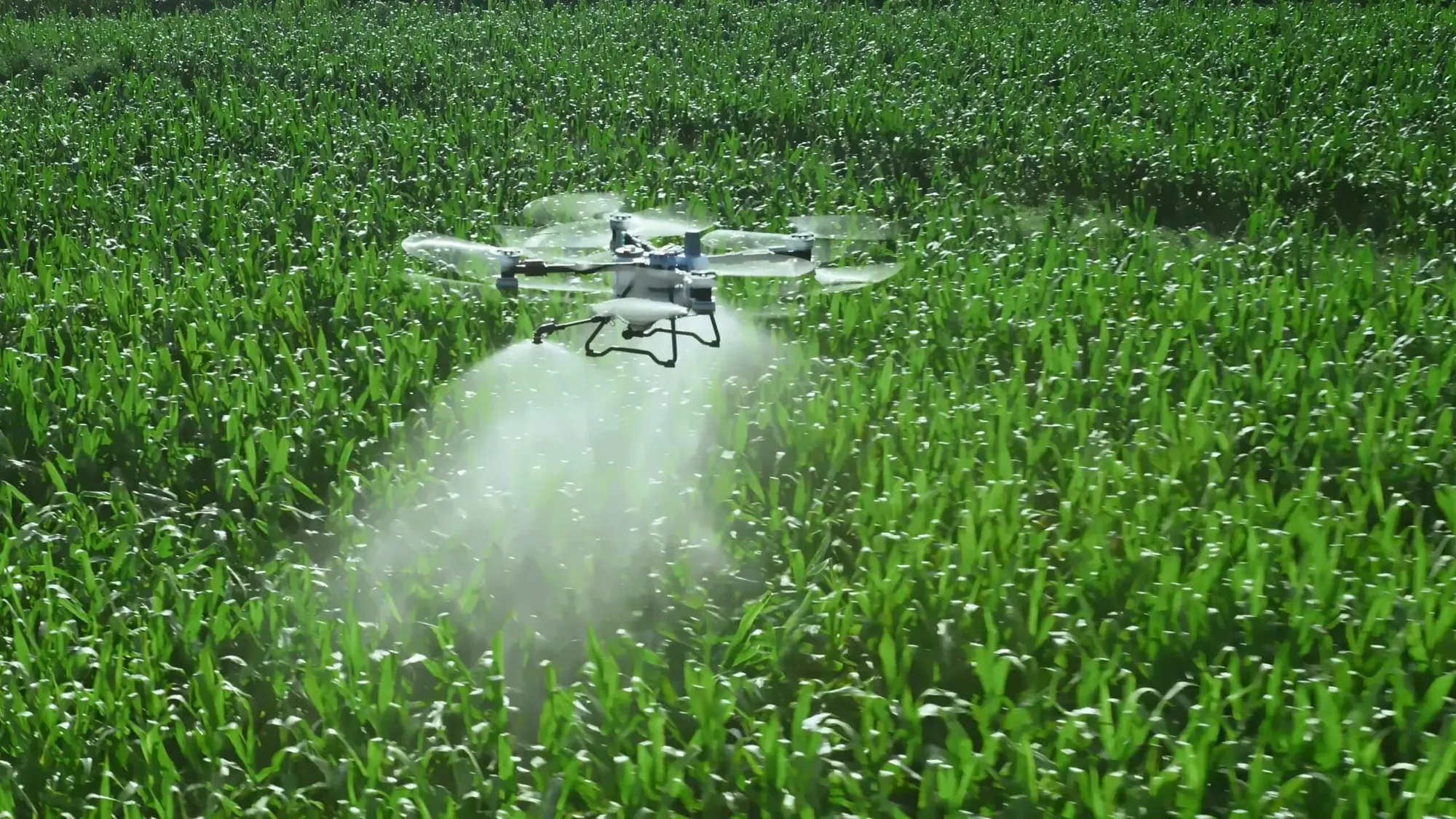
Spraying potato fungicide by air
Most potato fungicides are registered for aerial application. New Brunswick's late blight factsheet gives a typical aerial minimum of 5 gallons per acre by air (roughly 47–56 L/ha, depending on US or imperial gallons), against at least 233 L/ha (21–25 gallons per acre) by ground. A drone is an aerial application, so:
- The label must allow aerial application in potatoes and must not say DO NOT apply by RPAS (the regulators' word for a drone).
- The water volume can't go below the aerial minimum on the label; don't cut it to stretch a tank.
- The pilot needs a Transport Canada Advanced certificate, and the applicator your province's aerial licence. See drone spraying regulations.
Sprayers101's Canadian spray drone label search lists candidate products by crop; confirm each one on the label itself.
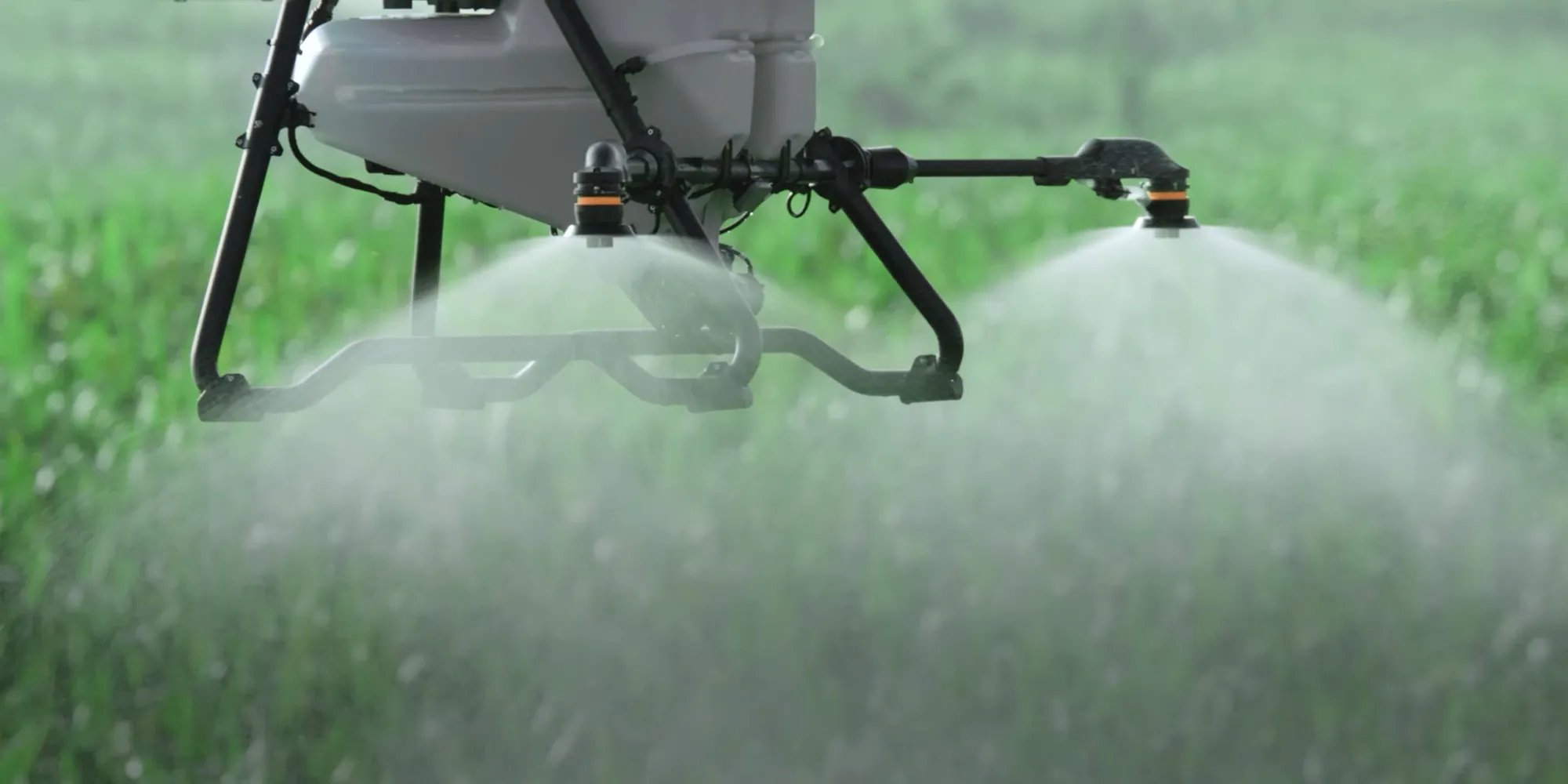
Where a drone fits in a blight program
- After heavy rain, when the interval should shorten but the field can't carry a sprayer.
- Headlands, wet corners and low spots where the sprayer gets stuck or leaves ruts.
- Small and irregular fields that take as long to set up for as a big one.
- Edge strips, beyond blight: Colorado potato beetle moves in from field edges; see the PEI demonstration below.
For a whole farm's protectant program, ground sprayers and airplanes still carry the acres.
A Canadian drone demonstration in potatoes
A July 2026 demonstration at Huntley, PEI tested drone perimeter spraying for Colorado potato beetle. An Agras T25 applied an insecticide with an aerial use at 5 gal/ac to field edges, about 15% of the field. Three days after application, beetle numbers were down 64% in the drone strips and 78% in the ground-sprayed area; by day six the two were about the same. It was a demonstration, not a blight trial, but it shows how drones can work alongside ground sprayers in potatoes.
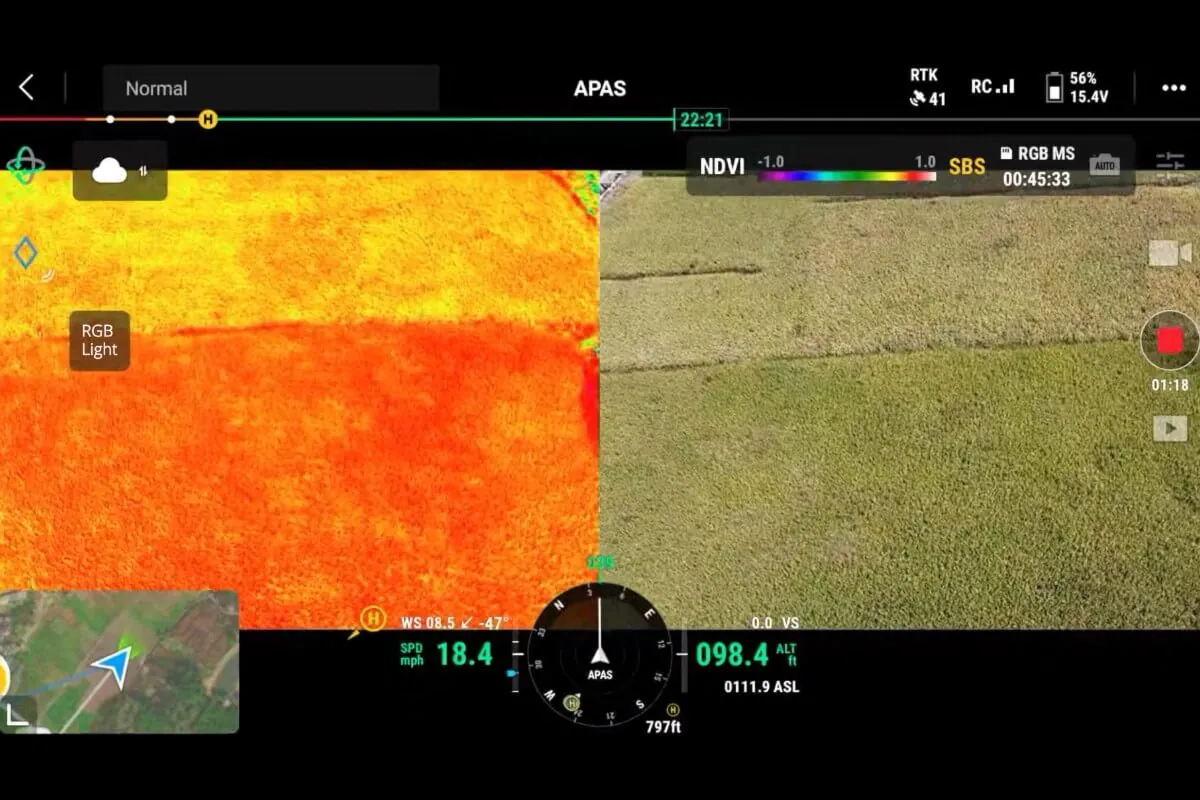
Map first
A Mavic 3 Multispectral can map canopy differences across a field so scouts check the right spots. A map can't diagnose late blight: confirm symptoms on the ground. See crop scouting and mapping.
Want a drone to cover your wet acres this season? Ask us to fly the job, or book a demo.
Common questions
Manitoba advises every 7–10 days for contact fungicides and 10–14 days for systemic ones, using the shorter label interval when risk is high. New Brunswick advises shortening the interval after 20–25 mm of rain in 24 hours.
Yes, if the label allows aerial application in potatoes and doesn't exclude drones, at no less than the aerial water volume, with a licensed pilot and applicator.
Check the label. New Brunswick's late blight factsheet says most fungicides are registered at a minimum of 5 gallons per acre by air. Don't go below the aerial minimum on the label.
New Brunswick, Manitoba and Ontario ask growers to report suspected cases. In Ontario, contact the OMAFA potato specialist.
Bury or destroy them before the crop emerges and control volunteers. On PEI, the Potatoes Regulations bar uncovered cull potatoes and volunteers from June 15 to August 31.
It depends on the water volume and your refill cycle. At about 50 L/ha a T50 tank covers roughly 0.8 ha, so drones suit wet patches, edges and small fields rather than a whole farm's program.
More Applications
Spray drones for Canadian field crops
A spray drone makes sense when wet ground, tall crops or a short fungicide window keep your sprayer out. At a typical 50 L/ha label rate one T50 tank covers about 0.8 ha (2 acres), so it suits patches and timing gaps, not whole farms.
Multispectral drones for crop scouting and mapping
A multispectral drone maps crop health with light bands the eye can't see, so you can find where a field differs, compare dates and build prescription maps. The map shows where to look; a ground check tells you why.
Crop dusting in Canada: airplanes, drones and what has changed
Crop dusting still happens: aerial applicators fly airplanes over Canadian farms every season, mostly for fungicide and insecticide. A spray drone can take over small, wet or obstructed fields; big open acres in a short window still favour an airplane.
Want to see a drone do this job on your farm?
Tell us the crop, the job and your timing. Demonstrations use clean water and show the flight, refill and crew workflow.
Book a demo