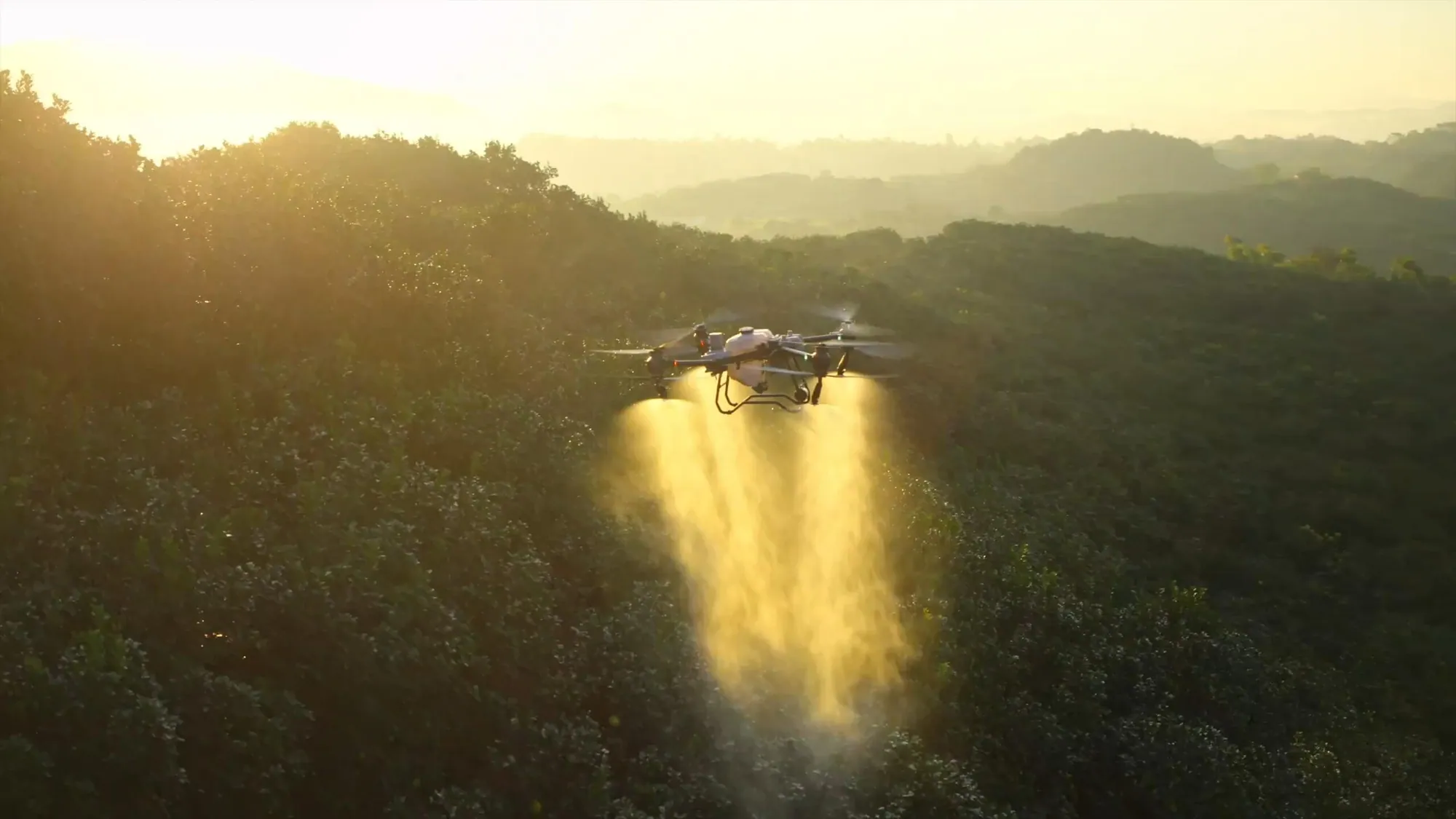
Agricultural drones
for Canadian farms
DJI Agras spray and spreading drones and Mavic 3 Multispectral mapping, set up for your fields, your power and Canadian rules. Based in Toronto, delivering across Canada.
What farmers use agricultural drones for
Start with the job. Each one links to a guide with real per-load numbers and the rules that apply.
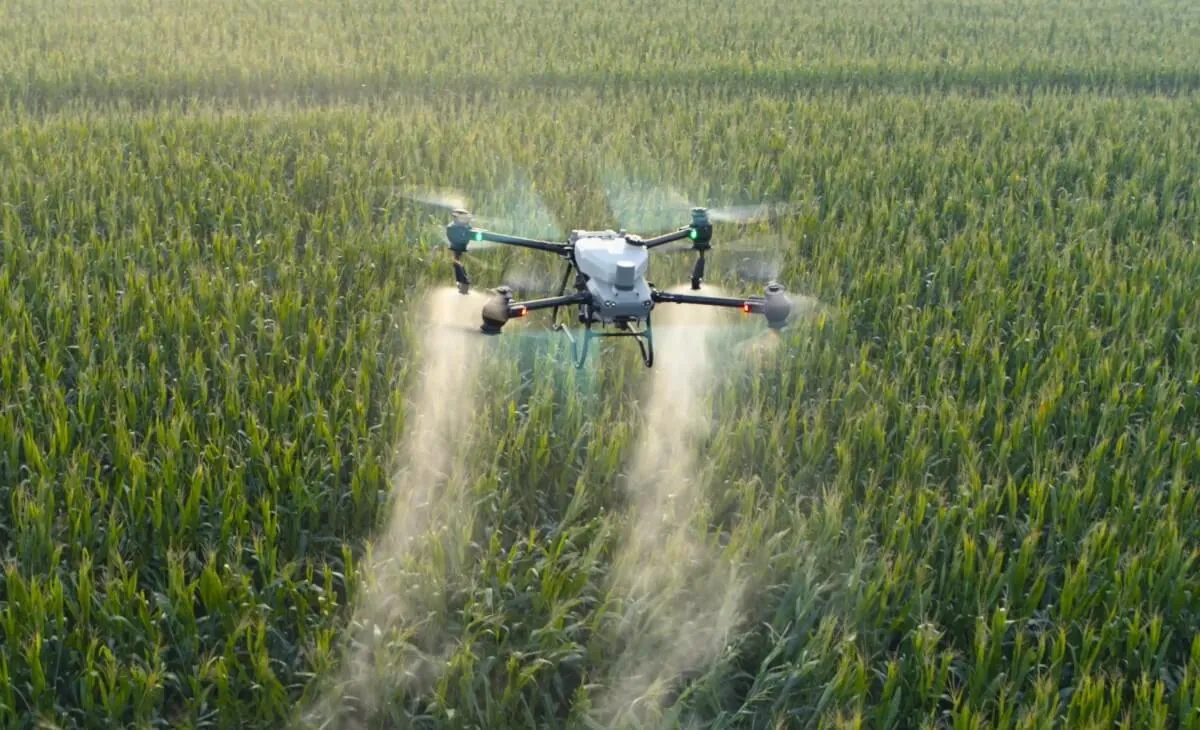
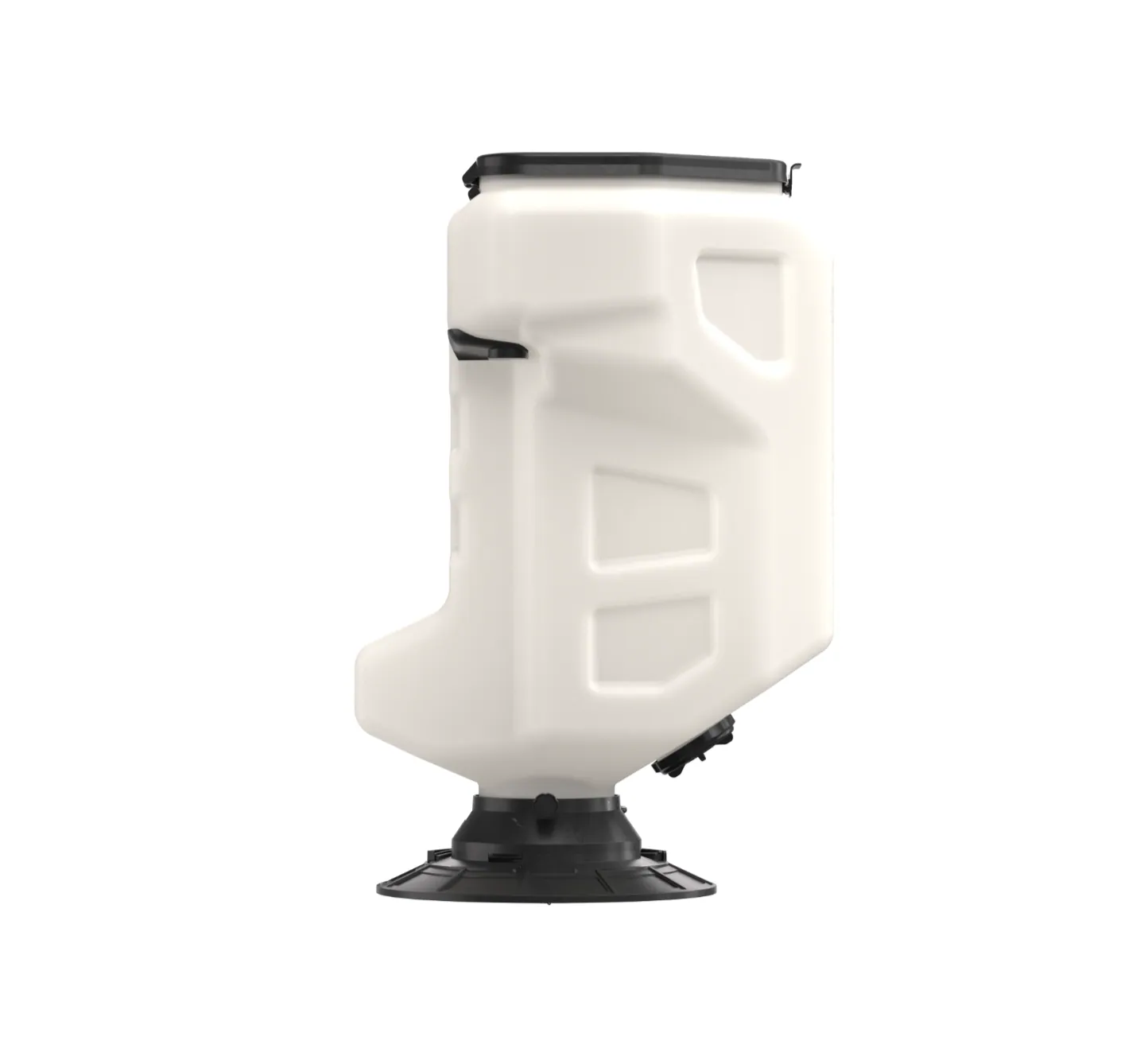
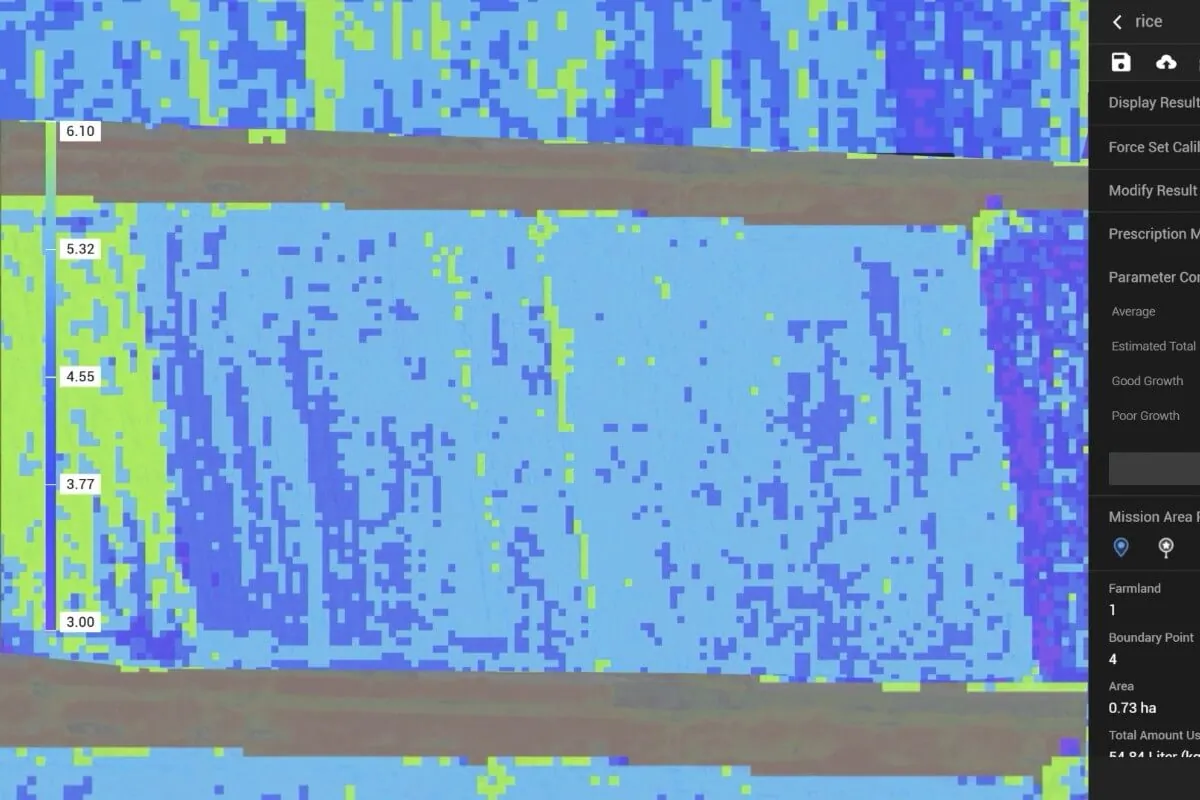
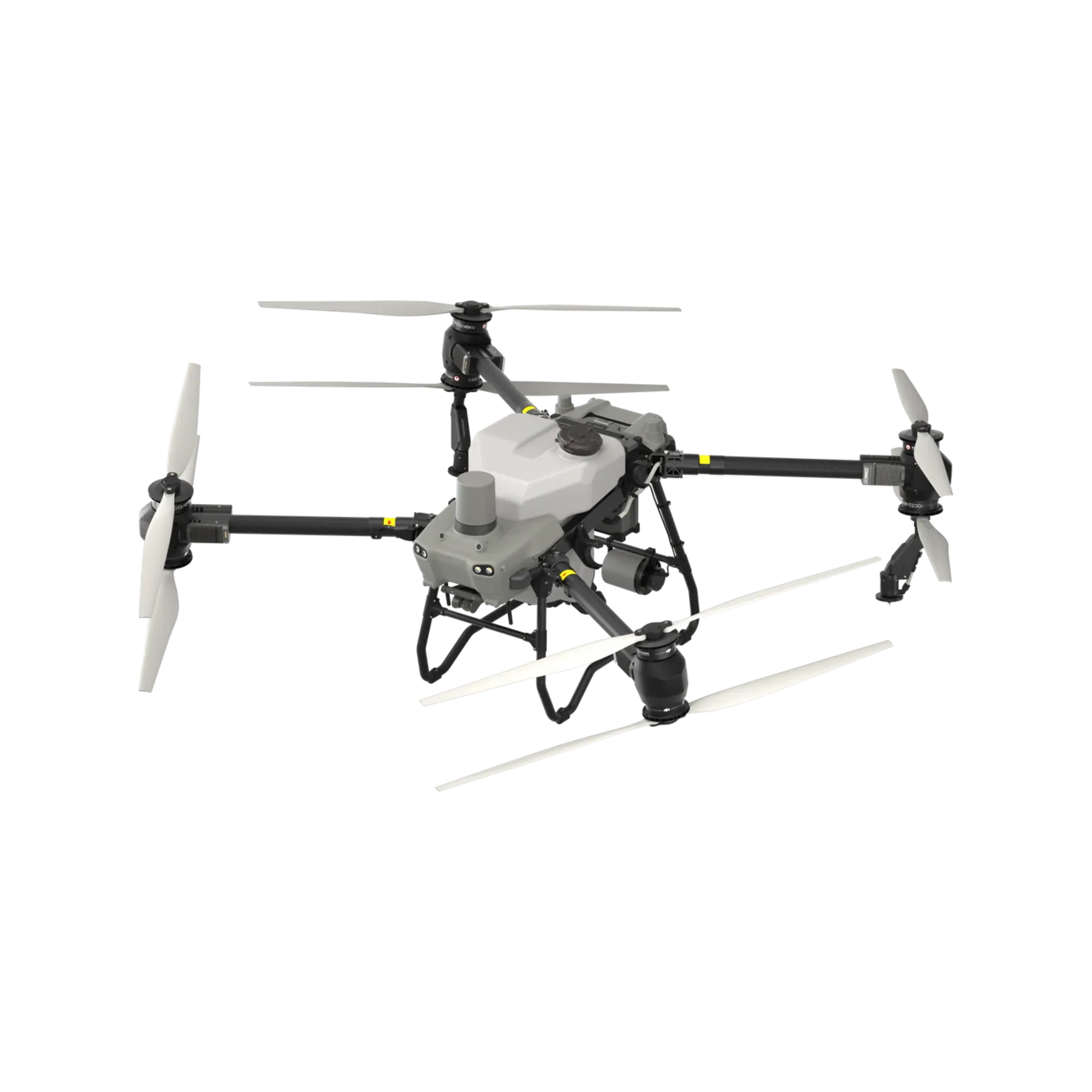
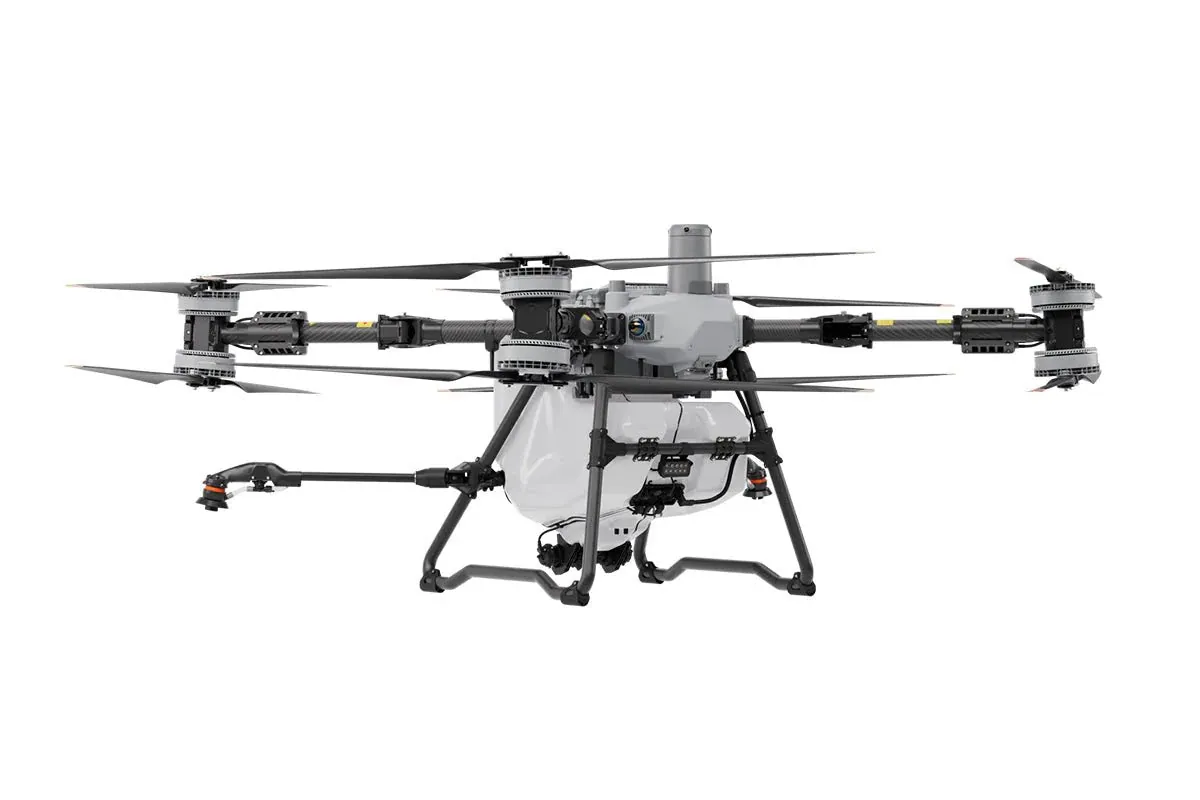
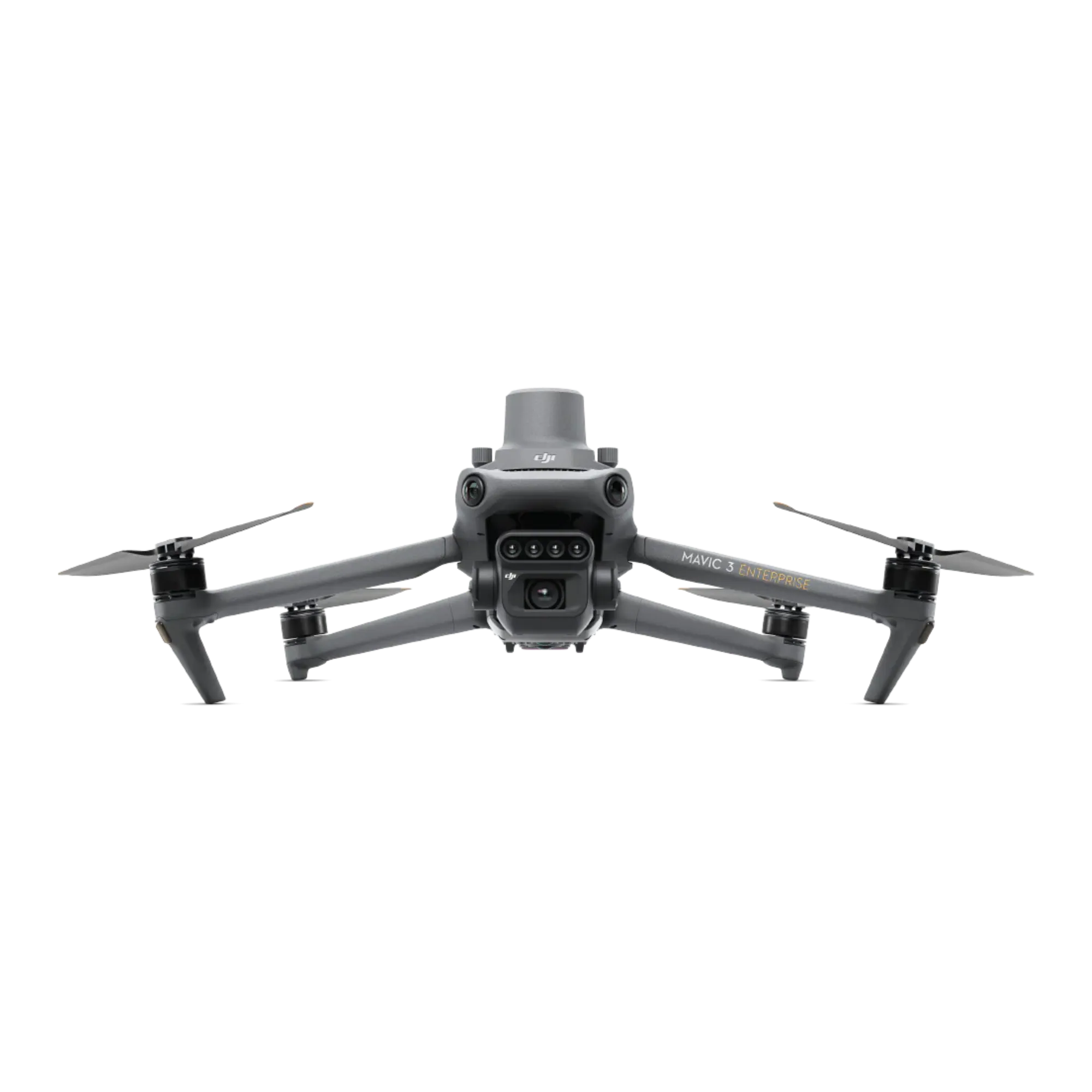
DJI agricultural drones we supply
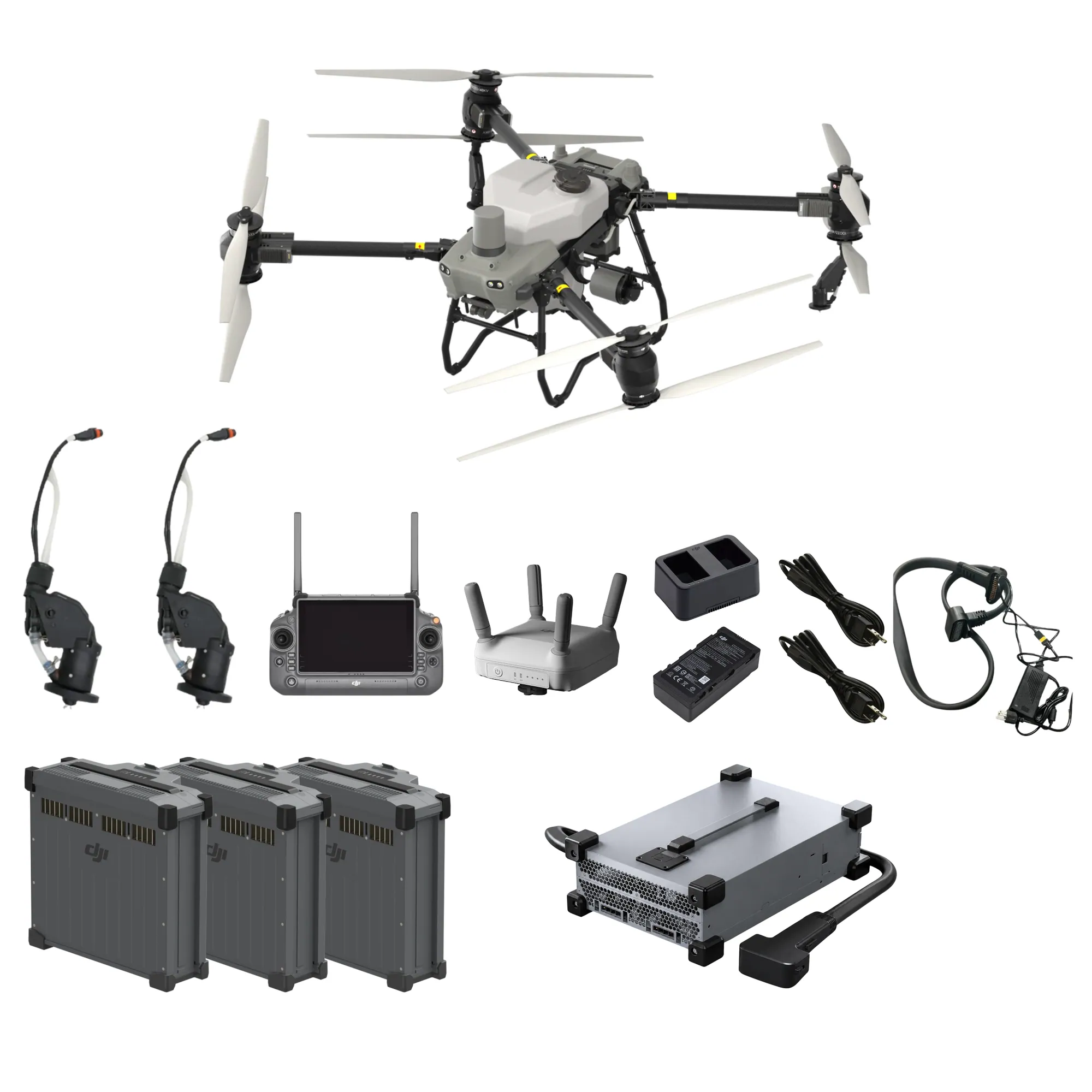
Every package is quoted line by line: aircraft, batteries, charging and payload systems.
Spray drone or ground sprayer?
A drone doesn't replace your sprayer. It covers the passes your sprayer can't make in time.
Spray drone
Agricultural drones in Canada: what to know before you buy
Agricultural drones do three jobs on Canadian farms: they spray labelled products, they spread seed and granular fertilizer, and they map crops. The DJI Agras T50 and Agras T100 handle spraying and spreading; the DJI Mavic 3 Multispectral handles mapping.
What a drone can do that your other equipment can't
- Get onto wet fields and over tall crops without wheel tracks or compaction.
- Broadcast cover crops into a standing crop before harvest, or clover into thin pasture.
- Treat patches, edges and small or irregular fields without hiring a crop duster.
- Map a whole field so scouts walk to the spots that differ.
What it can't do
- Match a ground sprayer's daily capacity: at a 50 L/ha (about 5.3 US gal/ac) label rate one T50 tank covers about 0.8 ha (2 acres).
- Apply a product whose label has no aerial use, or says DO NOT apply by RPAS (the regulators' word for a drone).
- Diagnose a crop problem from a map without a ground check.
Rules in one paragraph
A loaded Agras is a medium drone (25–150 kg), so the pilot needs a Transport Canada Advanced certificate and the model needs a safety declaration for the operation; a fully loaded T100 can pass 150 kg and then needs a Special Flight Operations Certificate (SFOC). Spraying a pesticide also needs your province's aerial licence and a label that allows aerial application. The regulations guide covers each step, and drone licence training explains the certificate.
How buying works
- Demo. We fly with clean water on your farm, ideally when the crop looks the way it will at application.
- Quote. An itemized, dated quote you can compare or attach to a cost-share application. See financing and funding.
- Delivery and training. Inspection, setup, calibration and first flights with your crew. See Agras training.
- Support. Parts, repairs and pre-season checks. See repair and support.
Guides by buyer: farms, custom applicators and research teams. Universities and government research teams can order through institutional purchasing.
Frequently asked questions
What is the best agricultural drone for a Canadian farm?
Start with the job. For spraying and spreading, the Agras T50 suits most farms: it stays well under the 150 kg line and runs on simpler power. The Agras T100 suits operators whose bottleneck is refills. For mapping, the Mavic 3 Multispectral.
How much does an agricultural drone cost?
It depends on the package: aircraft, batteries, charger or generator and spray or spreading system are separate lines, and batteries are a large share of the total. We send an itemized quote with current availability. See financing options.
Are agricultural drones worth it?
They pay off when they save a pass you would otherwise miss or hire out: a fungicide window on wet ground, cover crops seeded before harvest, or patches a sprayer can't reach. Compare against what you pay now for custom or aerial application. Not ready to buy? Hire us to fly it.
Do I need a licence to fly an agricultural drone in Canada?
Yes. A spray drone needs a Transport Canada Advanced pilot certificate, a registered and declared drone, and, for pesticides, your province's aerial licence. A mapping drone like the Mavic 3M needs a Basic or Advanced certificate. See drone licence training.
Can I see a drone fly on my farm before I buy?
Yes. Demonstrations use clean water and show the flight, refill and crew workflow. Share your location and dates and we will check weather and airspace first. Book a demo, or see which farm shows have live drone demos.
Do you deliver outside Ontario?
Yes, across Canada. Large orders can ship by freight in several packages, so tell us whether your site can unload heavy items and any seasonal shutdown dates.
Book a demo or ask for a quote
Tell us the crop, the job and your timing. A person replies with next steps.
Tell us about your farm and the job
Your name and email are enough to start. A person from our Toronto team replies.