Drone spraying, seeding and mapping on Canadian farms
Drones spray, seed, spread fertilizer and map fields. Pick your job below to see what one load covers, when to fly and which rules apply.
 Spraying
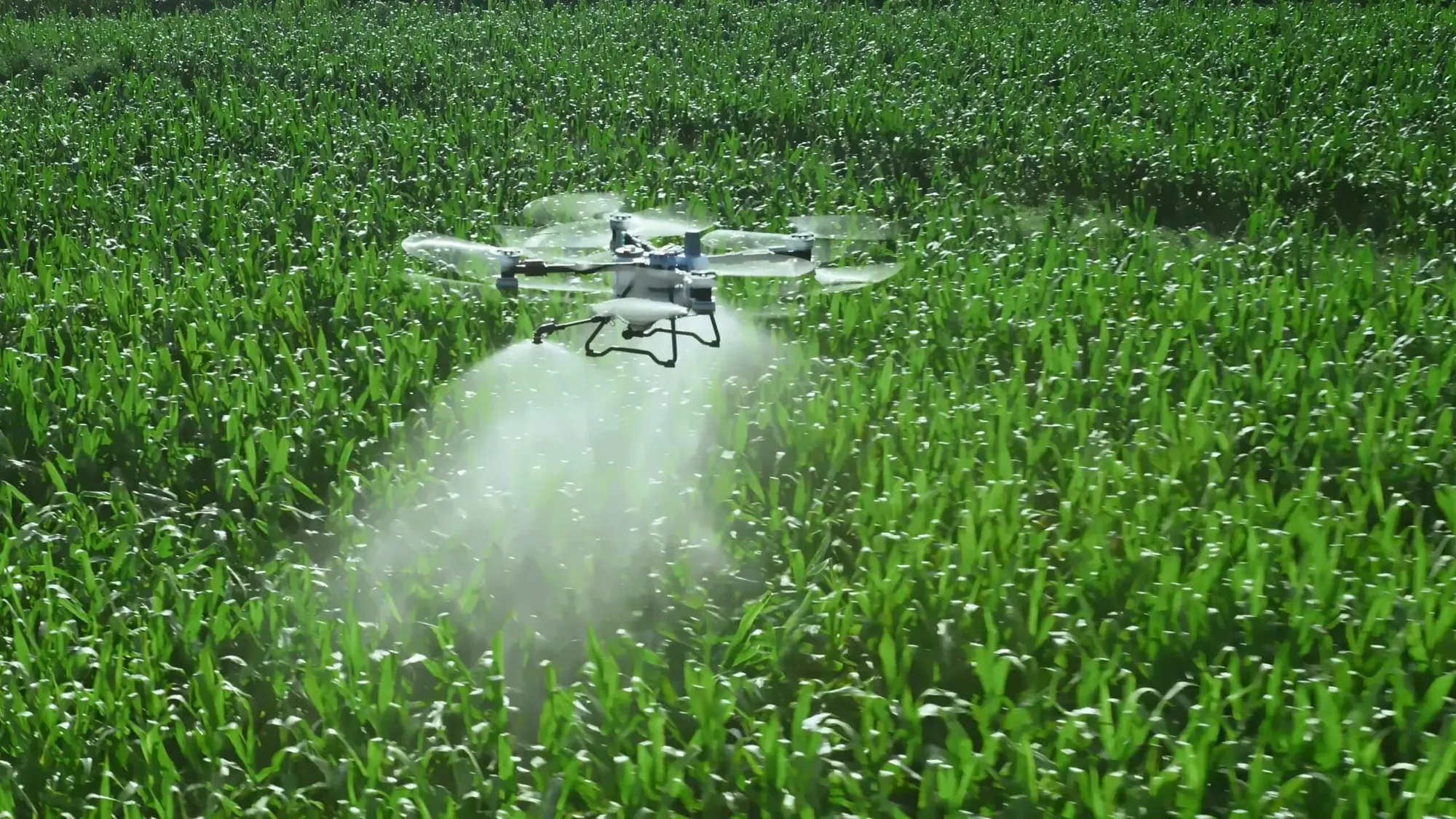
Spray drones for Canadian field crops
A spray drone makes sense when wet ground, tall crops or a short fungicide window keep your sprayer out. At a typical 50 L/ha label rate one T50 tank covers about 0.8 ha (2 acres), so it suits patches and timing gaps, not whole farms.
Read more →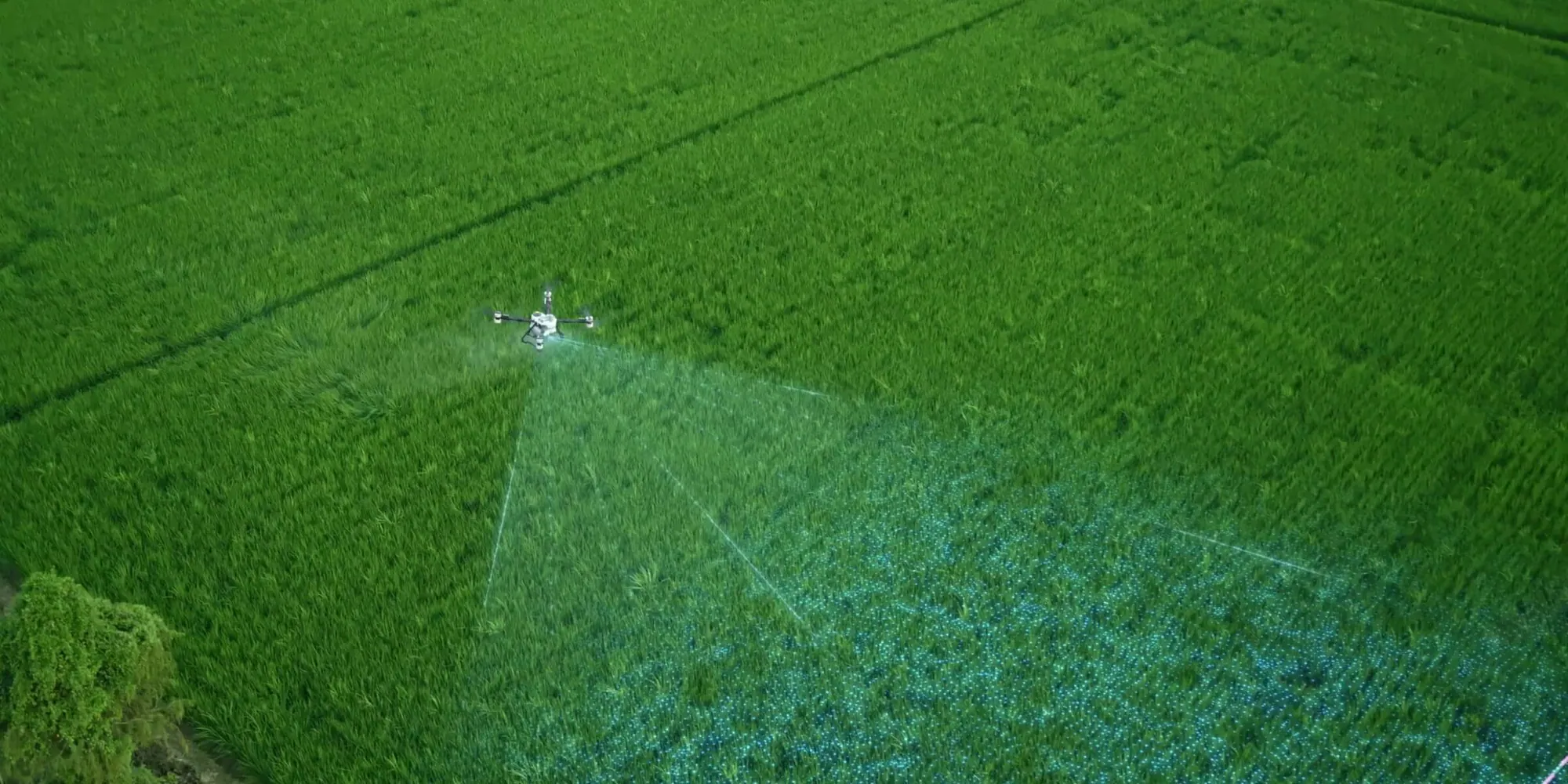 Spraying
Crop dusting in Canada: airplanes, drones and what has changed
Crop dusting still happens: aerial applicators fly airplanes over Canadian farms every season, mostly for fungicide and insecticide. A spray drone can take over small, wet or obstructed fields; big open acres in a short window still favour an airplane.
Read more →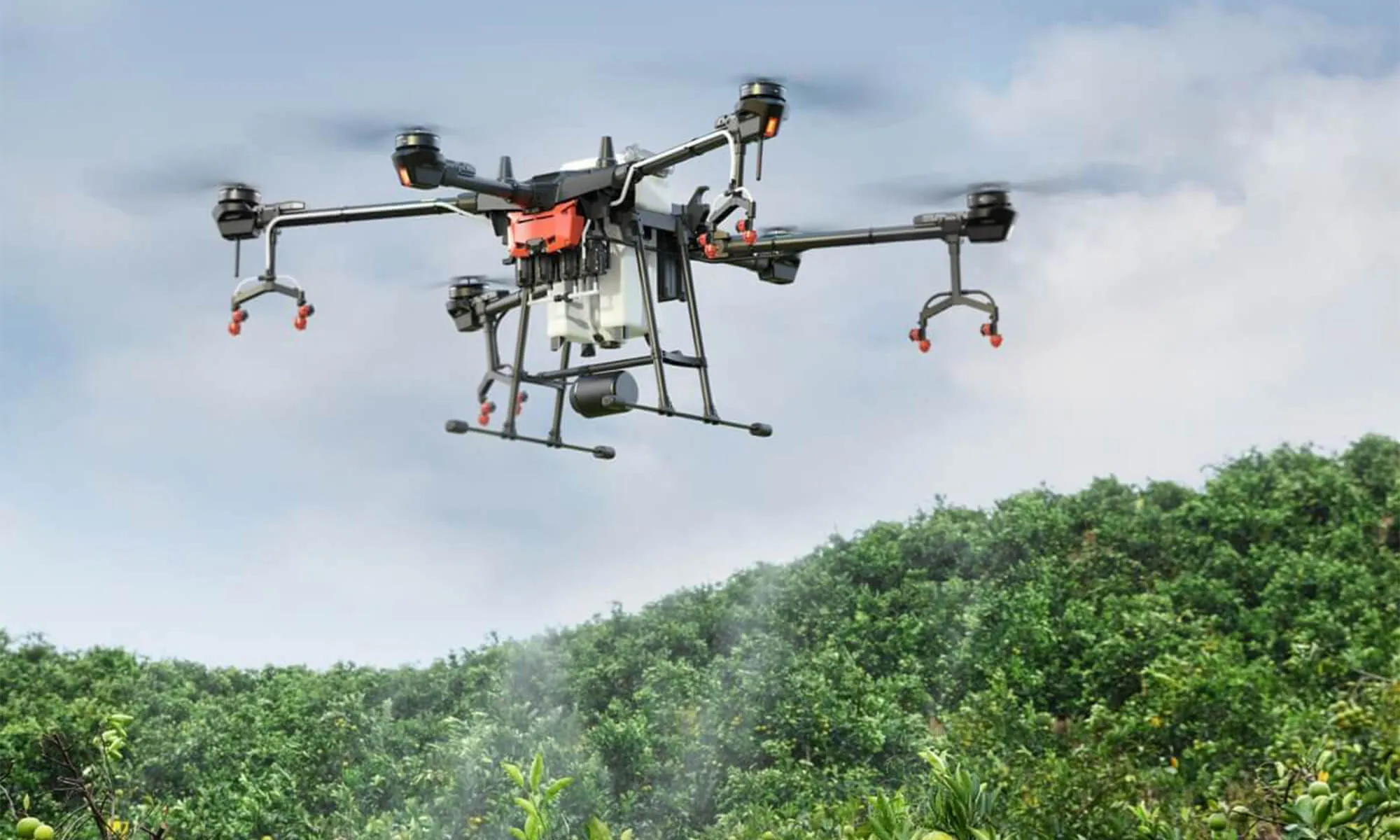 Spraying
Orchard and vineyard spraying with drones
Spray drones can treat orchards, vineyards and berry blocks on slopes and wet rows an airblast sprayer can't reach, but they spray from above at a lower water volume, so canopy coverage differs. Check the label allows aerial use and test coverage first.
Read more →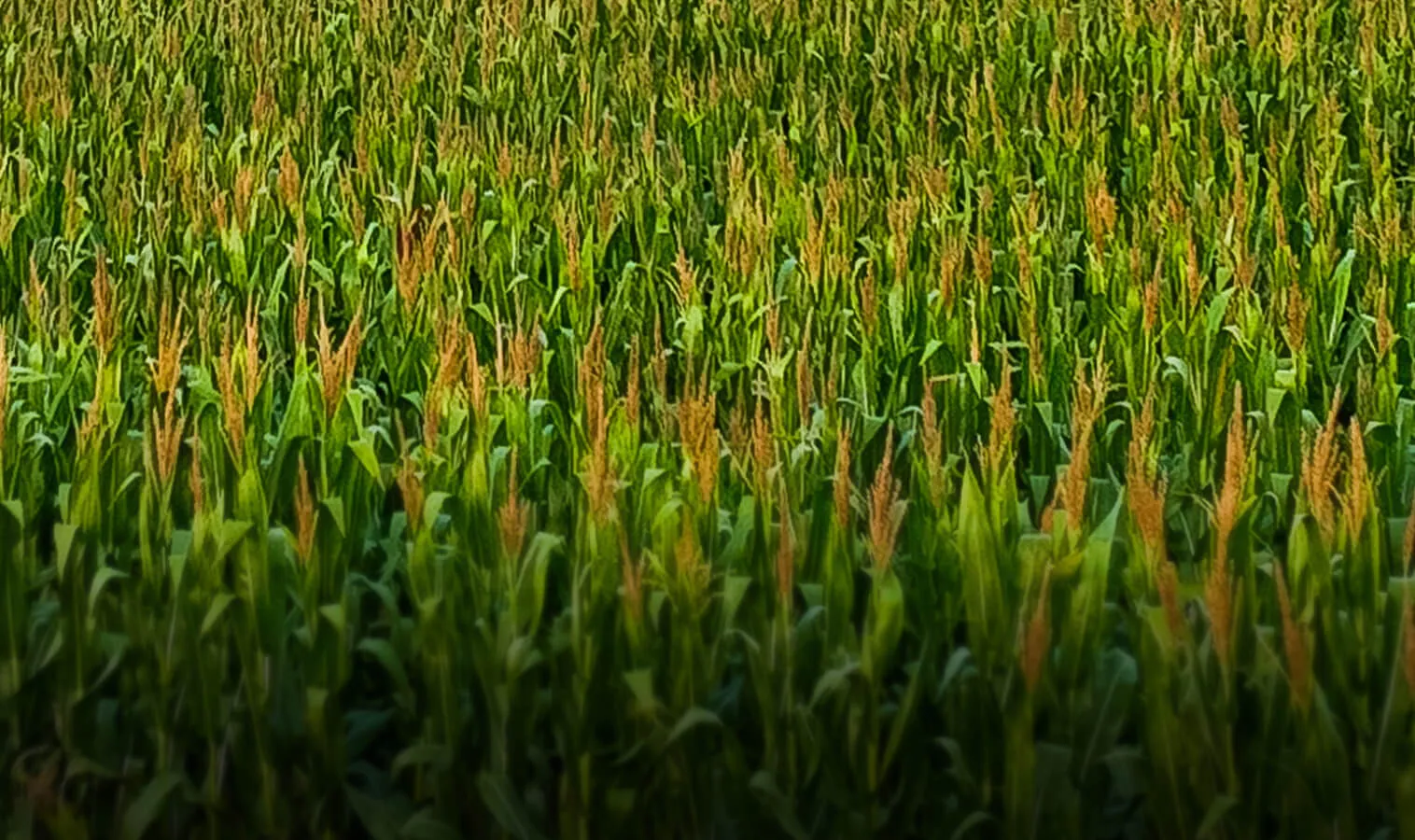 Seeding and spreading
Cover crop seeding with drones
A drone with a spreading system can broadcast clover, cereal rye or ryegrass into standing corn, soybeans or winter wheat before harvest. Establishment depends on moisture; one T50 load covers about 5 ha (12 acres) of clover at 10 kg/ha.
Read more →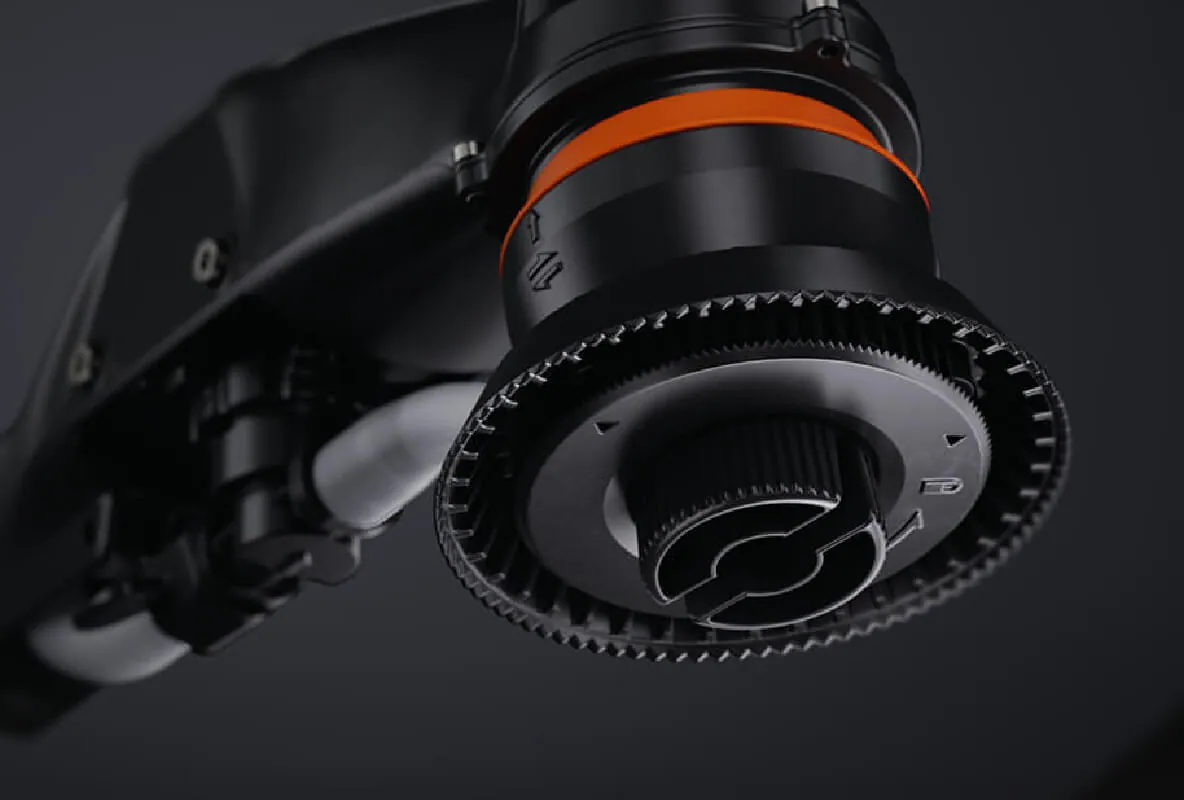 Seeding and spreading
Fertilizer drones: spreading granular fertilizer by drone
A fertilizer drone spreads granular fertilizer on wet, soft or irregular fields and patches a ground spreader can't reach. At 100 kg/ha one T50 load covers about 0.5 ha (1.2 acres), so it is a precision tool, not a replacement for bulk spreading.
Read more →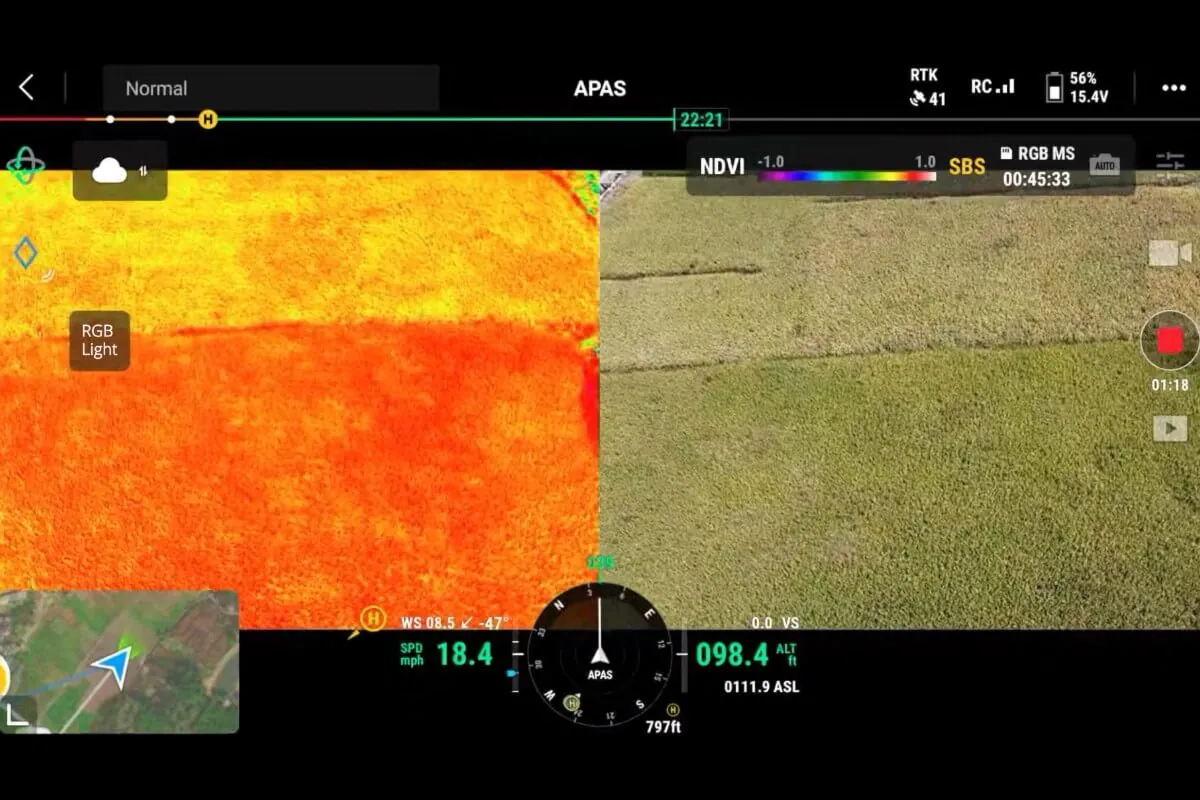 Mapping
Multispectral drones for crop scouting and mapping
A multispectral drone maps crop health with light bands the eye can't see, so you can find where a field differs, compare dates and build prescription maps. The map shows where to look; a ground check tells you why.
Read more →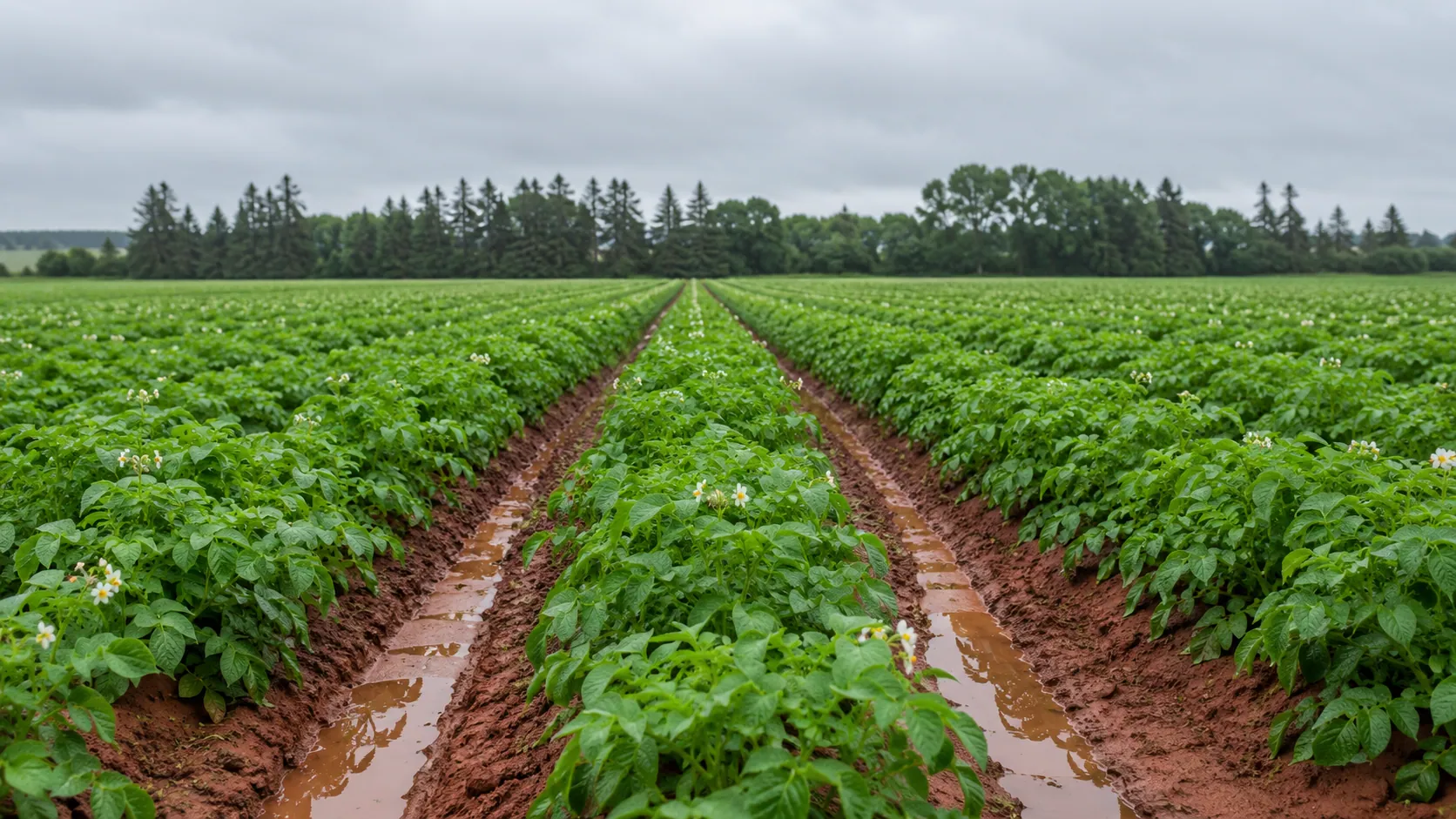 Spraying
Potato late blight: spraying fungicide by drone on wet rows
A spray drone can apply potato fungicide when rows are too wet for a sprayer, if the label allows aerial use at its aerial water volume. It fills gaps in a late blight program; it doesn't replace your sprayer or your province's spray-interval advice.
Read more →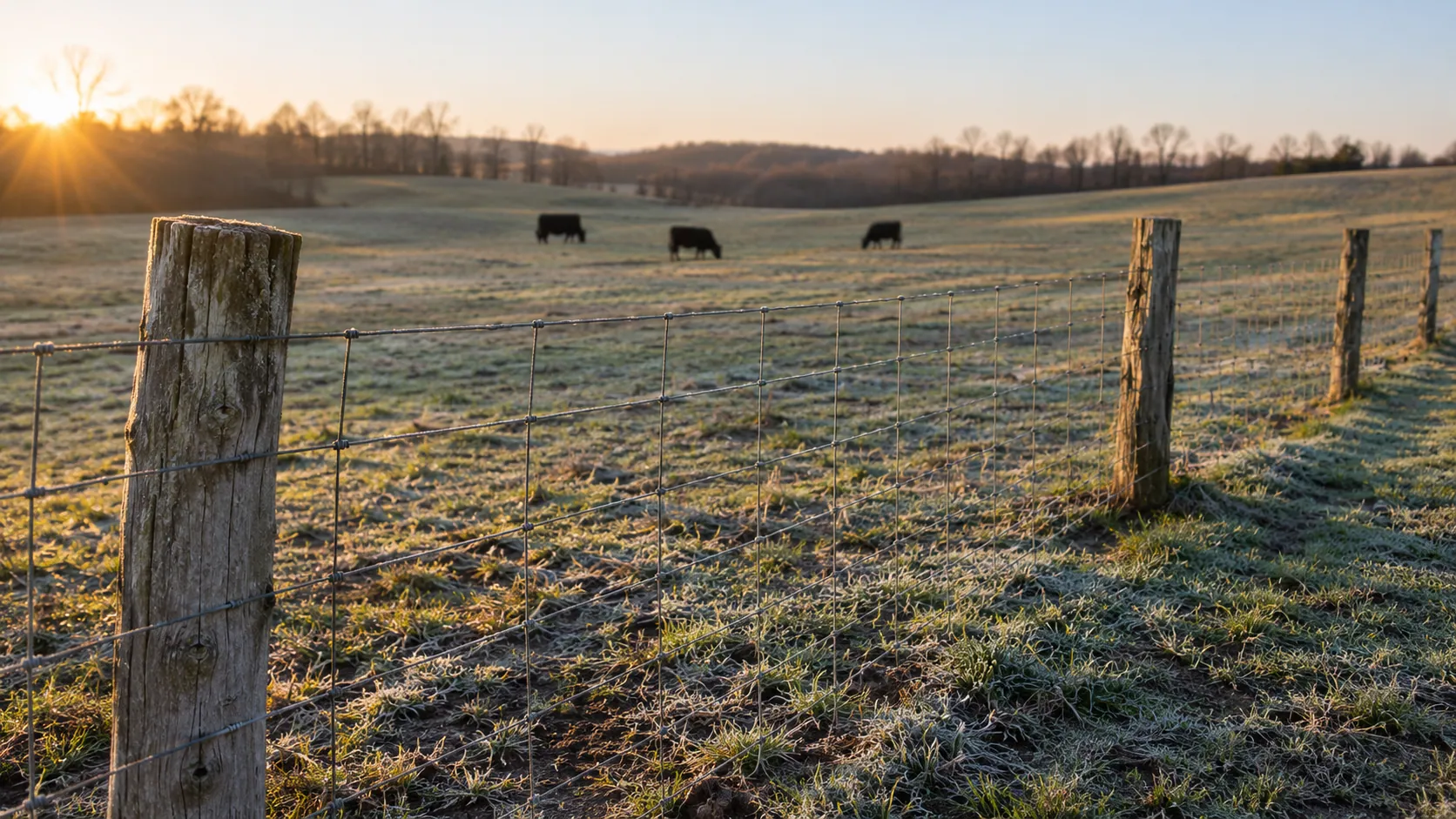 Seeding and spreading
Pasture seeding by drone: frost seeding clover into thin pasture
Frost seeding broadcasts clover onto thin pasture in March and April and lets freeze and thaw work the seed into the soil. A drone does it when the ground is too soft or steep for a spinner; one 50 kg T50 load covers about 12 acres at 9 lb per acre.
Read more →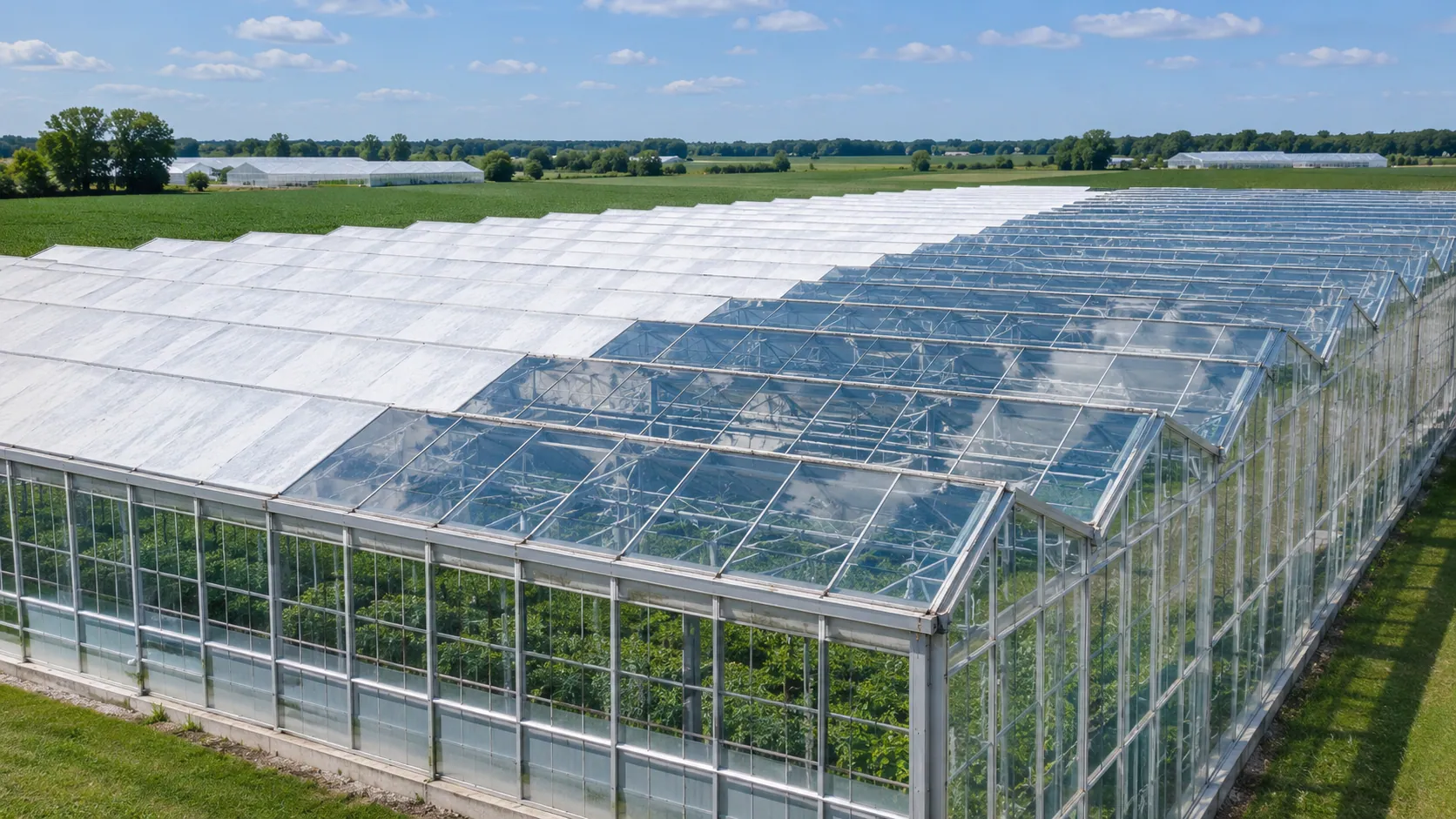 Spraying
Greenhouse shading by drone: putting on and washing off roof coatings
A spray drone can put shading compound on greenhouse glass roofs in spring and spray the remover in late summer, with no one on the roof. It leaves droplets rather than an even film, and must stay 500 ft from people not on the job.
Read more →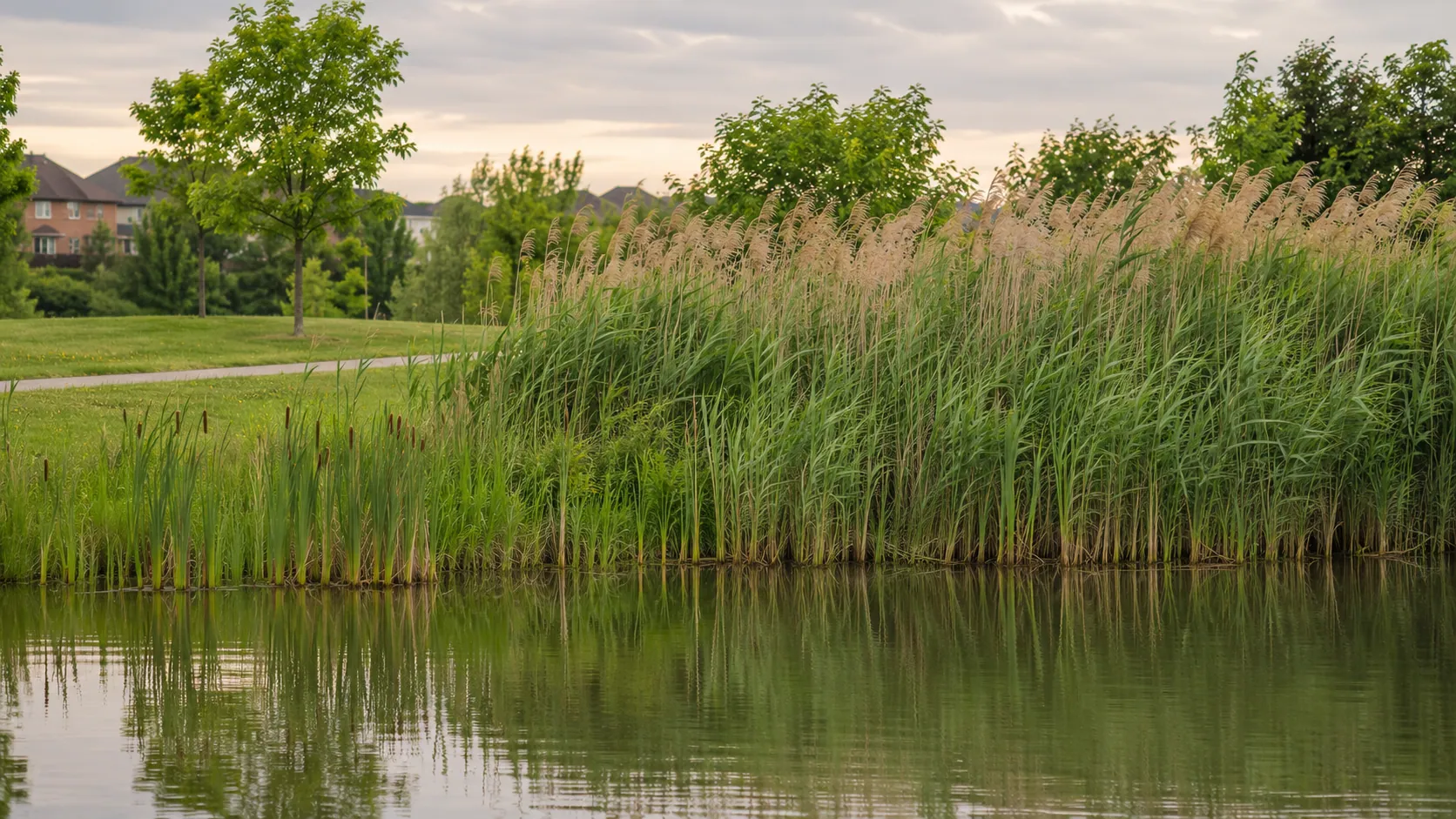 Environment
Mosquito larvicide and phragmites control by drone in Canada
Four biological larvicides (VectoBac 200G, VectoBac 1200L, VectoLex CG and VectoBac FG+) name drones on their Canadian labels. Ottawa and Winnipeg have used drones on stormwater ponds; every water body still needs a provincial permit and an aerial pesticide licence.
Read more →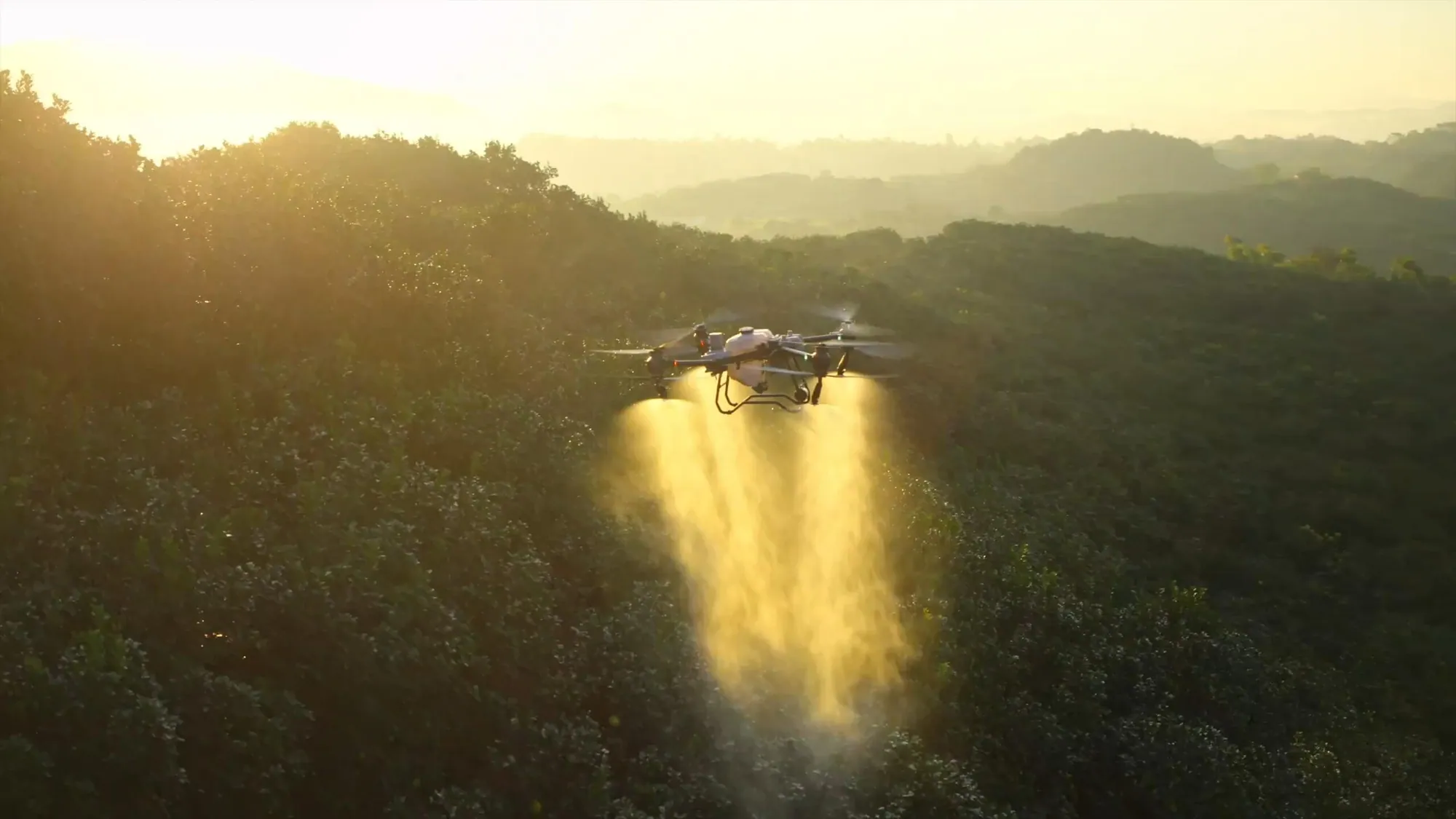
What agricultural drones do on Canadian farms
| Job | Typical use | Drone | Guide |
|---|---|---|---|
| Fungicide and crop spraying | Wheat, soybeans, corn and canola when a ground sprayer can't get in | Agras T50 or T100 | Spray drones |
| Aerial application | Jobs once done by a crop duster on small or obstructed fields | Agras T50 or T100 | Crop dusting |
| Orchards and vineyards | Steep, wet or terraced blocks | Agras T50 | Orchard spraying |
| Cover crop seeding | Clover into wheat, rye into standing corn | Agras T50 or T100 | Cover crop seeding |
| Granular fertilizer | Wet fields, patches, variable-rate | Agras T100 or T50 | Fertilizer drones |
| Potatoes | Fungicide passes when rows are too wet for the sprayer | Agras T50 or T100 | Potato blight spraying |
| Pasture seeding | Frost seeding clover and renovating pasture | Agras T50 | Pasture seeding |
| Scouting and mapping | NDVI and NDRE maps, prescriptions, research plots | Mavic 3 Multispectral | Multispectral mapping |
| Greenhouse shading | Shading compound on glass roofs, and washing it off | Agras T50 | Greenhouse shading |
| Mosquito and phragmites | Larvicide on standing water, invasive reeds in wetlands | Agras T50 and Mavic 3M | Mosquito larvicide |
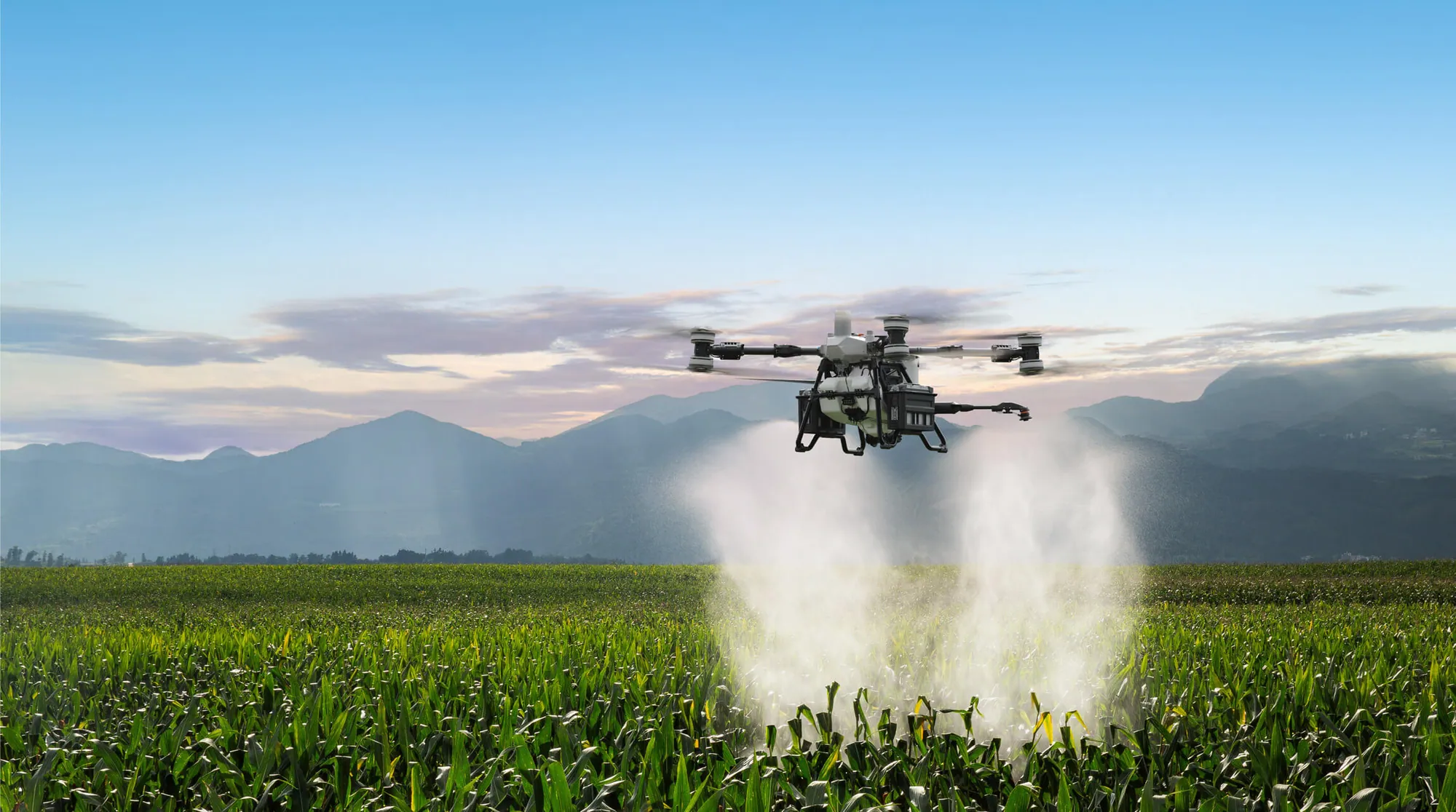
How much does drone spraying cost per acre?
There is no single rate. If you hire it, the price depends on acres, travel, water volume and the product, and is set by the operator; we fly contract jobs after a job assessment. If you own the drone, add the aircraft, batteries, charging, training, insurance and licences, then divide by the acres you spray each year. At a 50 L/ha (5.3 US gal/ac) label rate a T50 covers about 0.8 ha (2 acres) per tank, so crew time and refills are a big part of the real cost. Financing options can spread the purchase.
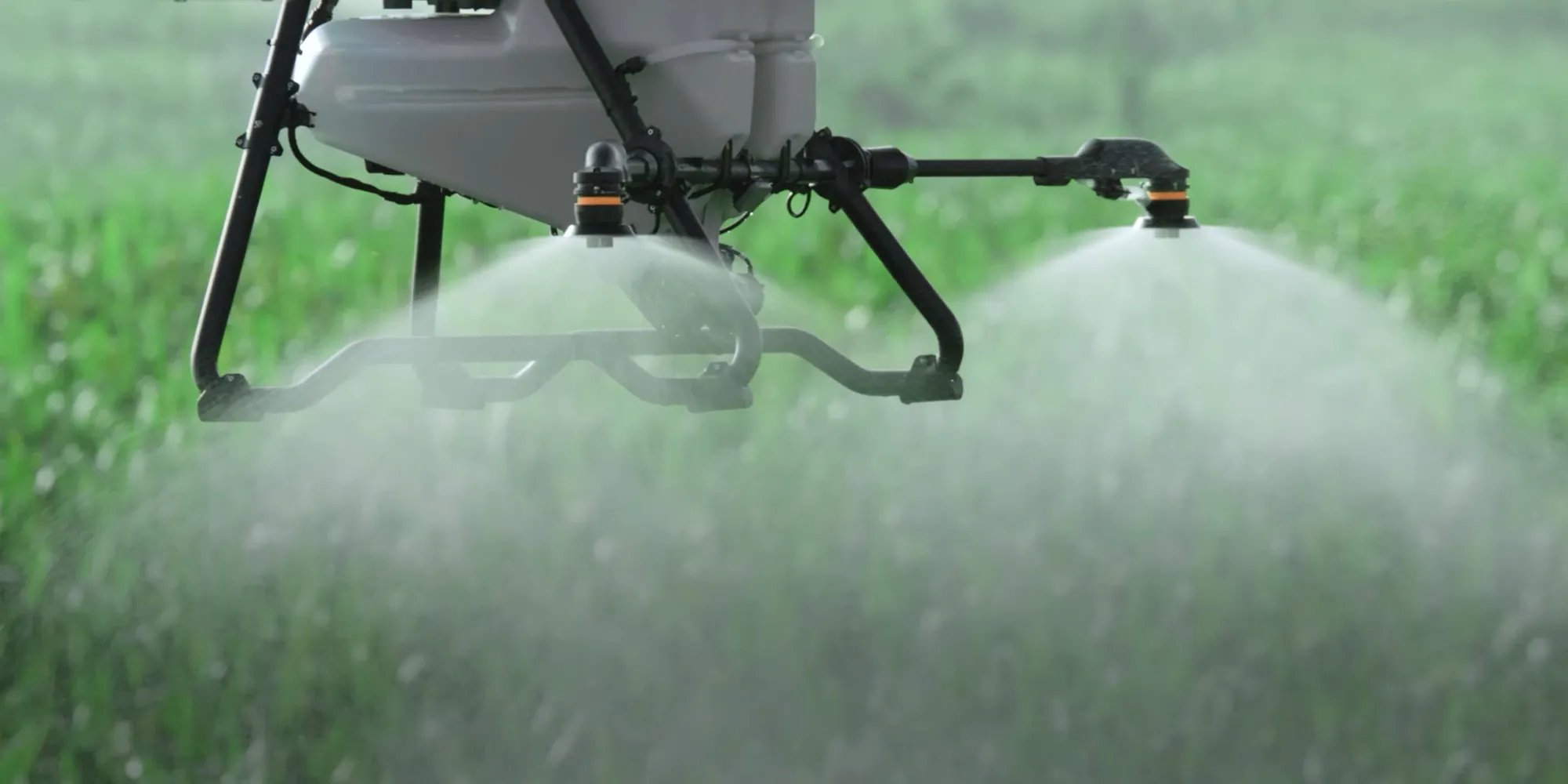
What every spraying job needs
- A product label that allows aerial application and doesn't exclude drones.
- A Transport Canada Advanced pilot certificate and a declared drone for the 25–150 kg class.
- Your province's aerial pesticide licence.
- A Special Flight Operations Certificate (SFOC) from Transport Canada if the loaded drone weighs over 150 kg, as a full T100 can.
Start with the regulations guide, then book a demo.
Want to see a drone do this job on your farm?
Tell us the crop, the job and your timing. Demonstrations use clean water and show the flight, refill and crew workflow.
Book a demo