Crop dusting in Canada: airplanes, drones and what has changed
Crop dusting still happens: aerial applicators fly airplanes over Canadian farms every season, mostly for fungicide and insecticide. A spray drone can take over small, wet or obstructed fields; big open acres in a short window still favour an airplane.
Updated
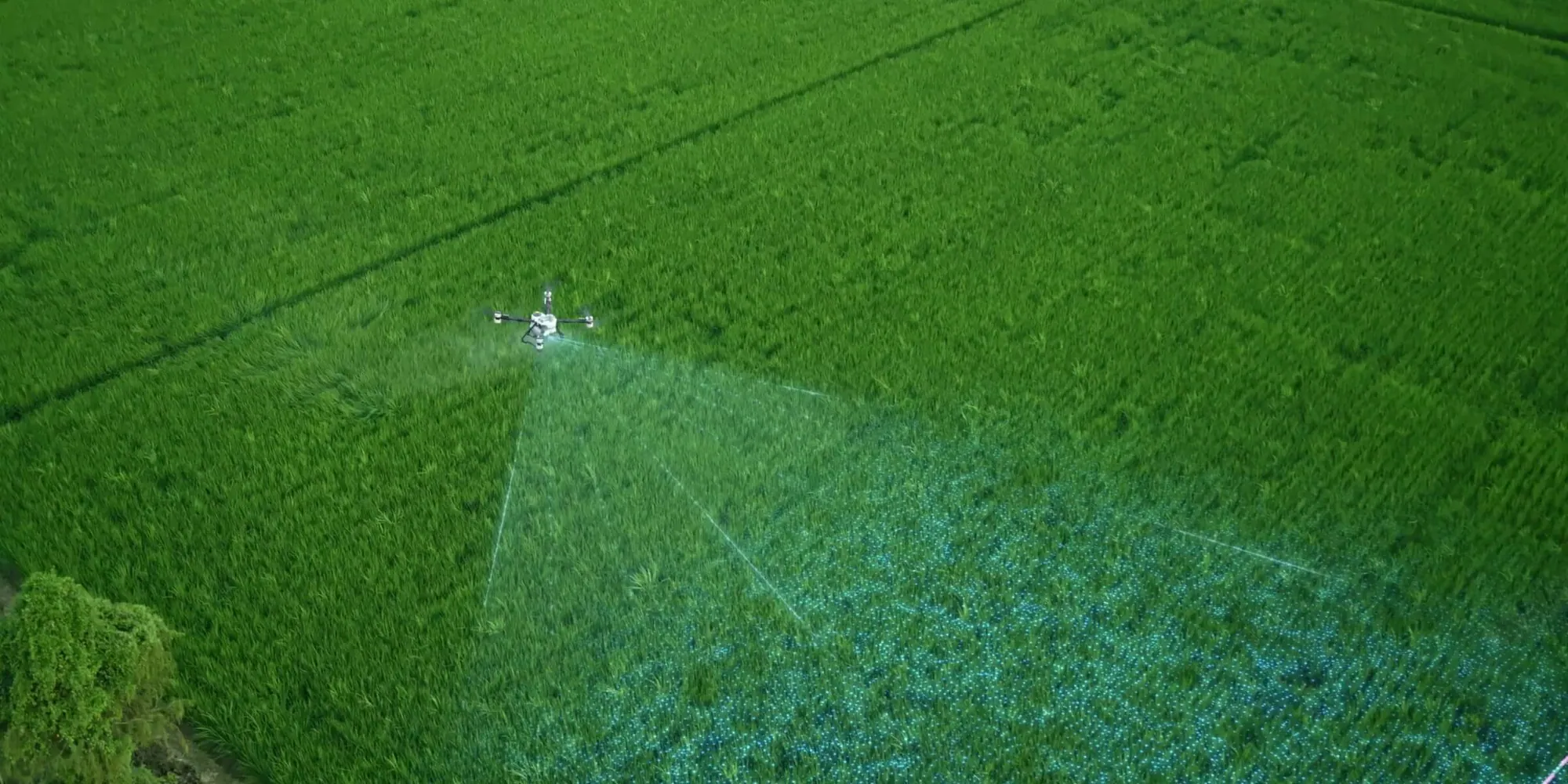
What crop dusting means today
Crop dusting is the old name for aerial application: spraying or spreading crop inputs from an aircraft. The name comes from the 1920s, when aircraft spread insecticide dust. Today almost every pass is a liquid fungicide, insecticide or herbicide, and the industry calls it aerial application.
Drones now do some of the duster's work
Since Health Canada opened aerially registered products to drones, a spray drone such as the Agras T50 can apply the same labelled products at the aerial water volume, on fields too small, wet or obstructed for an airplane. It flies 2–3 m above the crop instead of passing over at speed.
Drones fill gaps; airplanes still cover the acres
Fixed-wing aerial applicators still cover large acres quickly; a drone can't match an airplane load. Drones make sense for small and irregular fields, edges, slopes, wet spots and tight windows when the duster is booked.
Is crop dusting still a thing?
Yes. Aerial applicators still fly fixed-wing aircraft and helicopters across the Prairies and Eastern Canada every summer, mostly for fungicide and insecticide passes when a ground sprayer can't get in or can't cover the acres in time. What has changed is that drones now share some of that work.
What is sprayed during crop dusting?
- Fungicides: fusarium head blight in wheat, white mould in soybeans, tar spot in corn, sclerotinia in canola.
- Insecticides: outbreaks such as grasshoppers, aphids or armyworm.
- Herbicides and desiccants: pre-harvest passes where the label allows aerial use.
- Fertilizer and seed: some operators also broadcast granular fertilizer or cover-crop seed.
Every product must be registered for aerial application, and the label sets the water volume, wind limits and buffer zones.
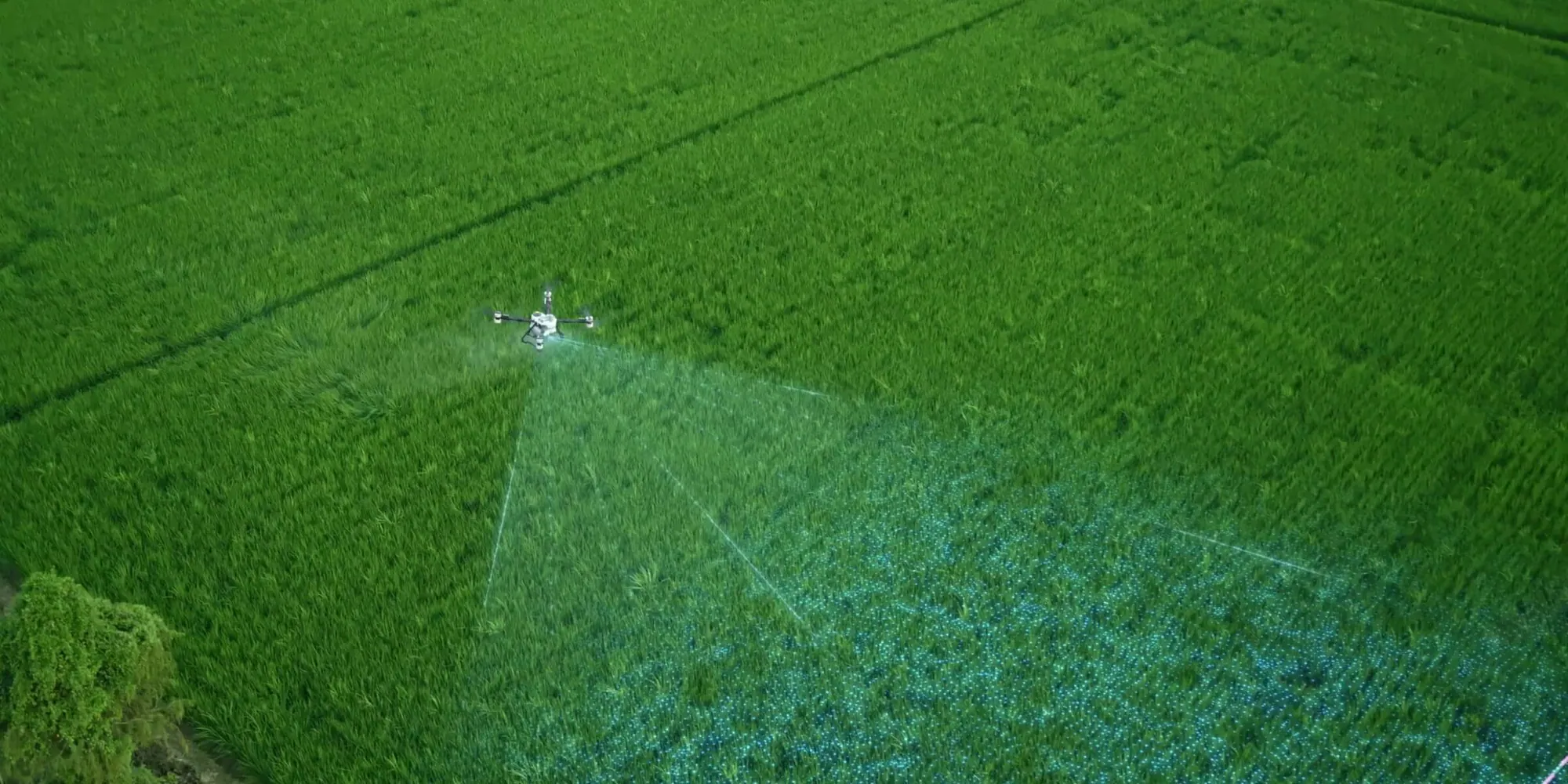
Airplane, helicopter or drone?
| Airplane | Helicopter | Spray drone | |
|---|---|---|---|
| Load | Hundreds of gallons | Smaller than an airplane | 40 L (about 10.6 US gal, T50) to 100 L (about 26 US gal, T100) |
| Best for | Large, open fields | Hilly or broken land | Small, wet, irregular or obstructed fields |
| Needs | An airstrip near the fields | A landing and loading area | A truck, water and power at the field edge |
| Flown by | A commercial aerial applicator | A commercial aerial applicator | You or a licensed operator |
| Flight height | Low passes at speed | Low passes | 2–3 m above the crop |
A manufacturer example: drone versus airplane
In South Africa, a drone service provider sprayed a sugarcane ripener with an agricultural drone on one block and with a fixed-wing aircraft on a matched block. DJI reports that crop-health (NDVI) images from a Mavic 3 Multispectral, taken 16 and 37 days later, showed more uniform coverage from the drone. DJI publishes the images, not measured numbers, so treat it as one manufacturer-reported comparison. Source: DJI Agriculture, sugarcane case study.
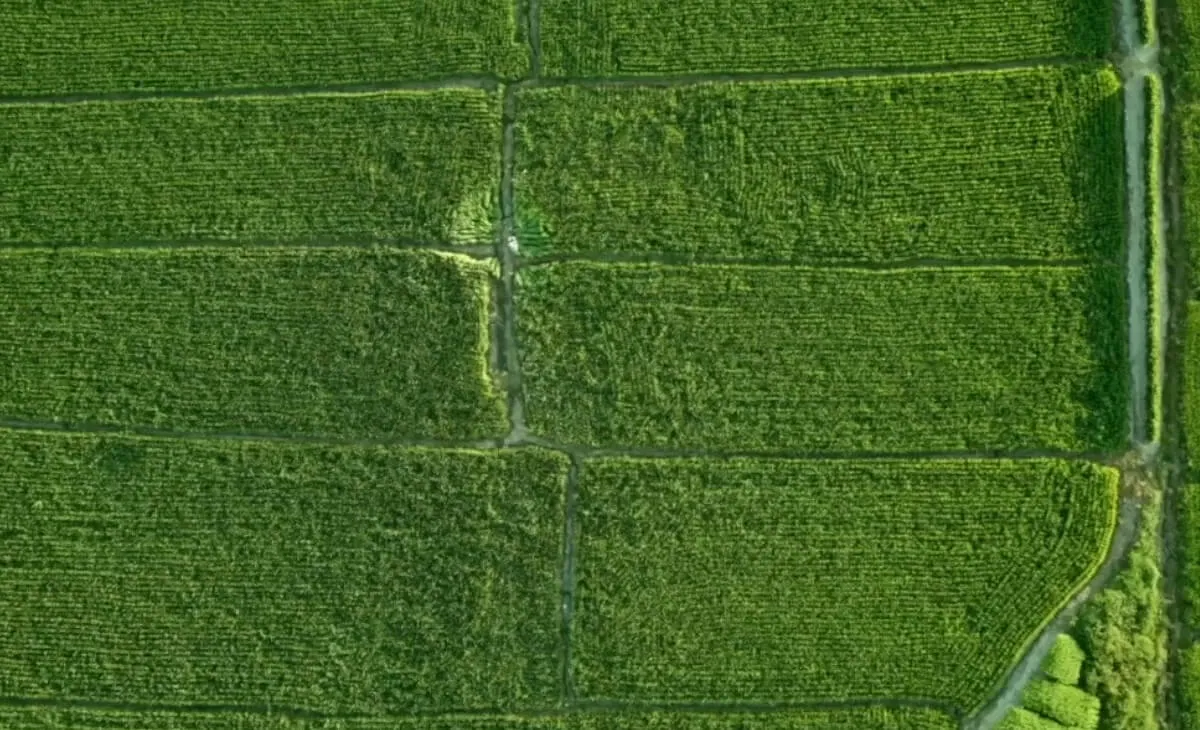
When a drone can replace the crop duster
- The field is too small or oddly shaped to be worth an airplane's time.
- Hydro lines, shelterbelts or buildings make low passes unsafe.
- The ground is too wet for a sprayer and the aerial applicator is booked.
- You want to treat only part of a field, such as a patch or an edge.
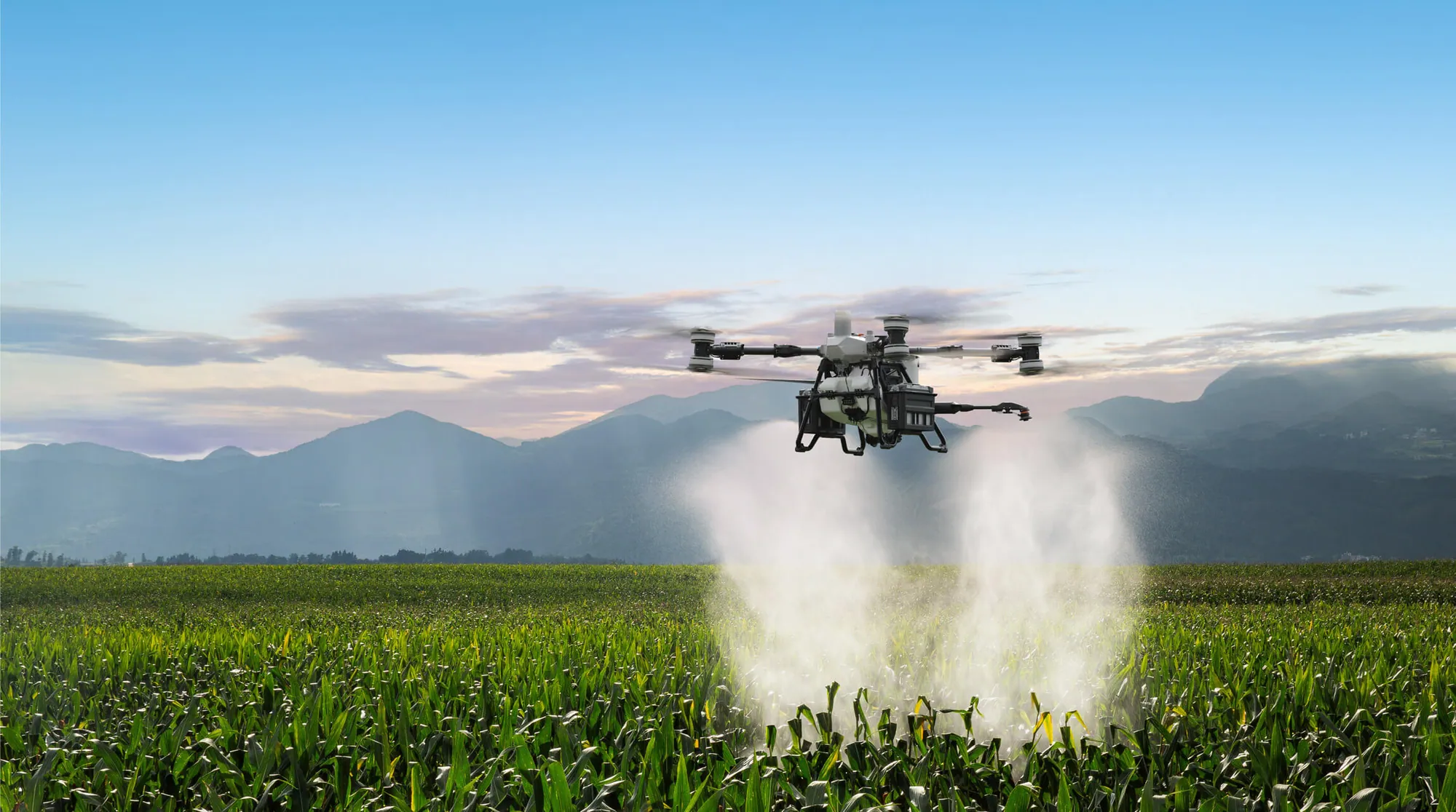
When it can't
- You need thousands of acres in a day or two: an airplane is far faster.
- The product has no aerial registration, or its label says DO NOT apply by RPAS.
- Nobody on your farm holds a Transport Canada Advanced pilot certificate and the provincial aerial licence, and you'd rather not hire a licensed operator. See the regulations guide.
A short history
The first recorded crop dusting flight took place in 1921 near Troy, Ohio, when a Curtiss JN-4 spread lead arsenate dust over a grove of catalpa trees to control caterpillars. Purpose-built ag aircraft followed after the Second World War, and liquid sprays replaced most dusts. Drones are the newest chapter: in Canada, aerially registered products opened to drone application in 2026.
Want to compare a drone with what you pay for aerial application now? Read the spray drone guide or talk to us.
Common questions
A crop duster is the aircraft, or the pilot, that applies crop inputs from the air. The name dates from the 1920s, when insecticide was spread as a dust.
On small, wet, irregular or obstructed fields, often yes. On large open acres in a short window, an airplane is still much faster. Compare loads: an Agras T50 carries 40 L.
Yes. A Transport Canada Advanced pilot certificate for a medium drone, plus your province's aerial pesticide licence. The regulations guide covers each step.
It depends on your acres, how often you spray and what you pay for aerial application now. Owning a drone means paying for the aircraft, batteries, training, insurance and crew time. Financing options can spread the cost, or hire us to fly the job.
More Applications
Spray drones for Canadian field crops
A spray drone makes sense when wet ground, tall crops or a short fungicide window keep your sprayer out. At a typical 50 L/ha label rate one T50 tank covers about 0.8 ha (2 acres), so it suits patches and timing gaps, not whole farms.
Orchard and vineyard spraying with drones
Spray drones can treat orchards, vineyards and berry blocks on slopes and wet rows an airblast sprayer can't reach, but they spray from above at a lower water volume, so canopy coverage differs. Check the label allows aerial use and test coverage first.
Fertilizer drones: spreading granular fertilizer by drone
A fertilizer drone spreads granular fertilizer on wet, soft or irregular fields and patches a ground spreader can't reach. At 100 kg/ha one T50 load covers about 0.5 ha (1.2 acres), so it is a precision tool, not a replacement for bulk spreading.
Want to see a drone do this job on your farm?
Tell us the crop, the job and your timing. Demonstrations use clean water and show the flight, refill and crew workflow.
Book a demo