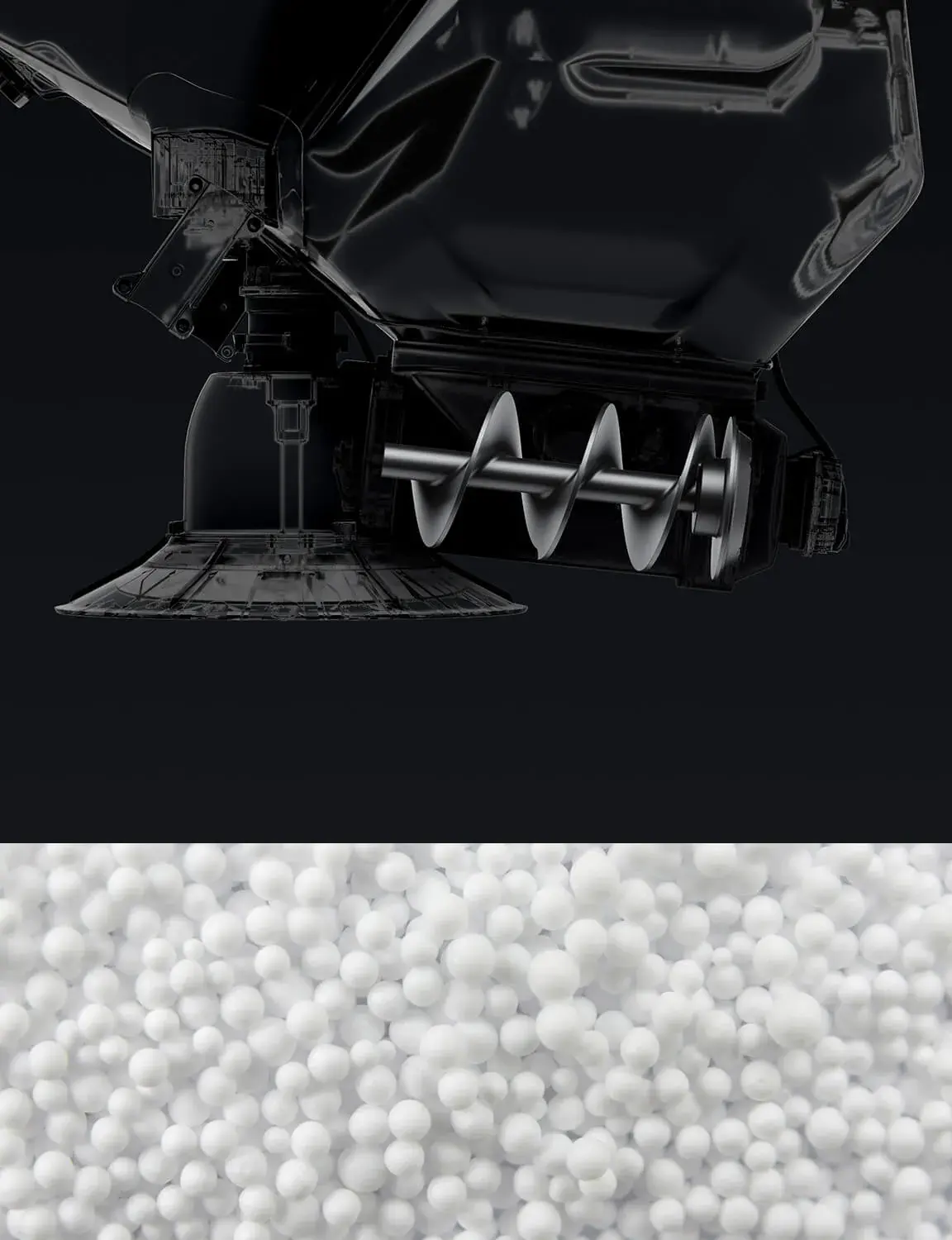
What does the seed lot tell you before you calibrate?
Calibration for a seeding rate starts with the seed you actually loaded, not the size range on a bag or a factory setting. SpeedyDrone's seeding guidance asks for the exact species or mix, seed treatment, lot, size distribution, bulk density and target kg/ha before a rate is measured.
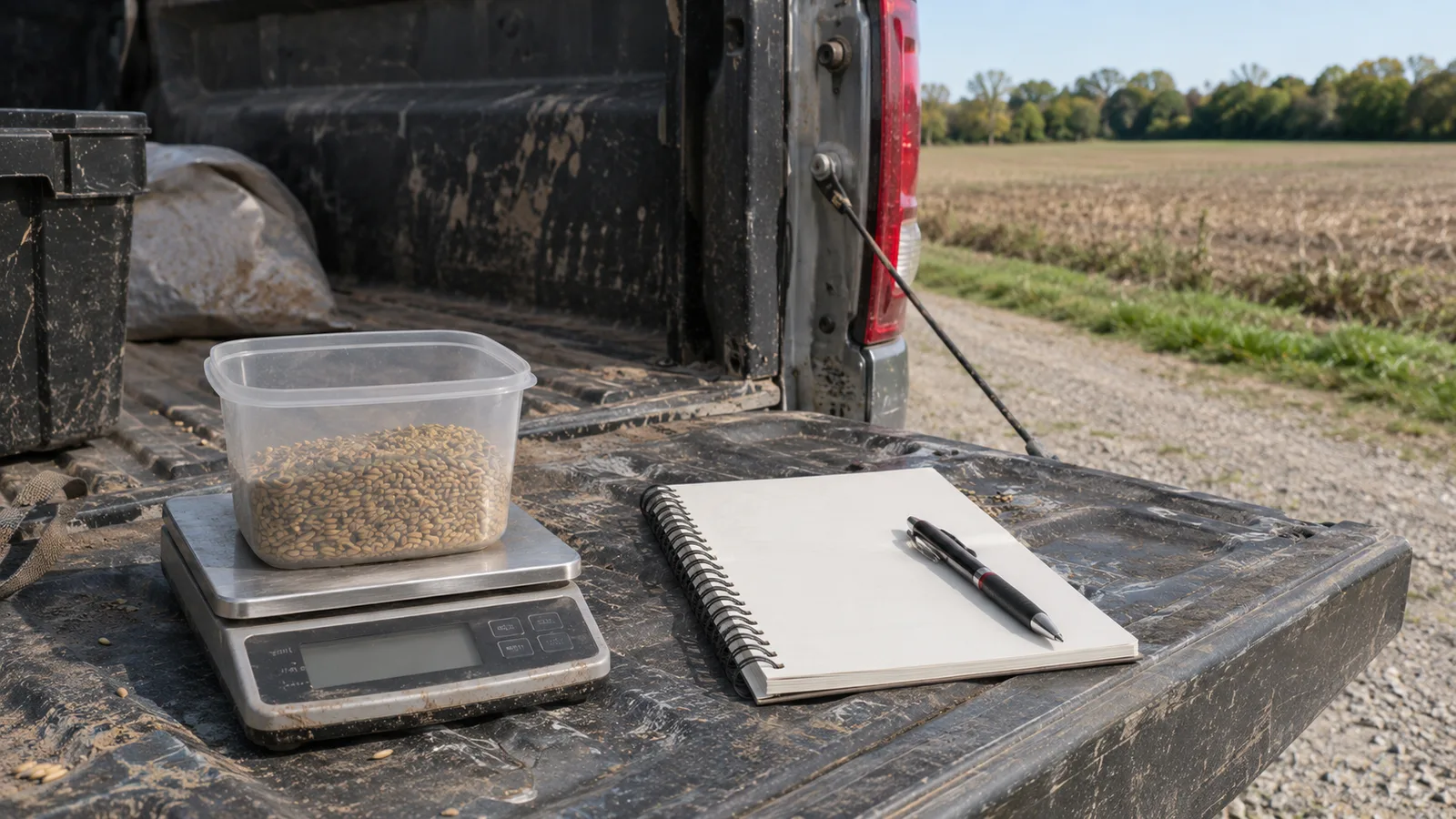
Record the lot before you change a setting
A seed lot check before calibration asks for the exact lot, packaging, intended use, directions, moisture condition, size distribution, bulk density, safety data where relevant, flowability and tolerance to segregation or breakage. Pasture work adds the forage species, coating or inoculant, size range, rate, grazing restrictions and the establishment goal.
Confirm the aircraft and feeder accept the material
DJI lists 0.5–5 mm for the T50 spreader and T100 auger ranges of 0.5–10 mm and 4–6 mm. Size range does not prove flow; test density, clumping and segregation at the planned rate. Remove large clumps and foreign objects; do not rely on the auger to break up caked fertilizer. See cover crop seeding.
Check that a blend stays mixed
A mixed seed lot request includes the exact species or mix, seed treatment, lot, seed size distribution, bulk density, recommended establishment method and target kg/ha. A mixed seed lot must stay acceptably mixed after filling and while it dispenses, and the seeding guidance asks for that confirmation. Material screening also asks for the lot's tolerance to segregation.
What should I check before loading the spreader?
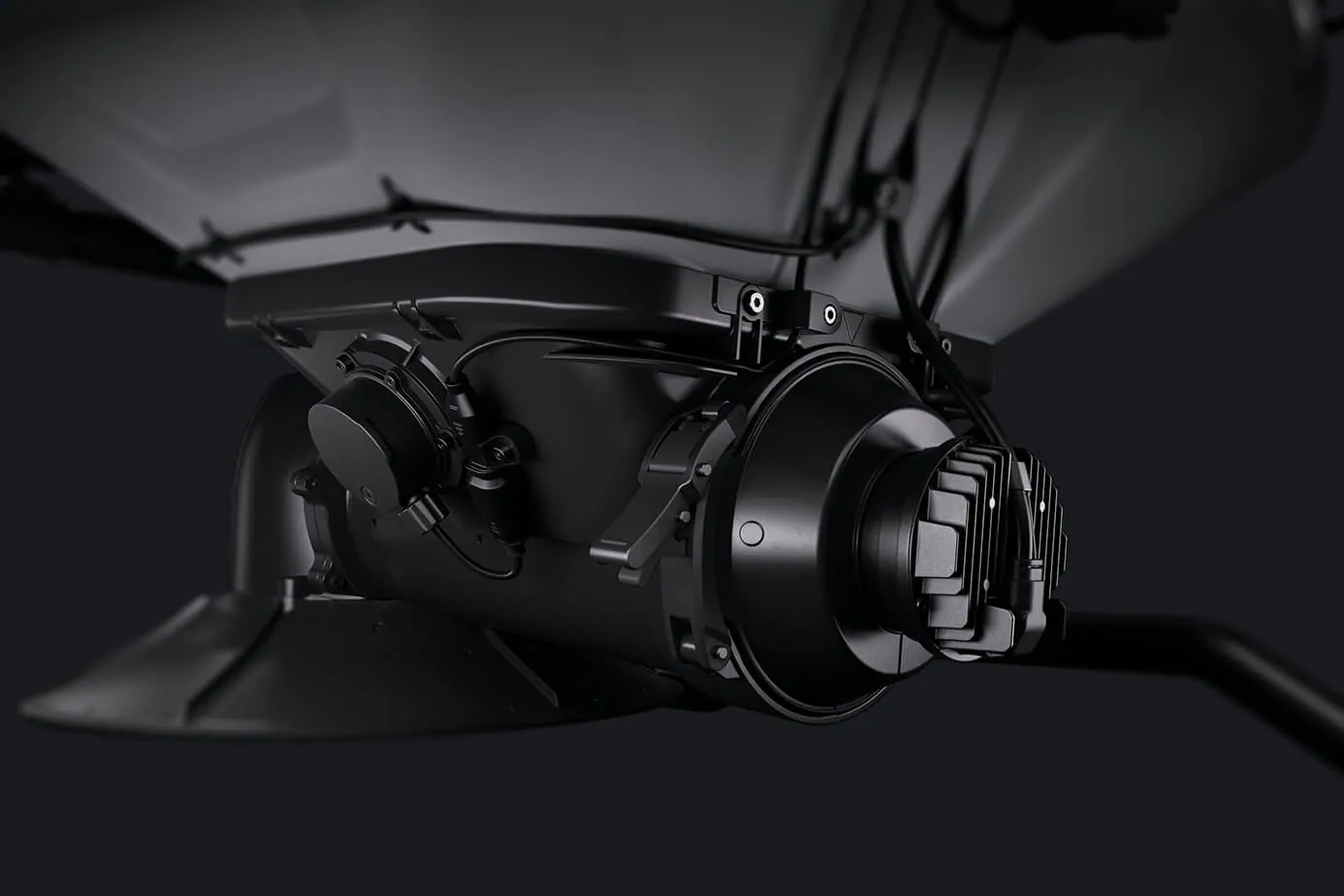
Before loading, the spreader needs a tare on a flat surface, the right gate or auger for the material, and a tank that is clean and dry. The T50 spreader needs tare calibration when an empty tank does not read zero, and DJI also requires tare calibration before first use.
A tare or empty-tank check is not a rate check
Tare calibration establishes the empty weight of the spread tank and does not replace material flow and spread-pattern checks. The empty-tank warning has its own calibration: empty the tank, put the aircraft on a flat surface and run the app procedure when the warning is wrong or the system fails to detect an empty tank. DJI recommends both tare and empty-tank calibration after changing from spraying to spreading.
Fit the gate or auger the material needs
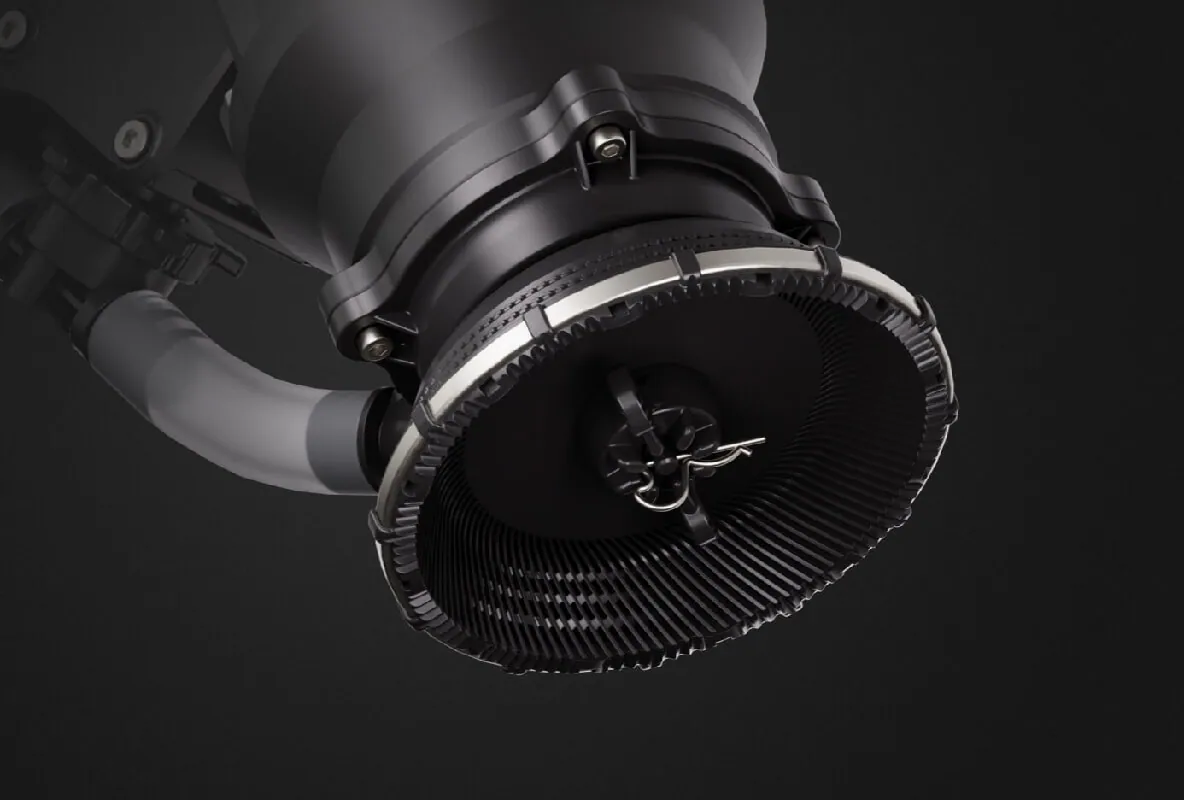
DJI recommends the T50 small-flow gate for hopper openings of 30% or less or material diameter of 2 mm or less. Set Hopper Outlet 2 for this gate and Outlet 1 for standard, then recalibrate. T100 checks include smooth screw feeder, normal spinner and secure connections.
Keep material dry and the system clean
Caked fertilizer and foreign objects must be removed before loading; stop and isolate an obstructed system. Clean and dry spread tank residue after use and check the spinner for wear. The DJI Agras T50 and DJI Agras T100 use different feeders.
What do I measure before I fly the field?
Catch trays and a scale measure two different things: the mean application rate and how evenly the material lands across the swath. A material test collects and weighs pass samples to check mean rate and lateral variation against the target rate and a pre-agreed acceptance threshold.
Measure the mean rate with trays and a scale
Cover-crop broadcasting starts with a strip using weighed trays at candidate spacing to compare seed density and rate with the planned dose. Crew and equipment include a loader, scale, catch trays, dry storage and protective equipment. The written output records a fit, test or decline decision.
Measure lateral variation as well as total weight
A test compares measured mean rate and lateral variation with the target rate and an acceptance threshold agreed before the test. The recorded figures include the settings, speed, spacing and useful load used during the pass, so the result can be repeated or rejected. The which agricultural drone tool helps a buyer see which platform and spreading system they are actually calibrating.
Keep three checks apart
Rate accuracy compares weighed pass samples with target rate. Spread pattern is recorded when tested. Establishment compares representative strips at an agreed crop stage for emergence and uniformity. Pasture work adds later ground counts, species establishment and grazing readiness.
When do I recalibrate, and what should I record?
Recalibration follows every change of material, hardware or operating condition, because a rate measured on one lot does not describe the next one. A failed or cancelled flow calibration is not a successful check: the reported fault has to be resolved and the system recalibrated before the result is relied on.
Recalibrate when the material or setup changes
Changing the hopper gate requires recalibration and a check of the actual material rate and distribution. The same applies when the material lot, settings, speed, spacing, useful load or operating conditions change, and any condition that requires re-testing should be recorded. A new species, treatment or blend is a new material, and the components must be confirmed as acceptably mixed after filling and dispensing.
Record enough to repeat the result
A test record covers the lot, weather, settings, speed, spacing, useful load, failed tests and any operating conditions that require re-testing. A production record covers weather, crop stage, material, flown area, loading, kg delivered and observed exceptions. The expected deliverable is a record of planned and flown area, material used, measured calibration and field conditions, with an optional plot map or follow-up observations if separately scoped.
Treat a failed calibration as a fault
Cancelling a failed calibration leaves the previous calibration data in use, so a displayed application rate does not prove that a newly fitted or changed system is calibrated. The app notification identifies the problem, and the check is complete only after the fault is resolved and the system recalibrated. Repairs after a fault are handled through drone repair support.
Does the seed need to reach bare soil?
Drone spreading broadcasts seed rather than placing it in a furrow, so the result depends on the crop, canopy, residue and moisture as well as on the rate. Québec field notes describe canopy interception and limited moisture making rye establishment less certain. Drilling is the comparison that broadcast work is measured against.
What Canadian broadcast work reported
Alberta research assessed aerially broadcast forage seed in standing silage corn with DJI Agras T40 and multispectral imagery, tracking emergence and crop performance. Ontario trials at 12 sites with DJI Agras T50 reported rye at one corn site advanced further before winter and produced more spring biomass than other methods. Compare research institution drone kits.
Broadcast placement can be patchier than drilling
Drone seeding produced patchier establishment than drilling in the Ontario interview. Québec notes on cereal rye in standing grain corn describe more variable early outcomes, target rates of 60–80 kg/ha and some sites that required two drone passes. A cover-crop plan keeps a drill or another feasible fallback if broadcast placement turns out to be unsuitable. The cover crop seeding workflow sets out where the checks sit in a season.
Canopy and moisture change the outcome
Canopy interception and limited moisture made rye establishment more uncertain in the Québec observations. Pasture overseeding checks seed-to-soil contact and whether a species needs drill placement, along with soil tests and existing cover. A pasture plan diagnoses the stand with the producer and chooses a small test area with a ground comparison where appropriate. Readers planning forage work can compare the pasture seeding setup before committing a whole field.
What Canadian rules, records and operating checks matter?
Canadian operating checks for the DJI Agras T100, a higher-capacity application aircraft with 100 L spray and 150 L spreading, include an SFOC when the loaded operating weight is above 150 kg. Confirm the operating category, registration and pilot certificate that apply to your aircraft and site with Transport Canada.
Weight and certificate questions
The T100 is listed with a 100 L spray tank and a 150 L spreading tank, and the loaded aircraft above 150 kg needs an SFOC. SpeedyDrone is not a Transport Canada examiner and books certificate courses and flight reviews with partner AlteX droneHUB in King, Ontario; qualified reviewers run the flight reviews and no one can promise a pass. The agricultural drone training page covers booking.
Labels, buffers and site hazards
Liquid application checks confirm label and provincial requirements, terrain, wires, clearance, wind, buffers and deposition. Granular work needs product instructions, boundaries, a signed rate plan, catch trays, a scale and setbacks. Pesticide jobs need product name, PCP number and current label.
Written records for a seeding job
A broadcast seeding record covers planned and flown area, material used, measured calibration and field conditions. Pasture overseeding deliverables are a patch map, pre-job notes and a calibration and application record, with optional establishment checks against agreed samples. Contract customers who need job documentation can see how the work is scoped on the contract drone seeding services page and in the drone spraying rules in Canada guide.
Is SpeedyDrone right for my job?
SpeedyDrone suits growers, research teams and agricultural service providers comparing Agras equipment, contract seeding or a handover check, and helps them plan a field setup around the work. A job where the seed, the spreader or the field fails a compatibility test needs that discussion before anything is booked.
What SpeedyDrone offers for broadcast seeding
SpeedyDrone offers contract application for spraying, seeding and granular spreading, assessing each job first, then quoting and dating it. Orchards, scattered fields, high rates and granular materials are quoted on field hours and refills. Training runs with AlteX droneHUB, and an Agras purchase includes one handover session.
What buyers ask SpeedyDrone before a seeding job
SpeedyDrone hears buyers ask how to calibrate application rate correctly and whether material must reach the target surface, so they can judge accurate, effective delivery. Buyers also worry whether coverage will penetrate a full-size canopy from top to bottom, and they ask what staffing and supporting equipment are needed.
Where the work fits and where it does not
An agreed handover matches the aircraft and attachments to the quote and records checks, including a seed or granule calibration. A material test can end in a written decline. A species needing drill placement needs a drill, not a spreader. Read start a drone spraying business.
Describe the crop, the material, the field and the work window on the contact page for a written, itemised quote, or ask whether the job can be flown for you.
Sources
Frequently Asked Questions
How do I calibrate a drone spreader so the seeding rate is right?
Calibrating a drone spreader for a seeding rate means recording the exact seed lot, checking the feeder and tare, then weighing catch-tray samples to compare measured output with the target kg/ha at the planned speed and spacing. Recalibrate after any change of material, gate, auger or operating conditions.
Does the seed need to reach the soil when a drone broadcasts it?
Seed from a drone spreader lands on the surface rather than in a furrow, and establishment depends on the crop, canopy, moisture and seed-to-soil contact. Ontario trials reported patchier establishment than drilling, and Québec notes describe canopy interception and limited moisture making rye less certain.
Can a T50 or T100 spread my cover-crop seed?
A DJI Agras T50 or T100 can spread cover-crop seed if the exact seed or blend suits the fitted spreader. The T50 spreader accepts compatible dry granules in DJI's published 0.5–5 mm range, and T100 augers have different size ranges. Density, flow, clumping and segregation still need a test.
Will my feed work in an Agras spreader?
DJI lists aquaculture feed as an example for the extra-large auger. Feed is a material to test rather than assume: diameter distribution, bulk density, moisture and flowability all need checking, and a limited trial should run before a full job. Confirm the fitted auger against the material.
What should I check on the T100 spreader before loading it?
Before loading a T100 spreader, check that the screw feeder turns smoothly, the spinner operates normally and the connections are secure. Inspect the material for clumps and foreign objects, keep hands clear during powered checks, and observe the app's payload recommendation for the aircraft and conditions.
What can SpeedyDrone check at handover?
At an agreed handover, SpeedyDrone matches the aircraft, controller, batteries, charger and attachments to the quote and records the checks completed. For spreading, a calibration check with the intended seed or granules is agreed, and any on-site checks and crew training go in the quote.