Spray drones for Canadian field crops
A spray drone makes sense when wet ground, tall crops or a short fungicide window keep your sprayer out. At a typical 50 L/ha label rate one T50 tank covers about 0.8 ha (2 acres), so it suits patches and timing gaps, not whole farms.
Updated
When the sprayer can't get in
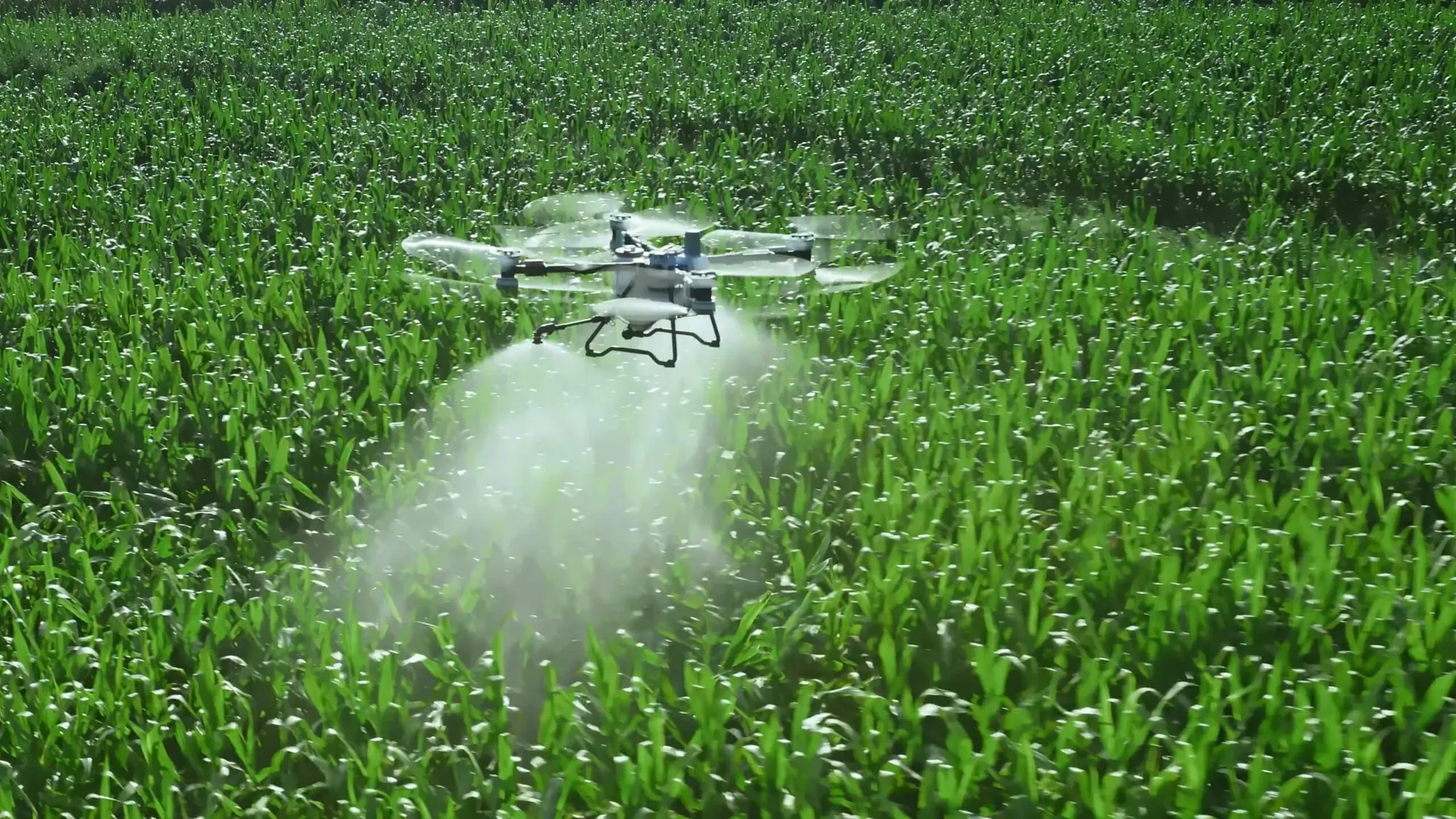
Fungicide windows are short: winter wheat at heading in mid-June, soybeans at R1–R2 in July, corn at VT–R1 from late July. A wet week, tall corn or a field too soft for a high-clearance sprayer can cost the window. In an OMAFA trial near Rodney, Ontario, tar spot cut corn yields by 40–60 bu/ac.
Fly over the crop at the label's water volume
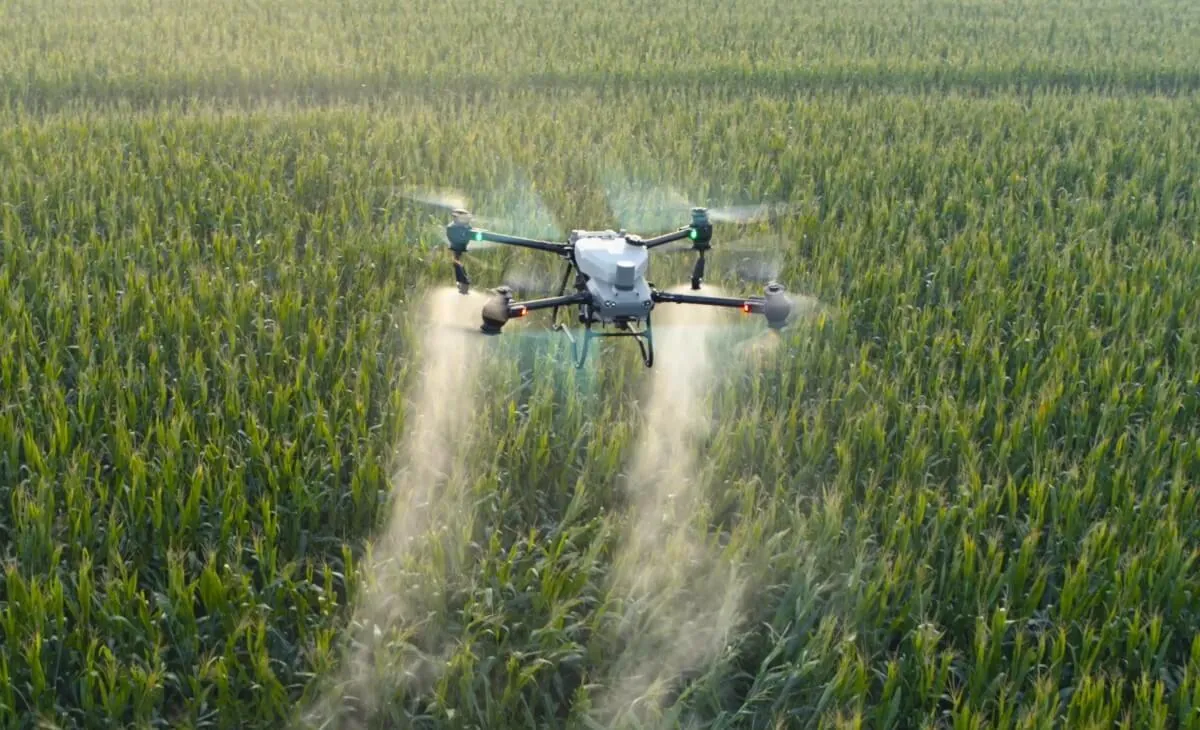
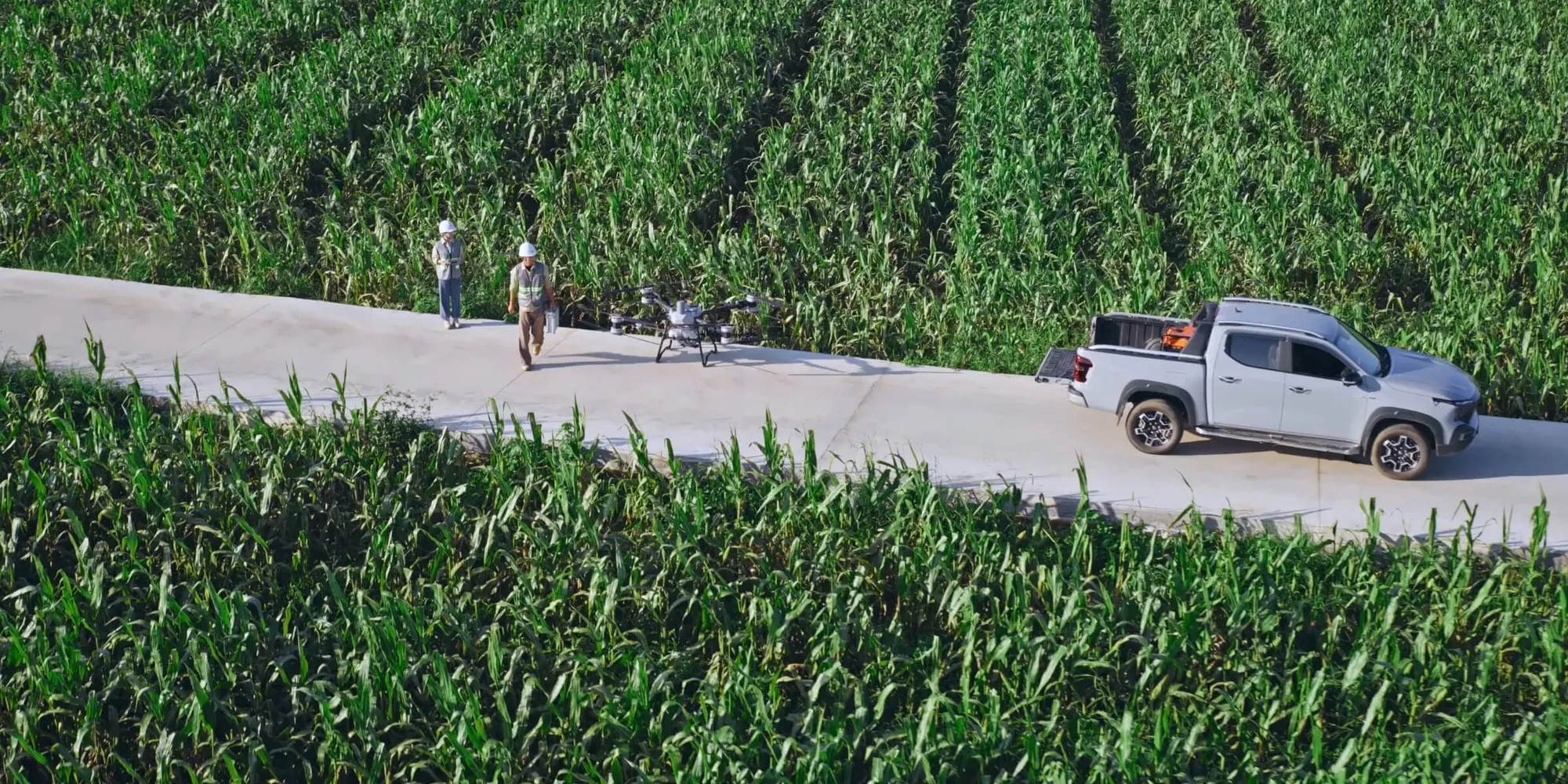
A spray drone such as the Agras T50 or Agras T100 flies 2–3 m above the canopy, leaves no wheel tracks and reaches fields a ground rig can't. It can apply only products whose label allows aerial application, at no less than the aerial water volume on the label: usually 45–50 L/ha for corn, soybean and wheat fungicides.
A pass on time, with honest coverage limits
Expect to protect the timing, not to beat a ground sprayer on coverage. OMAFA's trials found drone coverage below ground rigs, with the closest results at about 5 gal/ac (47 L/ha) or more. Most farms use a drone for the passes the ground rig misses and keep the sprayer for the rest.
How much a spray drone covers per load
Area per load is simply tank volume divided by water volume. Low water volumes look efficient on paper, but the label sets the minimum, and Ontario research found coverage drops and drift rises when you go low and fast.
| Water volume | T50 (40 L tank) | T100 at 75 L (stays under 150 kg) | T100 full (100 L, needs an SFOC) |
|---|---|---|---|
| 50 L/ha (5.3 US gal/ac), a common label minimum | 0.8 ha (2 ac) | 1.5 ha (3.7 ac) | 2.0 ha (4.9 ac) |
| 30 L/ha (3.2 US gal/ac), only if the label allows | 1.3 ha (3.2 ac) | 2.5 ha (6.2 ac) | 3.3 ha (8.2 ac) |
| 20 L/ha (2.1 US gal/ac), only if the label allows | 2.0 ha (4.9 ac) | 3.8 ha (9.4 ac) | 5.0 ha (12.4 ac) |
Daily area depends on your cycle, not the tank: flying, landing, refilling, swapping batteries and moving between fields. Time one full cycle on your own field before you plan acres. The field kit guide covers batteries and charging, which set the pace on most farms.
Fungicide timing by crop
| Crop | Main disease target | Spray window | Typical timing in Ontario |
|---|---|---|---|
| Winter wheat | Fusarium head blight | T3, heading to early flowering | Mid-June |
| Soybeans | White mould | R1–R2 | July |
| Corn | Tar spot, northern corn leaf blight | VT–R1 | Late July to August |
| Canola | Sclerotinia stem rot | 20–50% bloom | July |
These are the windows when a wet field or a tall crop most often stops a ground sprayer. Confirm timing and product with your agronomist and the label.
What the Ontario research found
OMAFA's application technology team has tested Agras drones (T10, T30, T50 and T100) against ground sprayers since 2022, under research authorization:
- Tar spot in corn (2022). A T10 at R1 applied 2 and 5 gal/ac against a ground rig at 16.7 gal/ac. Drone coverage was significantly lower, drift rose by about 44–73% at 2 gal/ac and high speed, and coverage fell deeper in the canopy. The conclusion: don't go low volume and fast.
- White mould in soybeans (2023). A T30 at R1.5 applied 20, 30 and 50 L/ha against a ground rig at 150 L/ha. At 50 L/ha the drone often matched ground yield and control, but overall control was still below the ground sprayer.
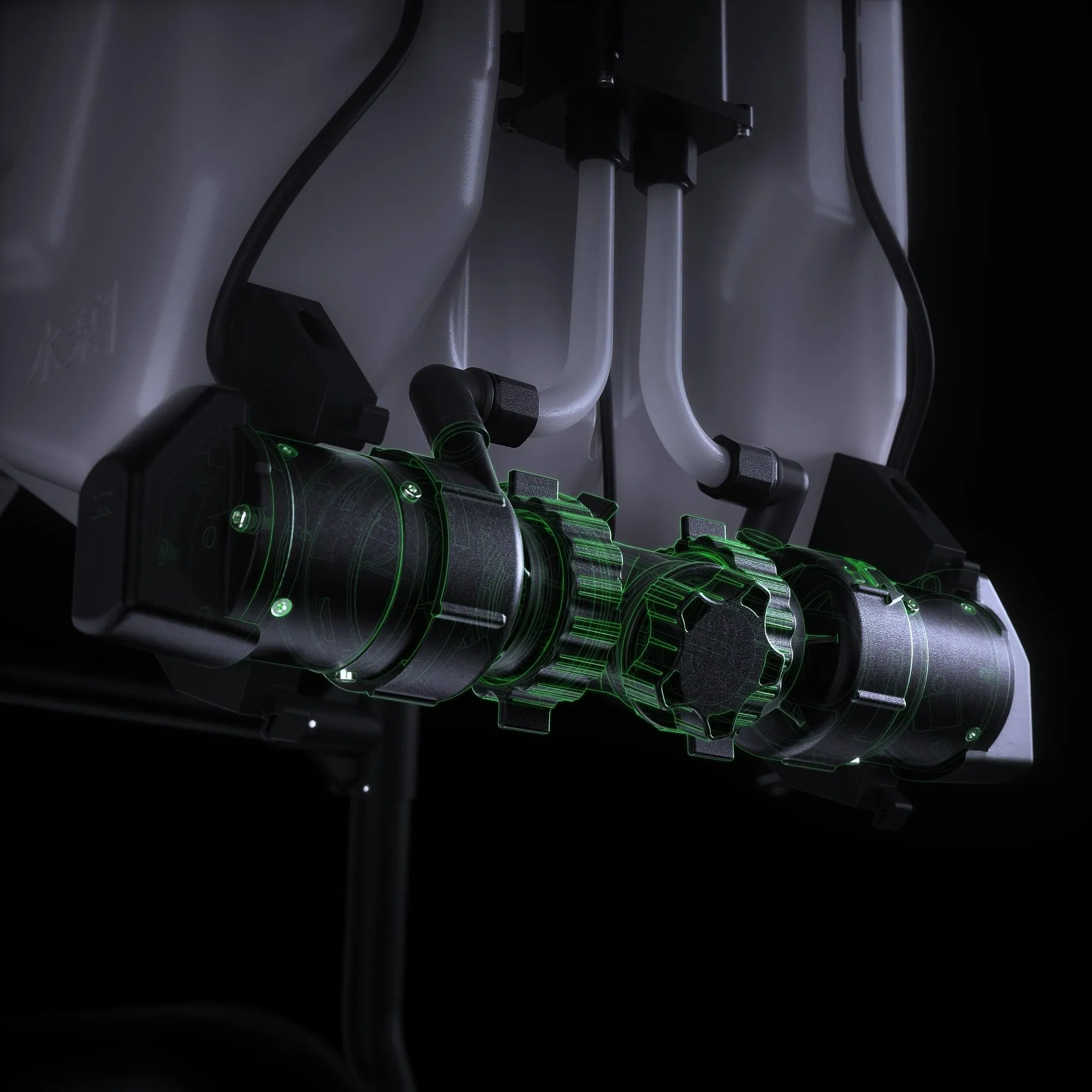
- Swath and droplets (2025–2026). Drone deposits vary much more across the swath than other equipment, so a narrower swath than the maximum is safer. The spinning (centrifugal) sprinklers can make finer droplets than the screen says, so drift can be higher than you expect. In a 2025 trial, spray from the T50 and T100 landed on an area 32% and 40% wider than the app setting, so product went on thinner than planned: check with water-sensitive paper.
Sources: Sprayers101 tar spot trial, Sprayers101 soybean trial, Ontario Grain Farmer, March 2026.
Rules before you spray
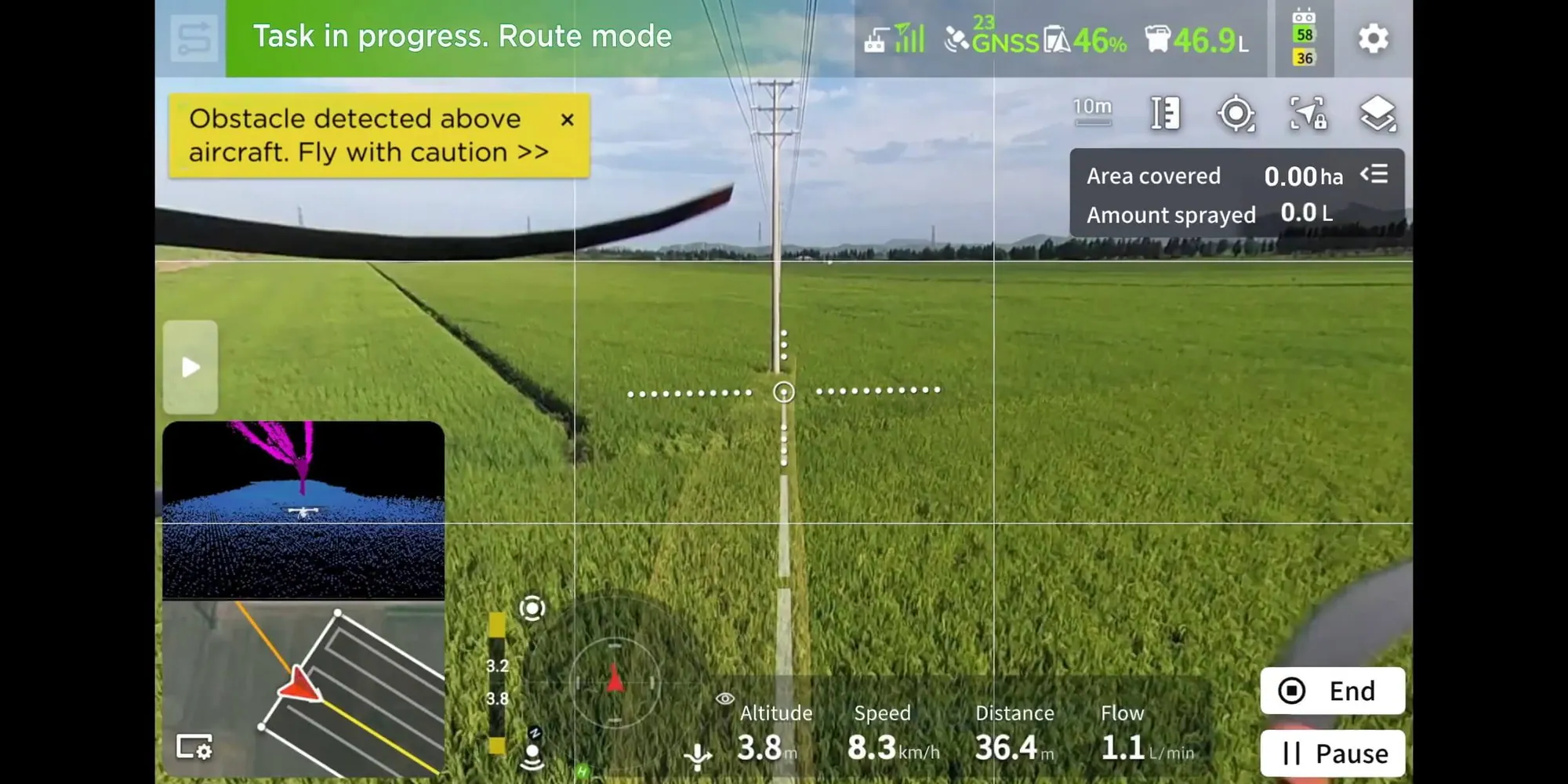
- The label decides. Health Canada allows drone application of products registered for aerial use, unless the label says DO NOT apply by RPAS (the regulators' word for a drone). In Québec, the province allows only labels that mention RPAS. Use at least the aerial water volume on the label and its helicopter (rotary-wing) buffer zones. The Sprayers101 Canadian spray drone label search is a useful first check; confirm against the label itself.
- The pilot needs an Advanced certificate. A loaded T50 is a medium drone (25–150 kg) and the model needs a safety declaration for the operation. A fully loaded T100 can pass 150 kg and then needs a Special Flight Operations Certificate (SFOC).
- The applicator needs a provincial licence. Ontario requires an aerial class exterminator licence; Québec requires the C1/D1 permit and CD1 certificate.
- Some sites need a permit. Forests, residential areas and water bodies are restricted uses that need provincial permission.
Read the full drone spraying regulations guide before you book a date.
Drone, ground sprayer or airplane?
| Spray drone | High-clearance sprayer | Aerial applicator (airplane) | |
|---|---|---|---|
| Best for | Wet or tall crops, small and irregular fields, edges and slopes | Most passes on most fields | Large acres in a short window |
| Water volume | Label aerial minimum, often 45–50 L/ha | Usually 100 L/ha or more | Label aerial minimum |
| Wheel tracks | None | Yes | None |
| Daily capacity | Lowest; set by refill and charging | High | Highest |
| Who flies it | You or a licensed operator | You | A licensed aerial applicator |
A manufacturer example: canola in Romania
DJI reports a trial on August 1, 2024 near Giurgiu, Romania, where a local spraying service and FMC sprayed rapeseed (canola) against pollen beetle and stem weevil with an Agras T50. Average pest counts fell from 85 before spraying to 5 after, which DJI gives as 94% control. It is one trial with one product, reported by the manufacturer, and Canadian labels and conditions differ. Source: DJI Agriculture, rapeseed case study.
Setting up a fungicide pass
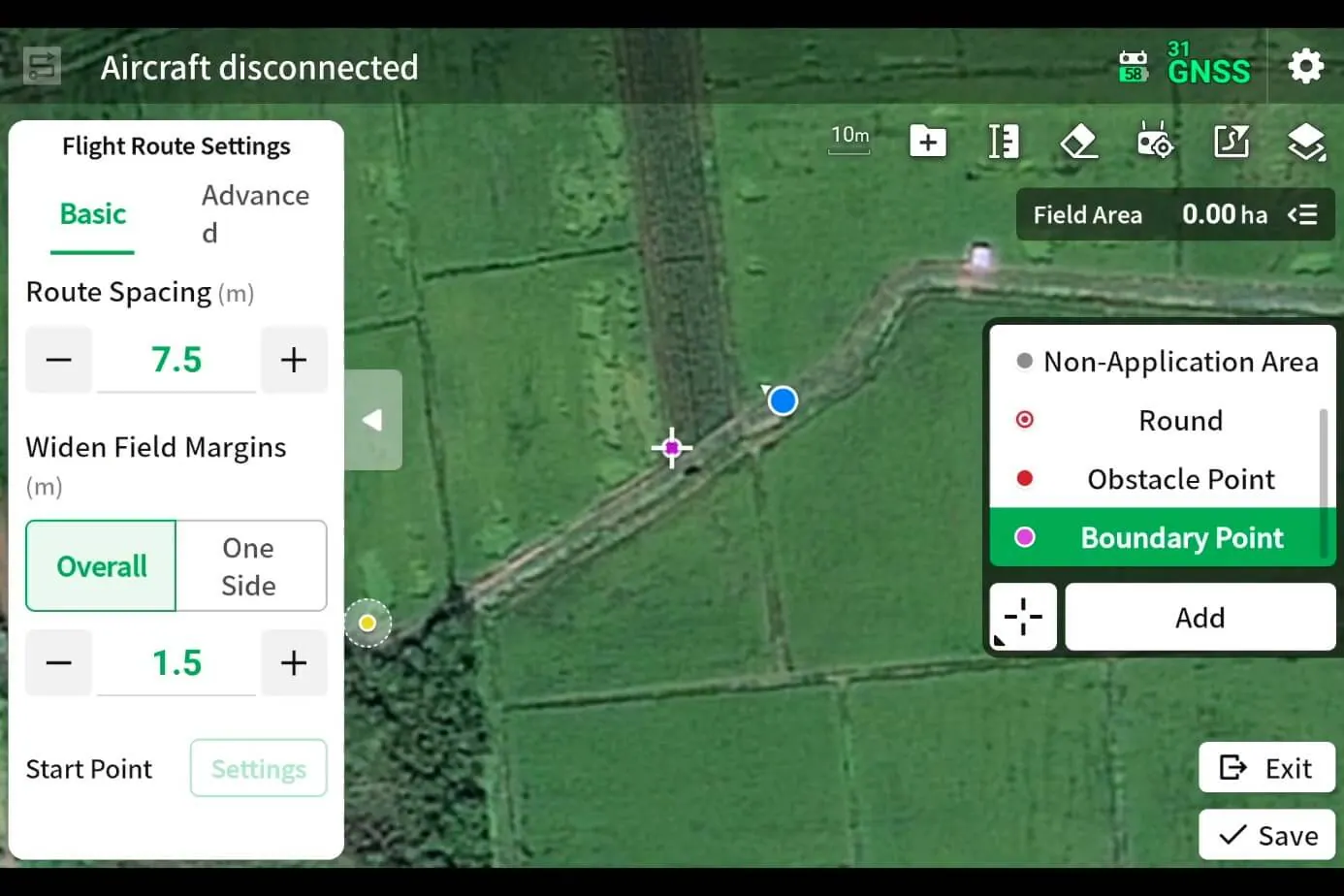
- Check the label for aerial use, the water volume and any RPAS restriction.
- Set a swath narrower than the maximum and confirm it with water-sensitive paper in the canopy.
- Choose the droplet size the label calls for; remember the sprinkler may run finer than shown.
- Fly at the height the app recommends for the crop, and respect the label's wind limits (the T50 is rated to 6 m/s, about 22 km/h).
- Plan water, mixing, battery rotation and the next field before you start.
Not sure the drone is right for your farm? Book a demo or ask about custom spraying.
Common questions
Yes, if the product label allows aerial application and you meet the pilot and applicator rules: a Transport Canada Advanced pilot certificate, a registered and declared drone, and the provincial licence for aerial pesticide application. See drone spraying regulations in Canada.
At least the aerial water volume on the product label, which is often 45–50 L/ha for corn, soybean and wheat fungicides. Ontario research found coverage fell and drift rose at low volumes and high speed.
Not in OMAFA's trials so far. Drone coverage was lower than ground rigs, and results came closest at about 47–50 L/ha. Drones are best used for passes a ground sprayer would miss. For airplanes versus drones, see crop dusting.
It depends on your water volume and refill cycle. At 50 L/ha a T50 tank covers about 0.8 ha (2 acres) per load, so your crew's refill and charging speed sets the daily total. Time a full cycle before you plan.
Products registered for aerial application, unless the label says DO NOT apply by RPAS. The Sprayers101 Canadian spray drone label search lists candidates, but always confirm on the label for your crop. For potatoes, see late blight spraying.
Yes. Applying a pesticide by air needs the provincial licence: in Ontario the aerial class exterminator licence, in Québec the C1/D1 permit and CD1 certificate. Rules in other provinces differ, so check with your province.
Yes. We fly contracted spraying jobs once a job assessment confirms the label, licences, field and dates. Send the crop, location, acres and window. See drone spraying services.
An Agras package is quoted as separate lines: aircraft, batteries, charger or generator and spray system. See the Agras T50 and financing options.
More Applications
Crop dusting in Canada: airplanes, drones and what has changed
Crop dusting still happens: aerial applicators fly airplanes over Canadian farms every season, mostly for fungicide and insecticide. A spray drone can take over small, wet or obstructed fields; big open acres in a short window still favour an airplane.
Potato late blight: spraying fungicide by drone on wet rows
A spray drone can apply potato fungicide when rows are too wet for a sprayer, if the label allows aerial use at its aerial water volume. It fills gaps in a late blight program; it doesn't replace your sprayer or your province's spray-interval advice.
Multispectral drones for crop scouting and mapping
A multispectral drone maps crop health with light bands the eye can't see, so you can find where a field differs, compare dates and build prescription maps. The map shows where to look; a ground check tells you why.
Want to see a drone do this job on your farm?
Tell us the crop, the job and your timing. Demonstrations use clean water and show the flight, refill and crew workflow.
Book a demo