Remote fields and camps
Moving tools, parts and supplies across water, bush or hills that trucks can't cross.
Questions about a project? Our team can help. Contact us →
The FlyCart 100 is DJI's largest delivery drone: an eight-rotor aircraft that carries cargo on a 30 m winch or a 10 m lifting cable, flies up to 12 km on two batteries and has radar, LiDAR and a built-in parachute. It moves tools, parts and supplies across terrain trucks can't cross: hills, water, bush and steep slopes. In Canada, a drone over 150 kg needs a Special Flight Operations Certificate (SFOC), so plan on roughly 60 kg of cargo, not DJI's 85 kg rating.
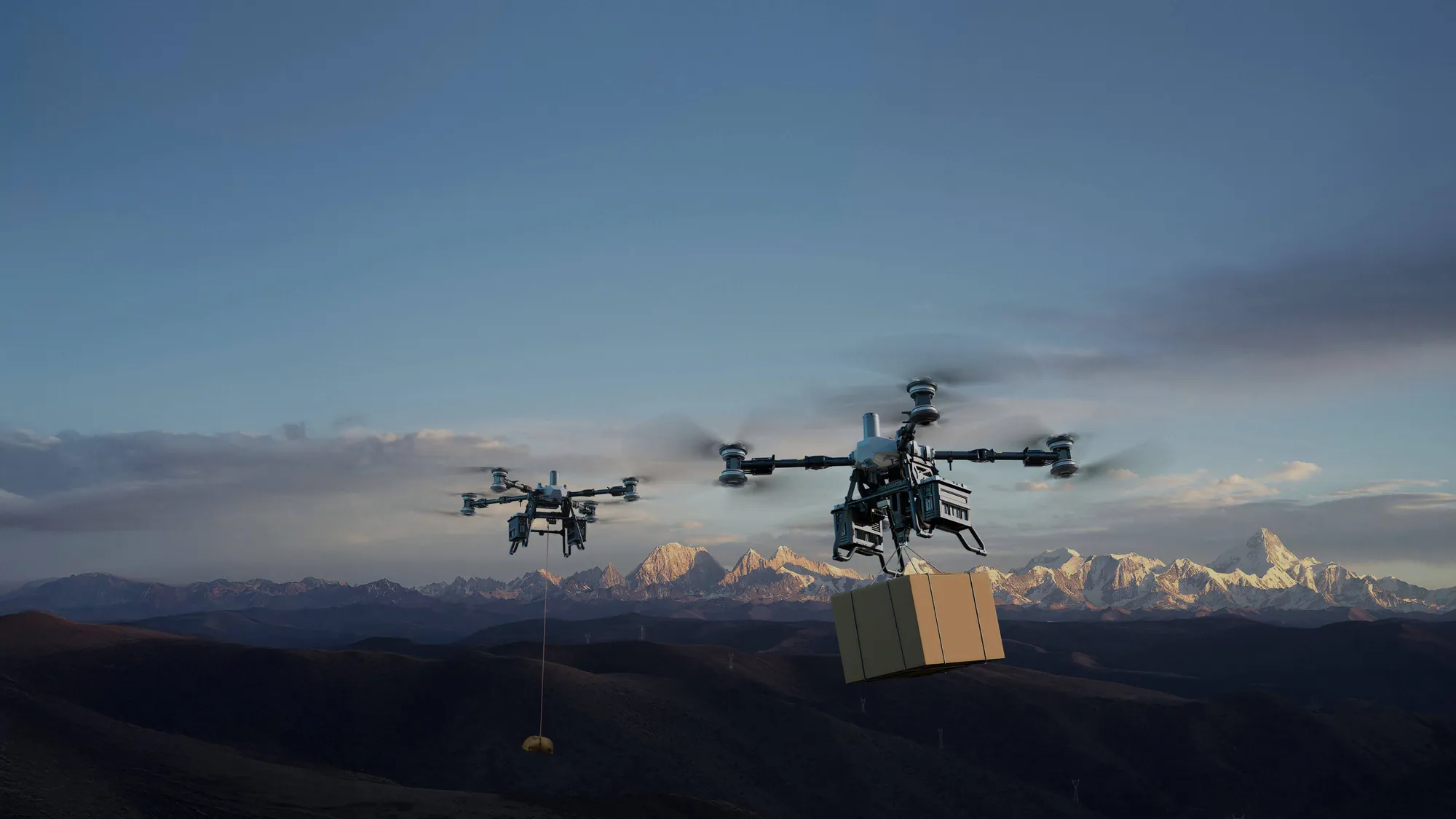
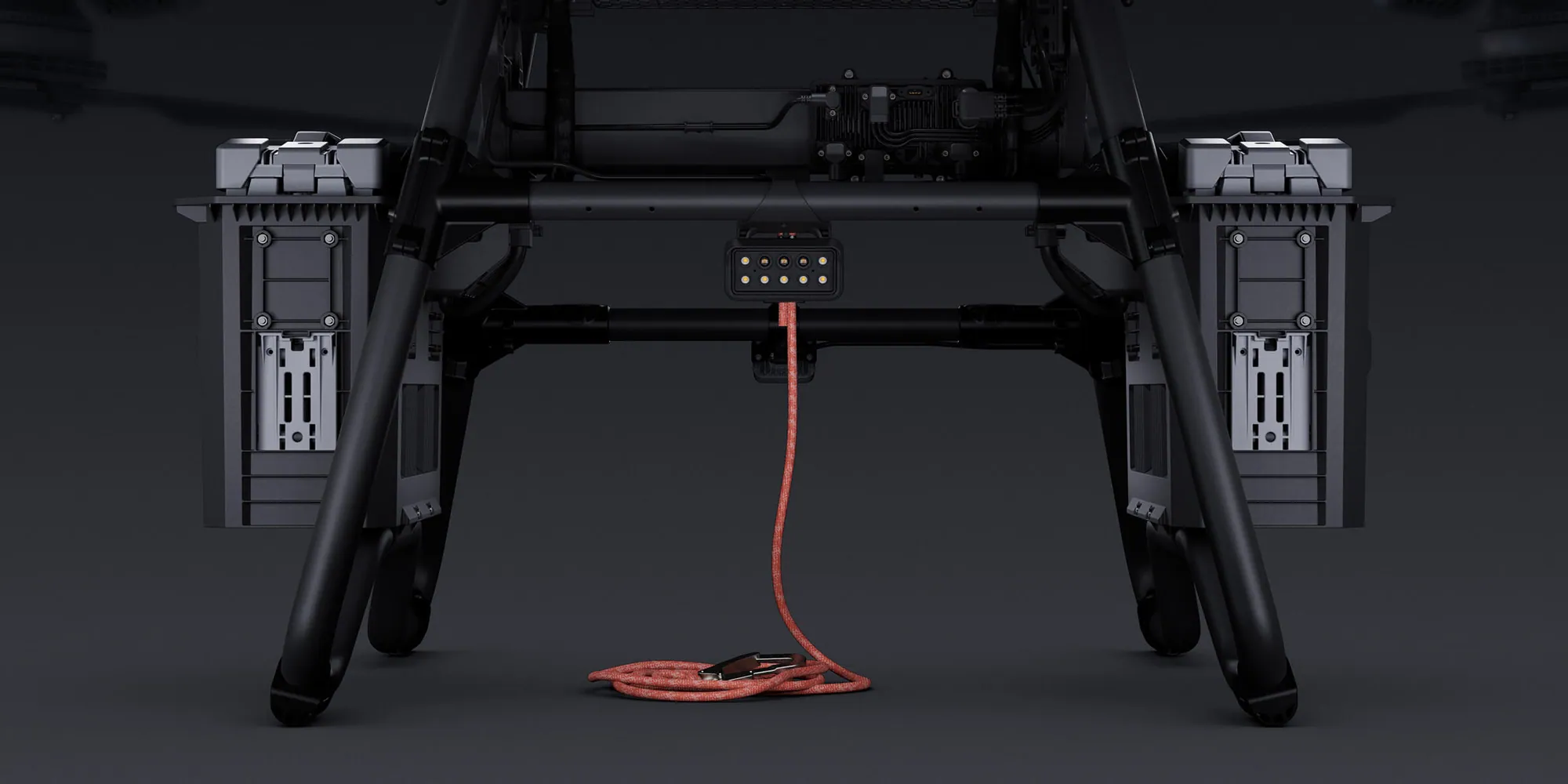
The flagship winch lowers and lifts loads on a cable of up to 30 m, with a weighing function and a hook you open from the app. The dual-battery lifting system carries a load on a fixed 10 m cable.
Up to 12 km and 14 minutes of flight at a 149.9 kg takeoff weight with two DB2160 or DB2212 batteries. Under an Advanced certificate the drone must stay in sight, so most routes are much shorter.
Front, rear and downward radar, LiDAR and a four-camera vision system for obstacle sensing up to 60 m, plus an integrated parachute that opens from 100 m.
Sealed against dust and rain except the motors (IP55), works from −20 to 40 °C and in wind up to 12 m/s (about 43 km/h): usable in a Canadian spring or fall, never in freezing rain.
The DB2160 battery and the C12000 charger or D14000iE generator are the same as the Agras T100's, so a farm or contractor running a T100 can share batteries and charging.
Plan routes, run deliveries and watch the drone from the DJI Delivery app and DJI DeliveryHub. A second remote controller supports handover between two pilots.
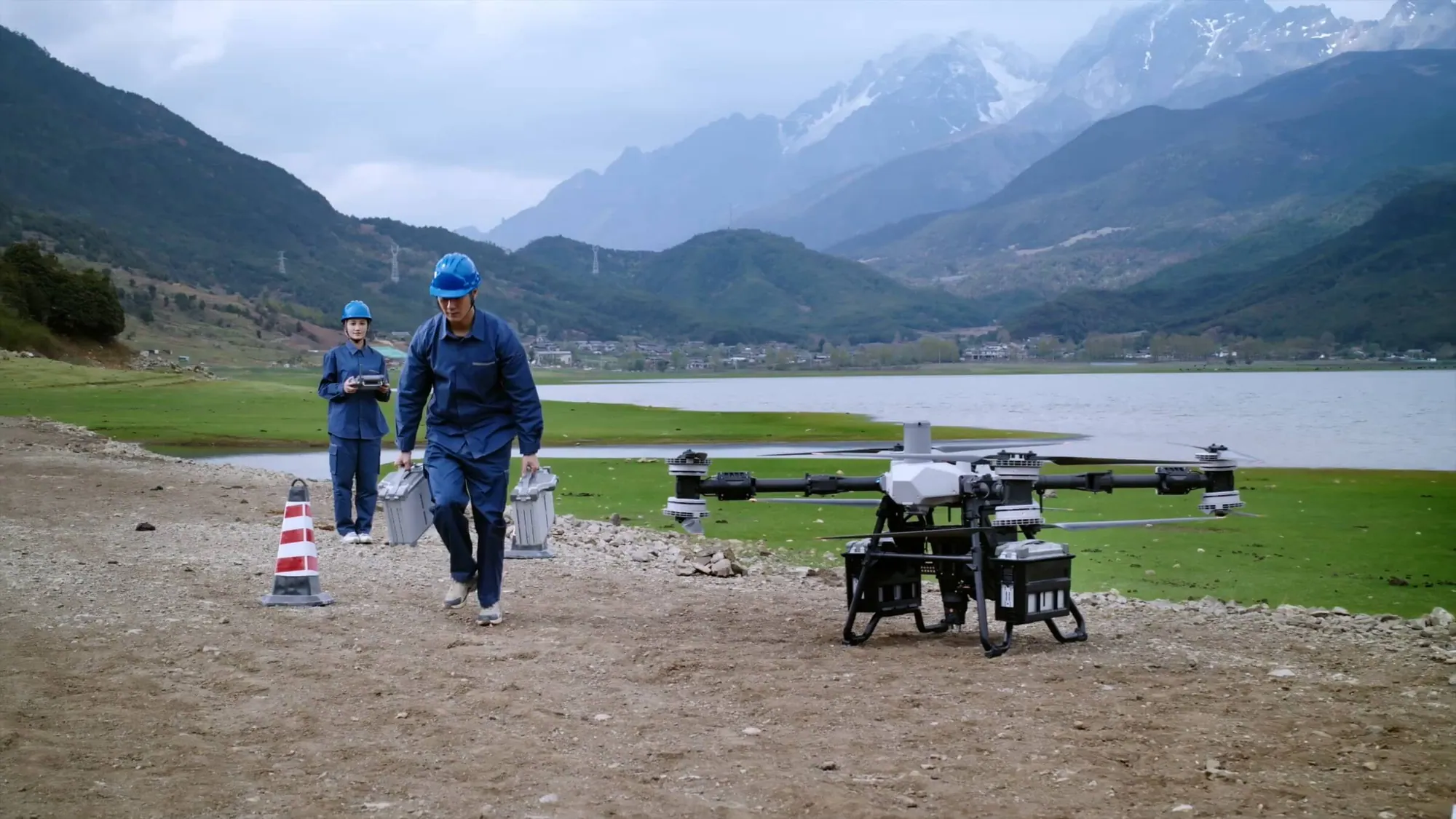
DJI's 85 kg figure assumes a 170 kg takeoff weight. Under Canada's 150 kg line, with two batteries, the cargo is closer to 60 kg. Start from the heaviest load you need to move, the distance and the site, then decide whether that fits.
Moving tools, parts and supplies across water, bush or hills that trucks can't cross.
Equipment to towers, slopes and worksites without a road.
Supplies to plots, wetlands and field sites with no access.
Supply drops where ground access is cut off.
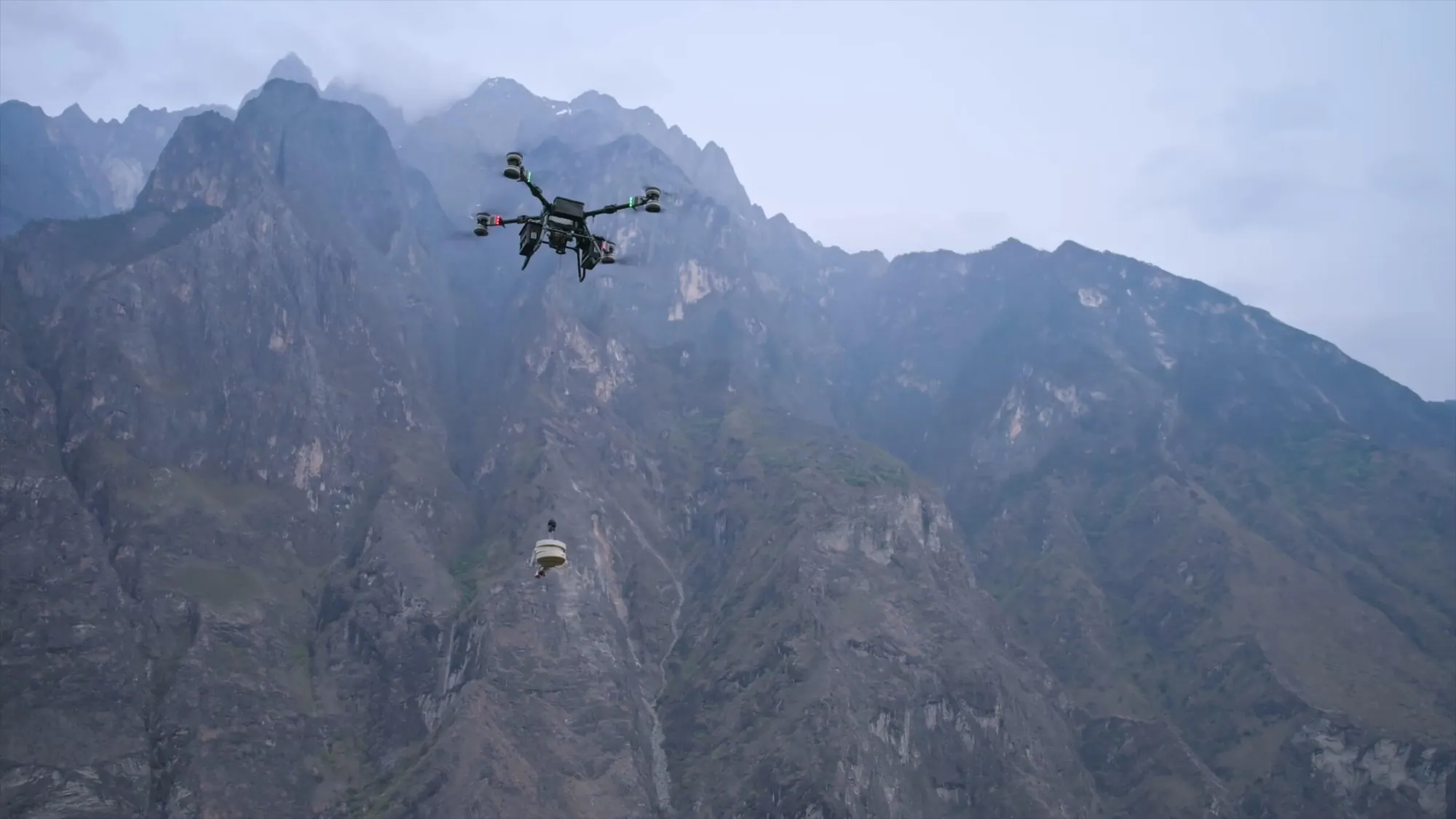
DJI rates it at 85 kg with two batteries at a 170 kg takeoff weight. In Canada a drone above 150 kg operating weight needs a special flight operations certificate (SFOC). With two batteries the drone weighs about 85 kg (lifting) or 90 kg (winch) before the hook and cable, which leaves roughly 60 kg of cargo under the 150 kg line, less with the hook and cable. Weigh your setup.
It is a medium drone (25–150 kg), so the pilot needs a Transport Canada Advanced certificate and the drone a declaration for the operation, kept at or under 150 kg. Above 150 kg, or beyond visual line of sight, the operation needs extra approval. See the drone licence guide.
Yes, within the drone's operating manual: Canadian rules allow a slung load only as the manual describes, otherwise an SFOC is needed, and you must not create a hazard when releasing or dropping cargo.
Up to 12 km with two batteries at a 149.9 kg takeoff weight, in DJI's windless test at sea level. Real range drops with wind, cold and heavier loads, and the drone must stay within visual line of sight under an Advanced certificate.
Yes. It takes the DB2160 (and the newer DB2212), charged on the C12000 or the D14000iE generator, so batteries and charging can be shared with an Agras T100. See the field kit guide.
It can move tools, parts, fencing supplies and feed to places a truck can't reach. We haven't found published Canadian farm cases yet, so talk to us about a trial: list the loads, distances and sites, and check the weight, airspace and cable rules first.
We send an itemized quote: aircraft, winch or lifting system, batteries, charger or generator and any care plan. Ask for a quote.
The Agras T100 is DJI's largest agricultural drone, built for operators losing time to refills: a 100 L spray tank, a 150 L spreading system with four auger sizes, and an optional lifting system. In Canada its weight is the first question. Fully loaded it can pass the 150 kg line that requires a Special Flight Operations Certificate, so we size the payload, power and crew with you before quoting.
Learn more →Batteries, power and accessories for Agras dronesBatteries and charging decide how much an Agras drone gets done. A T50 crew usually rotates three DB1560 batteries through a C10000 charger or a D12000iE generator; a T100 runs DB2160 batteries on a C12000 or D14000iE. We size the kit to your site power, daily acres and temperature, and add RTK, relays, spare propellers and nozzles so the aircraft isn't waiting on parts.
Learn more →Tell us what you need to move, how far and over what ground. We check the load against the 150 kg line and quote the kit.