Agricultural drone FAQ
The questions Canadian farmers, custom operators and researchers ask us most about DJI agricultural drones: choosing a model, rules and licences, using the drones, and support.
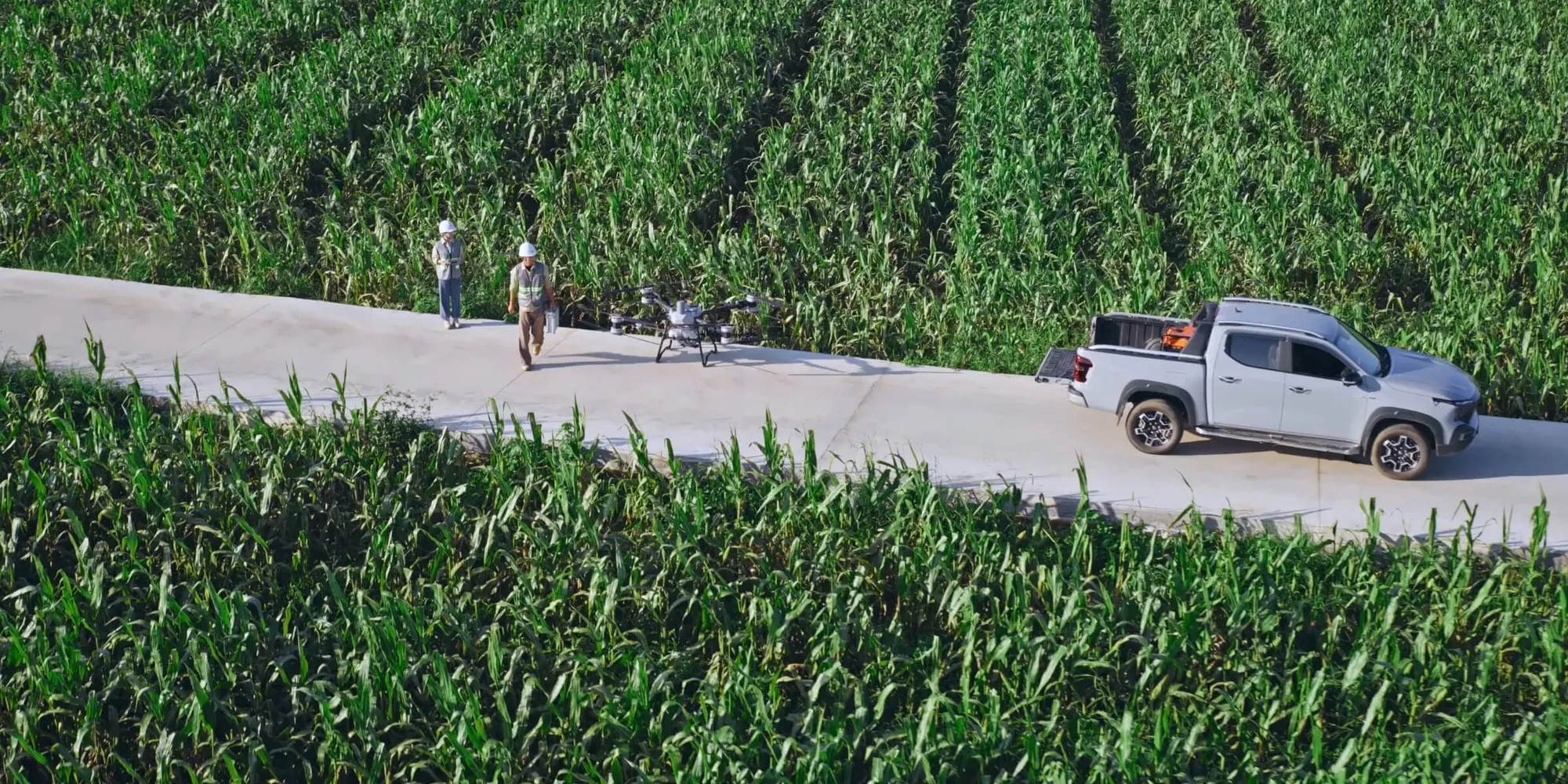
Start from the task (spray, spread or both), your field sizes and how many loads a day your crew can mix and refill. Tank size alone doesn't decide it. The Agras T50 suits most farms; the Agras T100 suits operators limited by refills who can plan around the 150 kg line.
Field area alone doesn't decide it. Start with the job that repeats, the work window and what your current method costs. Estimate material per load at your label rate, time a full cycle (fly, refill, swap batteries), and compare owning with hiring the work out. See drone spraying services.
Packages are built from separate lines: the aircraft and RC Plus controller, flight batteries (usually three DB1560), a charger or generator, and the spray system. The spreading system, extra sprinklers, a second tank and spare parts are optional lines. An aircraft-only listing has no batteries or charger. Your quote marks each line new or used.
It depends on your daily area, payload, refill speed, charging power on site and the temperature. Many buyers start with three and add more once the work is running. Batteries are a large share of the cost, so budget for them early. See the field kit guide.
Yes. We sell certified pre-owned units that cost much less than new. Stock changes from season to season, so ask for the current list showing which parts are new and which are used, battery cycle counts where known, the inspection done before delivery and the support terms. If none is available, ask for a comparison with a new aircraft and the same accessories.
Yes. The most useful demo is when your crop is close to the stage you will treat. Demonstrations use clean water only and show the flight, refill and crew workflow, not how well any product works. Send your location, access and possible dates; weather and airspace are checked first. Book a demo, or see drones fly at a farm show.
Yes. Send the program's quote requirements (addressee, date, separate lines, taxes) and the deadline as early as you can. We prepare a dated, itemized quote with the aircraft and each spreading or spray attachment on its own line if needed. The program decides eligibility. See financing and funding.
Payment arrangements are agreed in writing for each order. Usually a deposit confirms the order and the balance, sometimes in stages, is due before delivery. Third-party financing may be available; the lender sets the terms. See financing options.
Send the exact item list, the date items must be received by, your tax-exemption documents and the quote format your finance office needs. We flag anything that may not arrive in time so you can split or hold the order. See institutional purchasing.
Large orders can arrive by freight in several packages, and batteries may ship separately. Tell us whether your site can unload heavy items, who will be on site, the exact address and any seasonal shutdown dates. Check every package on arrival and report damage right away, with photos.
A Transport Canada Advanced pilot certificate: an online exam, then an in-person flight review. A loaded Agras is a medium drone (25–150 kg), so the model also needs a declaration for the operation. See the drone licence guide.
Yes, if the label allows aerial application and doesn't say DO NOT apply by RPAS (the regulators' word for a drone). Follow the label's rate, water volume, droplet size and buffer zones, and hold your province's aerial licence; some provinces exempt farmers spraying their own land. Buying or configuring a drone doesn't authorize any product. See drone spraying regulations.
When its operating weight, including the battery, attachments and material, is over 150 kg. DJI lists a 175 kg maximum takeoff weight for the standard T100, so a full load passes the line and needs an SFOC from Transport Canada. A lighter load still needs the right declaration and certificate.
Possibly, with permission from NAV CANADA (air traffic control) and an Advanced certificate. Share your field coordinates early: an airspace check can change where or when a demo or job takes place. The pilot in command is responsible for getting permission.
Yes, we can provide a field for practice and for the review. The review itself is done by a flight reviewer recognized by Transport Canada; tell us if you already have one booked. See the flight review guide.
Start with the exact seed, blend and target rate. The T50 spreader takes dry granules from 0.5 to 5 mm; the T100 uses augers for 0.5 to 10 mm. Check flow and clumping, calibrate at the planned rate, then check establishment. See cover crop seeding.
An index map shows where a field reflects light differently. It guides scouting and sampling, but the cause (water, nutrients, disease or something else) needs a ground check. See crop scouting and mapping.
It depends on the file format and the current firmware. Some workflows need specific raster formats, and some zones must be drawn on the controller. Send a sample file and we will check with the manufacturer before you decide.
Tell us the species, crop stage, plot map, comparison and what you need to measure, and we will suggest the equipment and workflow. Site, provider, cost and data permissions are agreed in writing before anything is scheduled.
We fly spraying, seeding, spreading and mapping jobs once a job assessment confirms the label, licences, field and dates. We don't rent drones at the moment; see what works instead.
Training is offered with a purchase: setup, calibration, route planning, batteries, safety and maintenance with your own drone. We can provide a field for the training and for your flight review. See Agras training.
Register your interest and earn the Transport Canada Advanced certificate by passing the exam and the flight review. Registering isn't a job offer: when a farm job comes up near you, we contact partners first. Pesticide jobs also need your province's aerial licence. See the partner program.
Yes, for any drone of 250 g or more: a Transport Canada Basic or Advanced pilot certificate, and the drone must be registered. Spray drones need the Advanced certificate. See the drone licence guide.
Get the Advanced pilot certificate and your province's aerial licence, choose the drone, batteries and power, and insure the business for aerial application. The business guide covers each step.
The outdoor shows: Canada's Outdoor Farm Show in Woodstock and Ag in Motion near Saskatoon both ran daily drone flights in 2026. See the dated list of farm shows.
It depends on the product, whether it is new or pre-owned, and any care plan. The terms are on your quote or invoice; keep your care plan activation confirmation. If a fault appears, send photos and the error message. See repair and support.
Only as a feasibility trial. DJI lists feed among the materials the T100's extra-large auger can handle, but pellet size alone doesn't prove the feed will meter, spread evenly or suit the site. Bring the feed label and a sample. Medicated feed has its own rules.
Plan on launching from a stable spot on shore. DJI's Mavic 3M manual prohibits takeoff from moving objects, including boats, and Canadian Aviation Regulations section 901.37 bars a pilot from flying while operating a moving vessel.
Visible boundaries, shore infrastructure, access and staging areas. Reflections and moving water can leave gaps. Water quality, depth, submerged equipment and biomass need sampling or underwater equipment instead.
You Might Also Be Interested In
DJI Agras T50
Learn more about DJI Agras T50.
Read more →DJI Agras T100
Learn more about DJI Agras T100.
Read more →Farms
Solutions tailored for farms.
Read more →Custom applicators and spraying businesses
Solutions tailored for custom applicators and spraying businesses.
Read more →Home
Return to the homepage.
Read more →About Us
Learn about our story, team, and mission.
Read more →Still Have Questions?
Our team is ready to help with any specific questions about your project requirements.
Contact Our Team