Orchard and vineyard spraying with drones
Spray drones can treat orchards, vineyards and berry blocks on slopes and wet rows an airblast sprayer can't reach, but they spray from above at a lower water volume, so canopy coverage differs. Check the label allows aerial use and test coverage first.
Updated
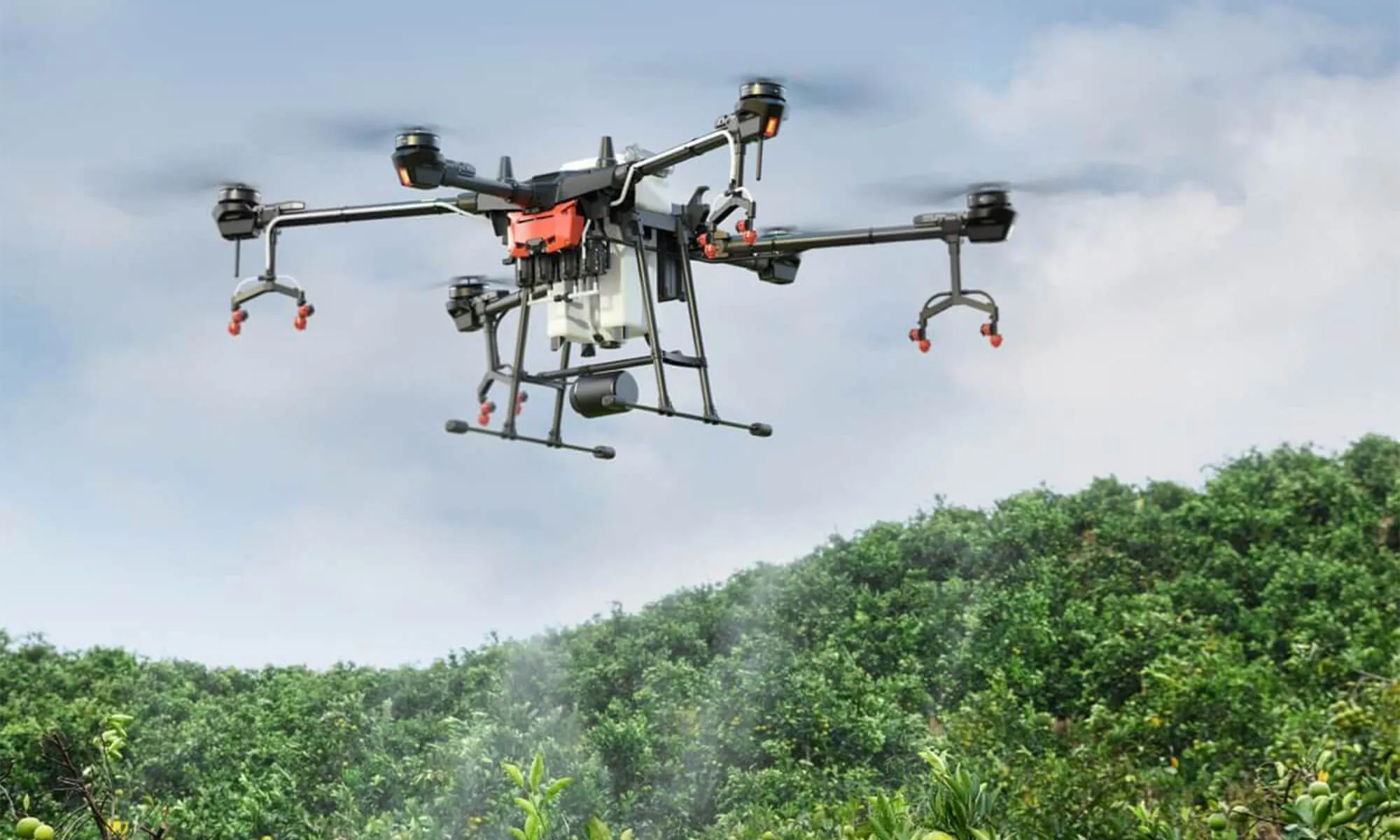
Where airblast sprayers struggle
Airblast sprayers need dry, firm alleys and safe slopes. After rain, on terraces or on hillside blocks in the Niagara, Okanagan and Annapolis valleys, a tractor may not get in when the spray window opens, or may not be safe to run.
Spray from above, follow the slope
A drone such as the Agras T50 flies above the rows, follows terrain on slopes up to 50° and sprays without touching the ground. An optional second pair of sprinklers raises flow for denser canopies. It can apply only products whose label allows aerial application.
Access and timing, checked against coverage
Expect better access and timing; check coverage yourself. A drone sprays from above at a far lower water volume than an airblast sprayer, so coverage on the underside of leaves and inside dense canopies differs. Test it with water-sensitive paper in your own blocks before you rely on it.
Drone or airblast sprayer?
| Spray drone | Airblast sprayer | |
|---|---|---|
| Access | Flies over wet alleys, terraces and steep blocks | Needs firm, safe alleys |
| Spray direction | From above, pushed down by rotor wash | From the side, into the canopy |
| Water volume | Label aerial minimum; far lower than airblast | Often hundreds of litres per hectare |
| Drift control | Low height, droplet size, wind limits | Air volume, nozzle choice, shrouds |
| Best use | Blocks a tractor can't reach in time | Most routine passes |
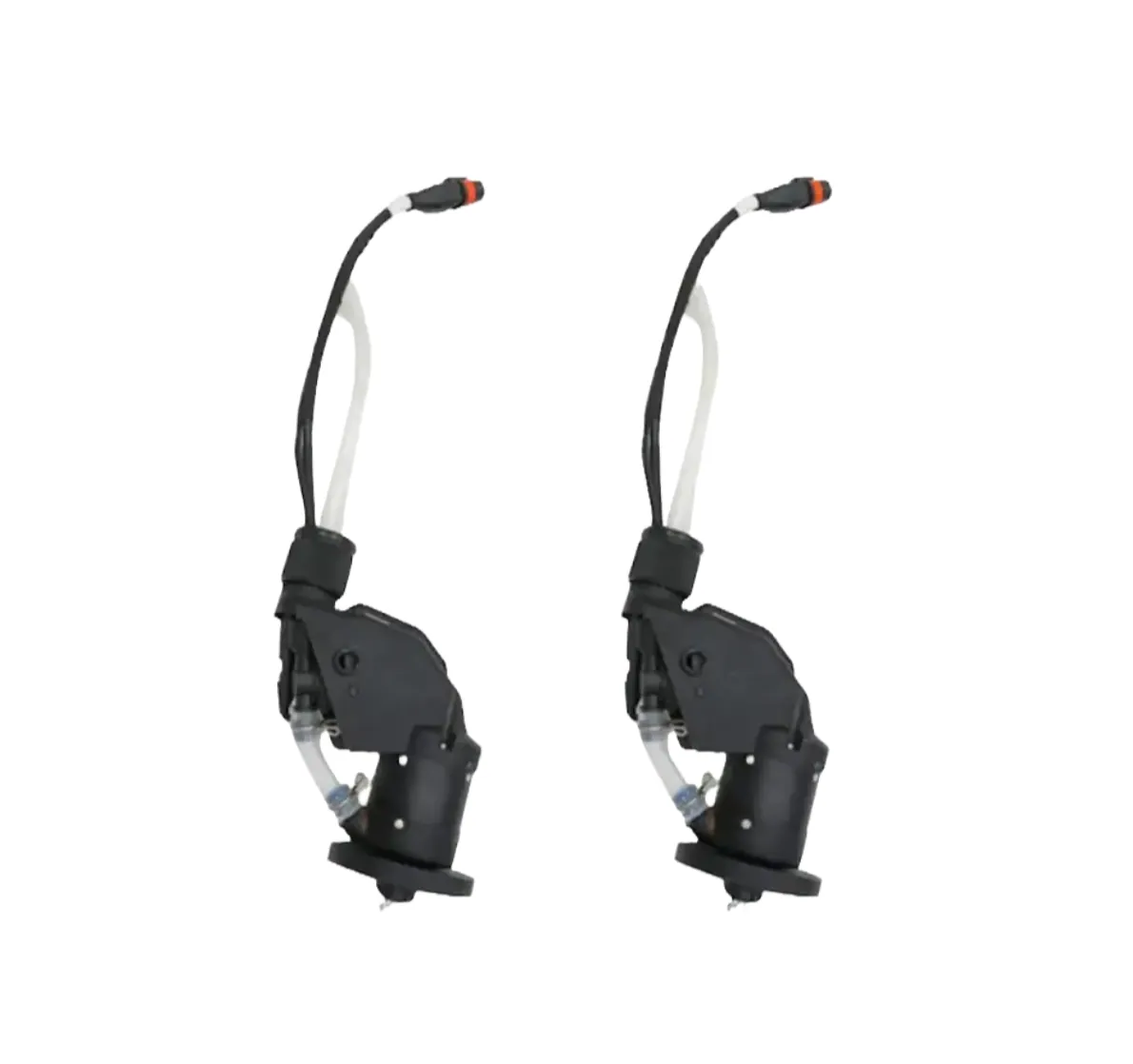
Setting up a T50 for orchards and vineyards
- Four sprinklers. The optional front pair lifts flow from 16 to 24 L/min for dense canopies. A DJI dealer must fit and calibrate it, and with it on the drone won't steer around obstacles by itself, so map every post and wire.
- Droplet size. Set 50–500 µm in the app to match the label's spray quality and the drift risk at block edges.
- Routes and obstacles. Map each block, mark posts, trellis wire, wind machines, hail netting and hydro lines, and walk the block before the first flight.
- Coverage check. Hang water-sensitive paper at the top, middle and inside of the canopy and fly a water-only pass.
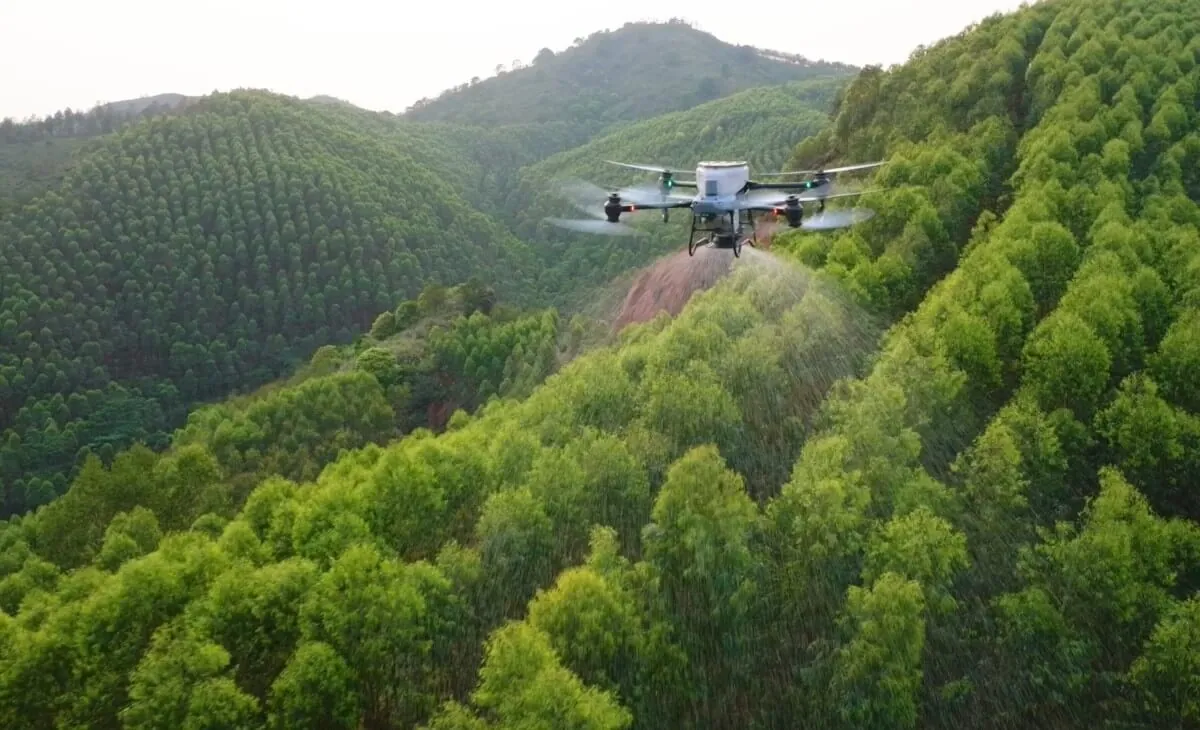
What you can apply
The label decides. A product can go on by drone only if it is registered for aerial application in that crop and the label doesn't say DO NOT apply by RPAS, at no less than the aerial water volume. Many orchard and nursery products have no aerial use at all; in Québec, none of the fungicides and insecticides registered for ornamental nurseries do. Check the Sprayers101 label search, then the label itself.
Applying a pesticide by air also needs your province's aerial licence. See the regulations guide.
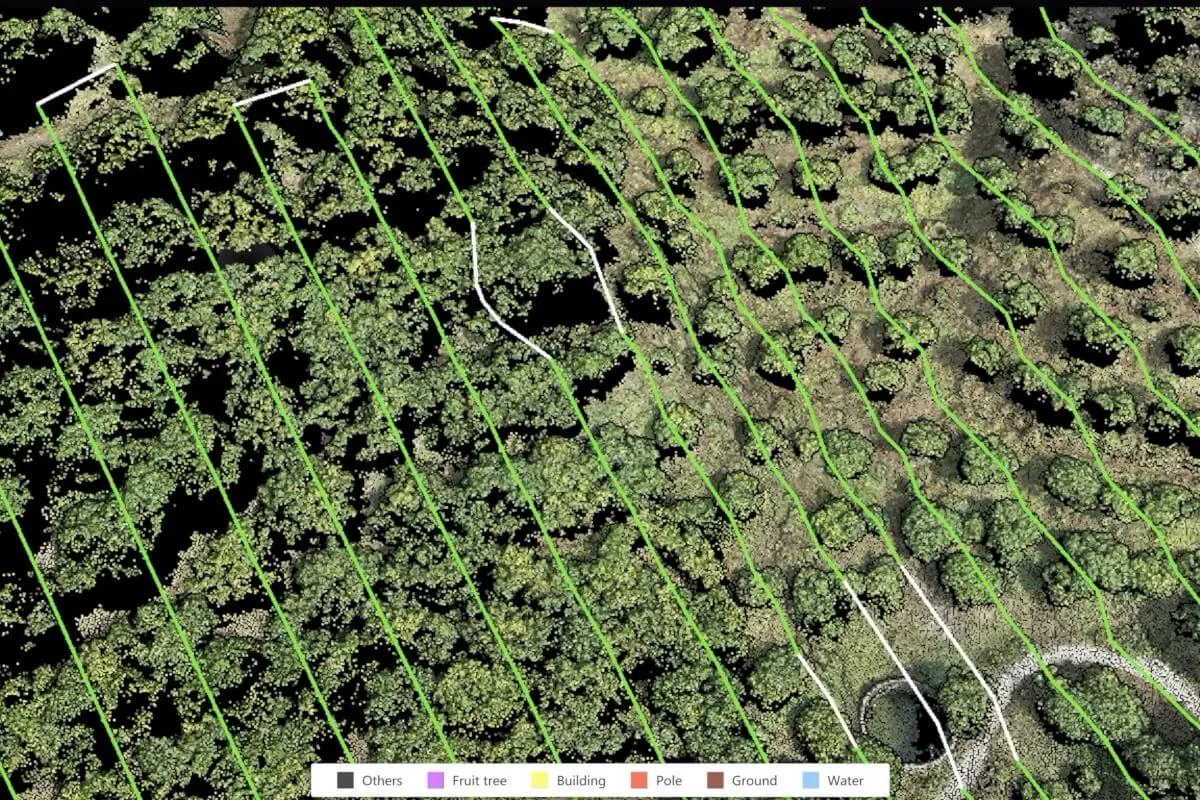
Map the canopy first
Multispectral maps help you see which blocks or rows are weaker before you decide where to spray. Researchers in six Niagara Riesling vineyards found links between remotely sensed data and vine size, water status and yield at some sites and dates, a reminder that maps work best alongside ground checks. The Mavic 3 Multispectral and the crop scouting guide cover that workflow.
A manufacturer example
DJI describes a sloped vineyard in Romania that used a T50 for its 2024 season because tractors struggled on the slope after rain. It is a manufacturer case from overseas, not a Canadian result, but the reason is the same one Canadian growers give: access on steep, wet ground.
Want to see a T50 fly your blocks with water? Book a demo, or hire us to fly the job.
Common questions
Yes, with a product whose label allows aerial application in that crop, at no less than the aerial water volume, and with a licensed pilot and applicator. Many orchard products have no aerial use, so check the label first.
Not the same. A drone sprays from above at a far lower water volume, so coverage inside dense canopies and under leaves differs. Test with water-sensitive paper in your own blocks.
Many growers add the second pair of sprinklers for more flow. DJI has a dealer install and calibrate it, and obstacle bypass is disabled with the kit fitted. See the Agras T50.
The T50 can follow terrain on slopes up to 50°. Map posts, wires and netting first and fly a water-only pass to check the route and coverage.
Check each label. In Québec, none of the fungicides and insecticides registered for ornamental nurseries have an aerial use, so they can't be applied by drone. For greenhouse roofs, see greenhouse shading.
Yes. Demonstrations use clean water only, ideally when the canopy is close to full size. Book a demo with your location and dates.
More Applications
Spray drones for Canadian field crops
A spray drone makes sense when wet ground, tall crops or a short fungicide window keep your sprayer out. At a typical 50 L/ha label rate one T50 tank covers about 0.8 ha (2 acres), so it suits patches and timing gaps, not whole farms.
Greenhouse shading by drone: putting on and washing off roof coatings
A spray drone can put shading compound on greenhouse glass roofs in spring and spray the remover in late summer, with no one on the roof. It leaves droplets rather than an even film, and must stay 500 ft from people not on the job.
Multispectral drones for crop scouting and mapping
A multispectral drone maps crop health with light bands the eye can't see, so you can find where a field differs, compare dates and build prescription maps. The map shows where to look; a ground check tells you why.
Want to see a drone do this job on your farm?
Tell us the crop, the job and your timing. Demonstrations use clean water and show the flight, refill and crew workflow.
Book a demo