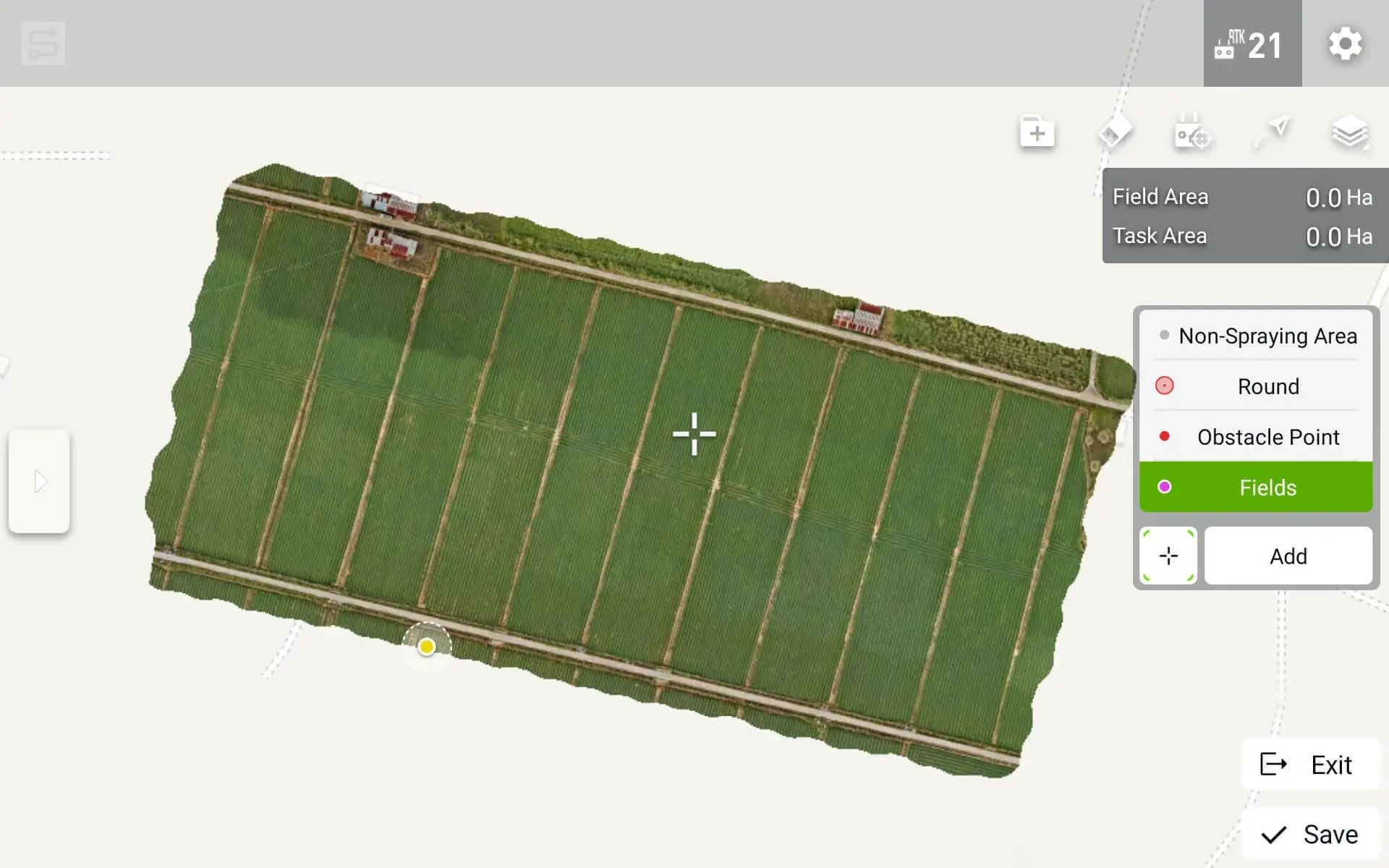
Authorization and a full operating plan come before the flight
Flying a spray drone near an airport or in controlled airspace is conditional, not automatic: the operator needs the correct authorization and a plan that holds together. Aviation checks cover actual operating weight with material and attachments, registration, pilot and observer requirements, operation category, airspace, visibility, distances, local site conditions, eligible aircraft and declarations, and any permissions or SFOC.
An aviation document is one input, not a clearance
An aviation document is one input into the decision, not a clearance for the whole operation. A product specification, flight certificate or pesticide registration on its own does not clear the job, so the aircraft, the operating plan and the material are assessed separately.
The airport question is one gate among several. The site review adds landowner permission, people, livestock, traffic, power lines, natural areas, water and nearby aerodromes, and a controlled-airspace permission does not settle any of them.
What buyers ask before their first flight
Buyers who contact SpeedyDrone ask whether they can operate legally in restricted or controlled airspace and what permissions or precautions that requires. Farm buyers comparing aircraft can start with the drone use on Canadian farms page.
What should be in a permission request for controlled airspace?
A controlled airspace permission request requires checking the aircraft, operating plan and material independently. An operator records the aircraft configuration, carried material, actual operating weight, pilot credentials, observer needs, operation category, airspace, visibility, distances and local site conditions, then confirms which permission applies.
Record the aircraft and the load
A permission request for controlled airspace should confirm the actual operating weight with material and attachments. The actual operating weight with material and attachments belongs in the record, because the same aircraft can fall on either side of a weight gate depending on what it carries.
A preparation checklist
- Aircraft: the actual operating weight with material and attachments.
- Crew: pilot credentials and whether observers are required for the operation.
- Location: fields, launch and recovery areas, people, livestock, traffic, power lines, water and nearby aerodromes.
- Permission: the operation category, the applicable declaration, whether an SFOC is needed, and dangerous payload restrictions checked separately under CAR 901.43.
Ask for the job before the setup
SpeedyDrone asks about the material, block, crew and work window before discussing a field setup, and assesses each contract application job before quoting or dating it. A buyer sorting out which pilot and aircraft requirements apply can start with the spray drone licence checker.
Does loaded weight change which rules apply?
Loaded weight decides which authorization a spray drone needs. A flight with an actual operating weight above 150 kg requires an SFOC-RPAS, a special flight operations certificate for that flight, under CAR 903.01(a) of the Canadian Aviation Regulations. An aircraft at or below 150 kg still depends on the actual configuration, declaration, mission, pilot and airspace.
What sits inside actual operating weight
Loaded weight changes which rules apply: The full battery, attachments, material and other carried items count, so a partly filled tank does not by itself settle the category. The most restrictive equipment, operator, site and legal conditions apply to the flight.
The DJI Agras T50 reference weights
DJI publishes maximum takeoff weights of 92 kg for spraying and 103 kg for spreading for the DJI Agras T50 under its reference configurations. Those are manufacturer ratings for reference setups, not a reading of your own tank and hopper. The flight category comes from the actual operating weight and mission, and the exact safety declaration is checked when one is required.
The DJI Agras T100 reference weights
DJI lists reference aircraft masses of 75 kg with the two-nozzle or spread setup and 77 kg with four nozzles for the DJI Agras T100, and a 175 kg maximum takeoff weight for the standard spray or spreading configuration and 177 kg for the four-nozzle spray configuration. A lighter setup needs a separate check of the exact aircraft declaration, planned category, certification, site and airspace.
What has to be managed once the aircraft is in the air?
Flight management keeps the aircraft inside the approved plan: who is watching, what the crew can see, how far the aircraft stays from people and property, and what happens if conditions change. Visibility, distances and local site conditions are part of the plan, and terrain, wires and branches need a survey, with clear approach, egress and landing areas, separation and a contingency.
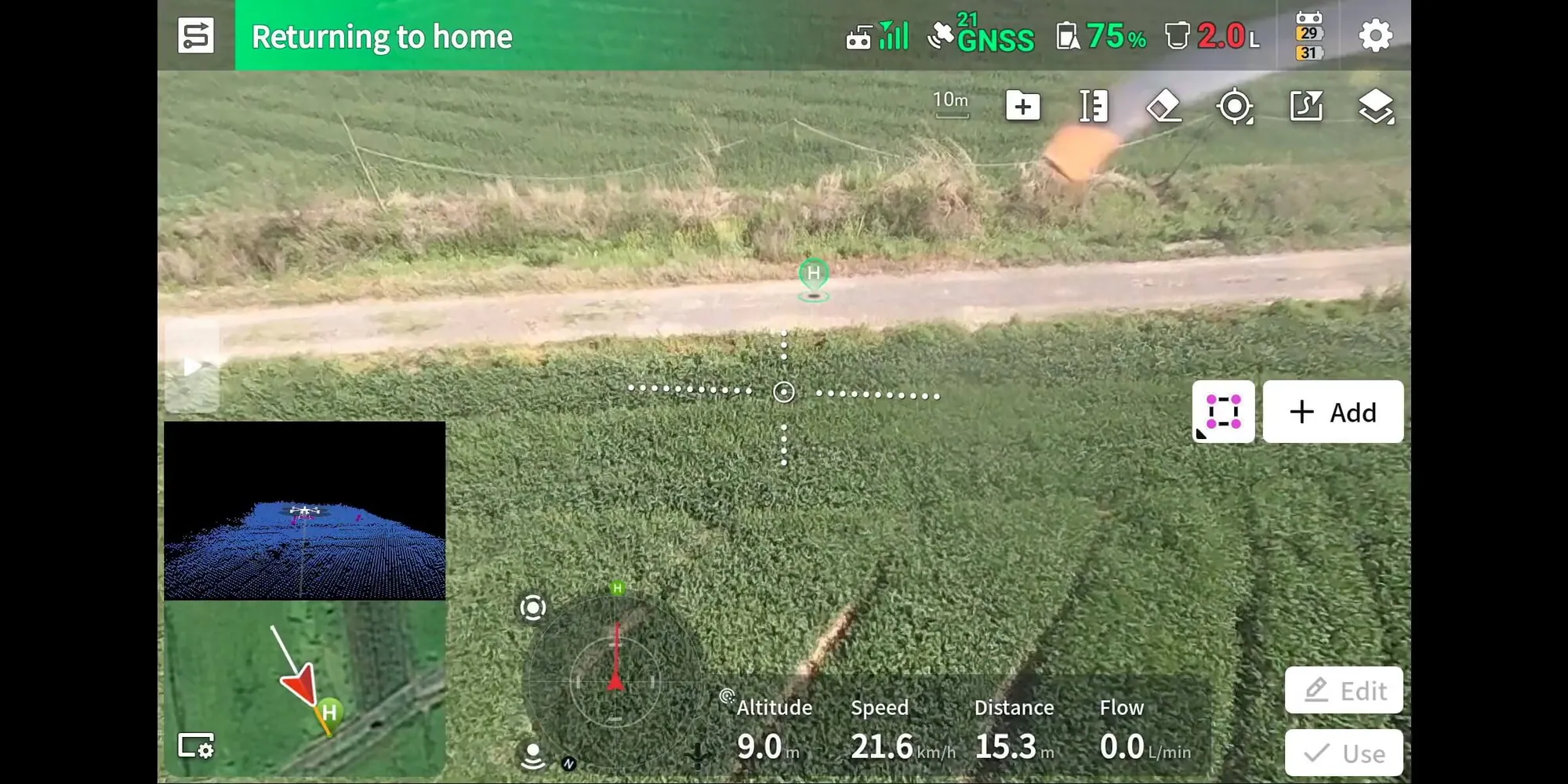
Line of sight and crew roles
Aircraft pilot and observer requirements belong in the operating plan. An observer may be required for a given flight, and that requirement is confirmed for the specific aircraft, site and operation rather than copied from a previous job.
Giving way and the flyaway response
Aircraft flight planning includes a contingency, alongside the approach, egress and landing areas. The crew works from current applicable guidance rather than a habit carried over from another site.
Hardware does not authorize the spray
A hardware configuration does not authorize pesticide use. Health Canada's current RPAS guidance and the current label are checked for the exact product, crop, site and use, and Ontario or Québec requirements are checked for the actual operation before a date is committed or a treatment quoted. The agricultural field kits page describes hardware; the label and the site permission are separate checks.
What other restrictions apply to a spraying job?
A spraying job faces other restrictions: aviation permission does not settle pesticide, site or provincial requirements. A pest control product needs the exact Canadian registration number, the current official label, and the crop, site and pest confirmed, with the application method, and the aerial directions are applied as written without changing the rate, carrier volume, droplet class or buffer zones.
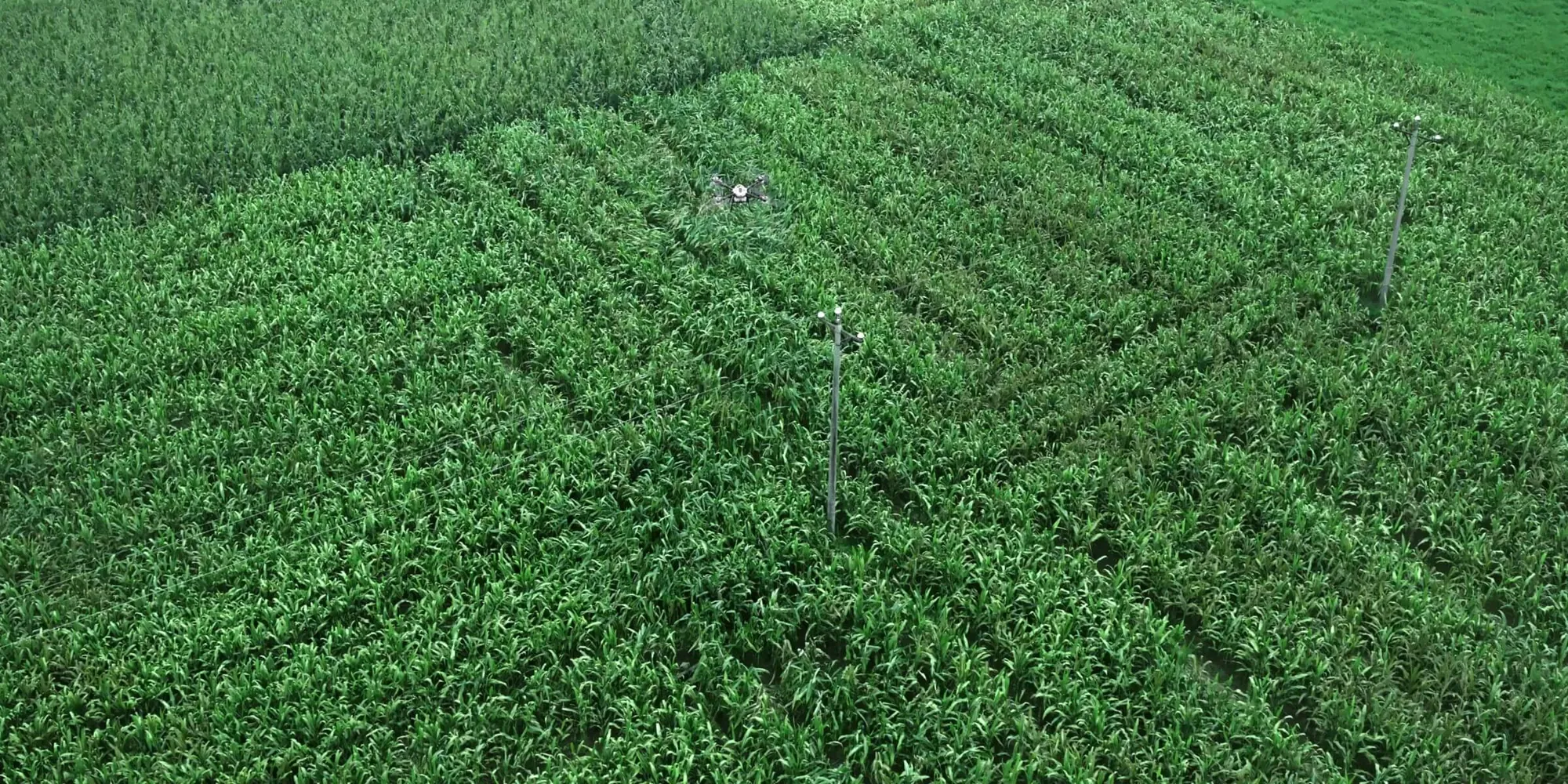
Labels that do not qualify
A ground-only label, a label silent on aerial application or one that expressly prohibits aerial application does not qualify. Restricted sites can require an explicit label allowance plus provincial or territorial authorization, and personal protective equipment, local approvals and the current label are checked before every job.
Site permission and what sits on the ground
Site review covers landowner permission, people, livestock, traffic, power lines, natural areas, water and nearby aerodromes, plus the launch and recovery area. Mapping outputs should not be used to certify structural, legal or agronomic conditions without qualified verification. The crop spraying work page shows where these checks land in a field job.
What is needed before a pesticide job is quoted
A pesticide job needs the product name, PCP number and current label before it can be quoted. Contract application is assessed first, then quoted, then dated. The label rate is never cut to meet a price.
Who can help a Canadian farm buyer plan the aircraft and the site?
SpeedyDrone helps growers, researchers and agricultural service providers compare DJI equipment and plan a field setup around their work, and as a DJI Authorized Dealer it sells DJI Agras drones, runs contract application with southern Ontario first, and books training with partner AlteX droneHUB in King, Ontario.
What the Ottawa research flight shows
Invest Ottawa reported an SFOC issued for Area X.O's operation with a DJI Agras T50 in Class C airspace near Ottawa International Airport, and the reported authorization enables research on spreading and spraying. That authorization belongs to that operator and that operation, so it does not clear a farm field or a custom applicator's job; any other proposed operation requires its own regulatory assessment.
What SpeedyDrone does for a farm buyer
SpeedyDrone provides product advice, configuration advice on new and pre-owned units, basic handover training, training bookings and local after-sales support, with on-site demonstrations and field services arranged when a project's conditions allow. SpeedyDrone is not a Transport Canada examiner; flight reviews are done by qualified reviewers and no one can promise a pass. Model comparison help sits on the T50 or T100 comparison page.
Who should look elsewhere
Some questions sit outside what SpeedyDrone does. SpeedyDrone is not an official DJI repair centre and does not hold agronomist, crop-protection expert or examiner titles, so an official examiner decision goes to Transport Canada, a label or rate question goes to a qualified adviser, and a factory fault on a new unit is handled through DJI. Paid repair service is described on the drone repair and support page, and course and booking detail is on the agricultural drone training page.
Describe the crop, the material, the field and the work window on the SpeedyDrone contact page for a written, itemised quote, or ask about having the job flown for you.
Sources
Frequently Asked Questions
Can I fly a spray drone near an airport or in controlled airspace?
A spray drone flight near an airport or in controlled airspace is possible only with the required authorization and a complete operating plan. The operator confirms the aircraft's actual operating weight, its eligibility, the pilot and observer requirements, the operation category, the airspace and the local site conditions before the flight.
What information should I prepare when requesting permission to fly in controlled airspace?
A controlled airspace permission request should name the aircraft configuration, the material carried and the actual operating weight, the pilot credentials and observer needs, the operation category, the airspace, the visibility and distances, the local site conditions and launch and recovery areas, and the specific permission being sought.
When does an Agras T100 need a special flight certificate?
An Agras T100 flight above 150 kg actual operating weight needs an SFOC-RPAS under CAR 903.01(a), and that weight includes fitted components and material carried. DJI lists a 175 kg maximum takeoff weight for the standard configuration and 177 kg for four nozzles , while a lighter setup still needs its own declaration and category check.
Can I fly a DJI Agras T50 or T100 on my farm with an Advanced drone pilot certificate?
A DJI Agras T50 or T100 flight on a farm needs more than an Advanced drone pilot certificate. The certificate covers the pilot side; the specific aircraft and its declaration, the actual operating weight, the operation category, the airspace permission, the site conditions and any pesticide label conditions are checked for that job.
What if an Agras flyaway is heading into controlled airspace?
An Agras operating plan sets approach, egress and landing areas and a contingency. DJI's obstacle sensing has operating conditions, so survey terrain, wires and branches and establish clear separation before the planned flight. Include the full battery, attachments, material and other carried items in the weight check.
If a helicopter arrives over our field, does our booked drone job have priority?
A booked drone job does not change the need for its own regulatory assessment. The reported authorization belongs to that operator and operation; any other proposed operation requires its own assessment of airspace, permissions and site conditions before the date is confirmed.