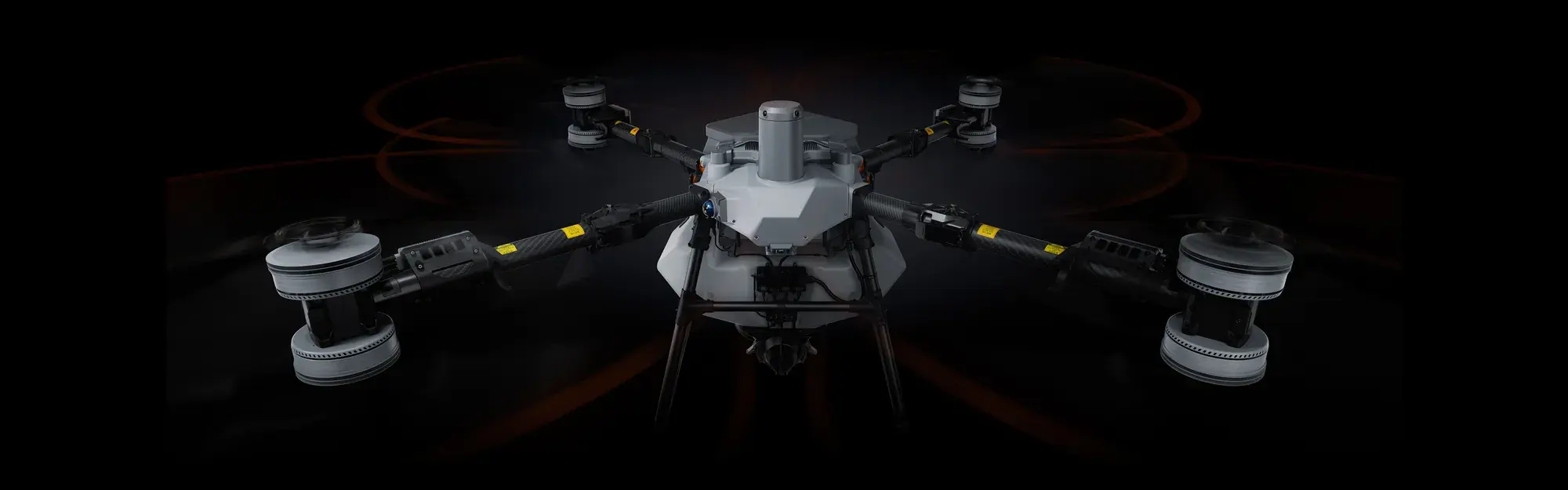
Agricultural drones fall into three types by job: map and scout, apply material, or carry a load.
SpeedyDrone uses Mavic 3M for mapping, Agras T50 or T100 for application, and FlyCart 100 for cargo. Mapping aircraft show where a field varies, application aircraft spray, seed or spread, and heavy-lift aircraft carry cargo. SpeedyDrone helps Canadian buyers choose by job and decide whether to buy or hire.
What kind of agricultural drone do I actually need?
The job decides the drone: Mavic 3 Multispectral for mapping, Agras T50 or Agras T100 for spraying and spreading, FlyCart 100 for cargo; the agricultural drone range covers roles. The job decides the drone because mapping, application and transport are separate tasks flown by separate aircraft, and the right type follows from what the field work must deliver.
Three jobs, three aircraft roles
Mapping, application and transport are separate jobs flown by separate aircraft. The Mavic 3 Multispectral records colour and multispectral imagery for scouting and research plots, Agras aircraft apply compatible liquids, seed and granules under an eligible operating plan, and the FlyCart 100 moves external loads. One airframe does not cover all three roles well.
Buyers ask which types exist before choosing model. Public forum buyers ask what types of drones agriculture uses, what they are most used for, which rotorcraft category is most stable and widely used.
Start with the field decision
Field decisions come before aircraft decisions. Equipment guidance starts with a written question, boundary, treatment or sampling plan and site constraints. Mapping, treatment and verification are separate workflows.
What can a Mavic 3 Multispectral tell me?
The Mavic 3 Multispectral tells you where a field or block differs from its surroundings and where to send a scout. The imagery shows variation and locations; it does not name the cause of that variation. Ground observations, samples or independent measurements decide what a pattern means before anyone plans a treatment.
What the aircraft records
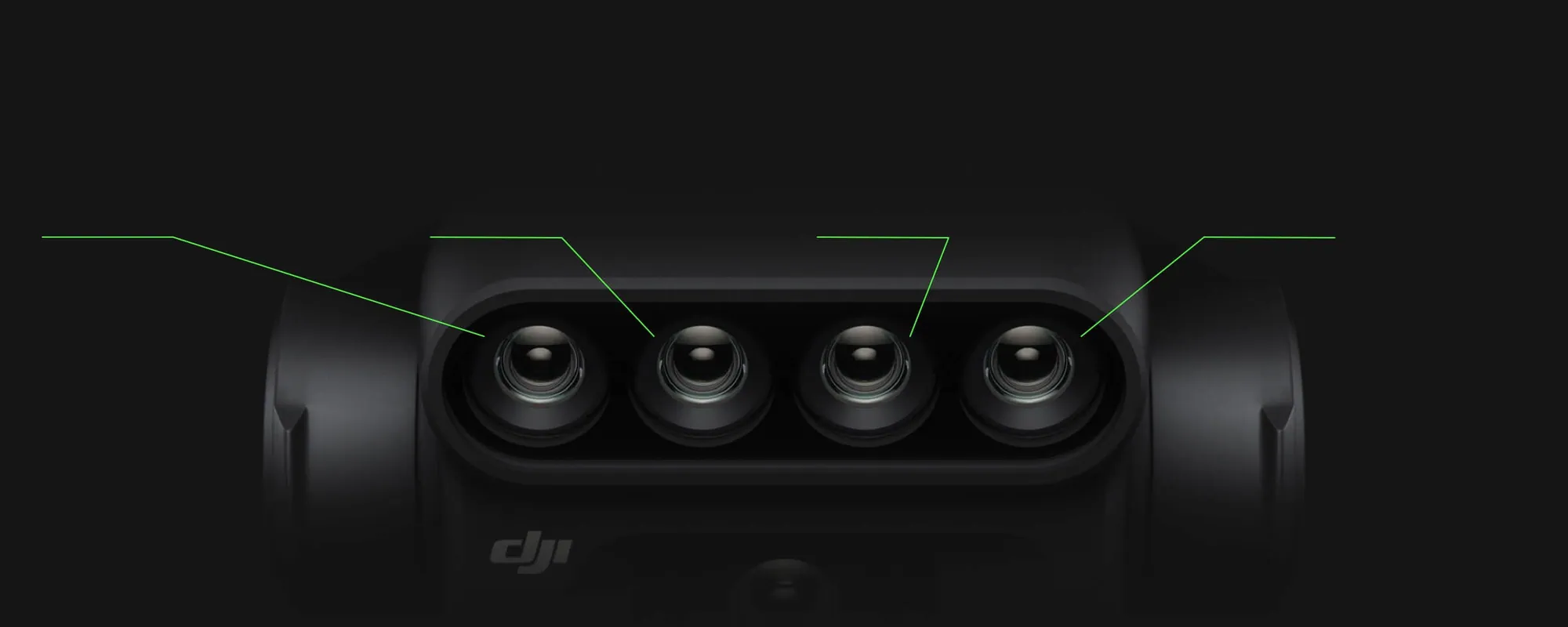
Mavic 3 Multispectral: 20 MP RGB and four 5 MP multispectral cameras for green, red, red edge and near infrared. Repeated flights capture repeatable imagery and flagged locations for checks.
What imagery cannot do
Mavic 3 multispectral index patterns do not diagnose a cause. Index patterns need evidence of what was seen plus field observations. A canopy map identifies differing places, which need inspection and samples.
From map to a prescription
Mavic 3 Multispectral maps require separate agronomy. Mavic 3M and Agras pair only with validated map and agronomy plan. Authorization needs approved product, rate, units, treatment, exclusions, conditions and aircraft load. See crop scouting and mapping and a Mavic 3 Multispectral review.
Which Agras drone is right for spraying, seeding or spreading?
Start with the Agras T50 for a defined spray, seeding or spreading task that fits a smaller payload system. Consider the Agras T100 when measured refills are the limiting step and the site can support a heavier aircraft. Both apply material only under an eligible operating plan with calibrated hardware and rates.
What the Agras T50 carries
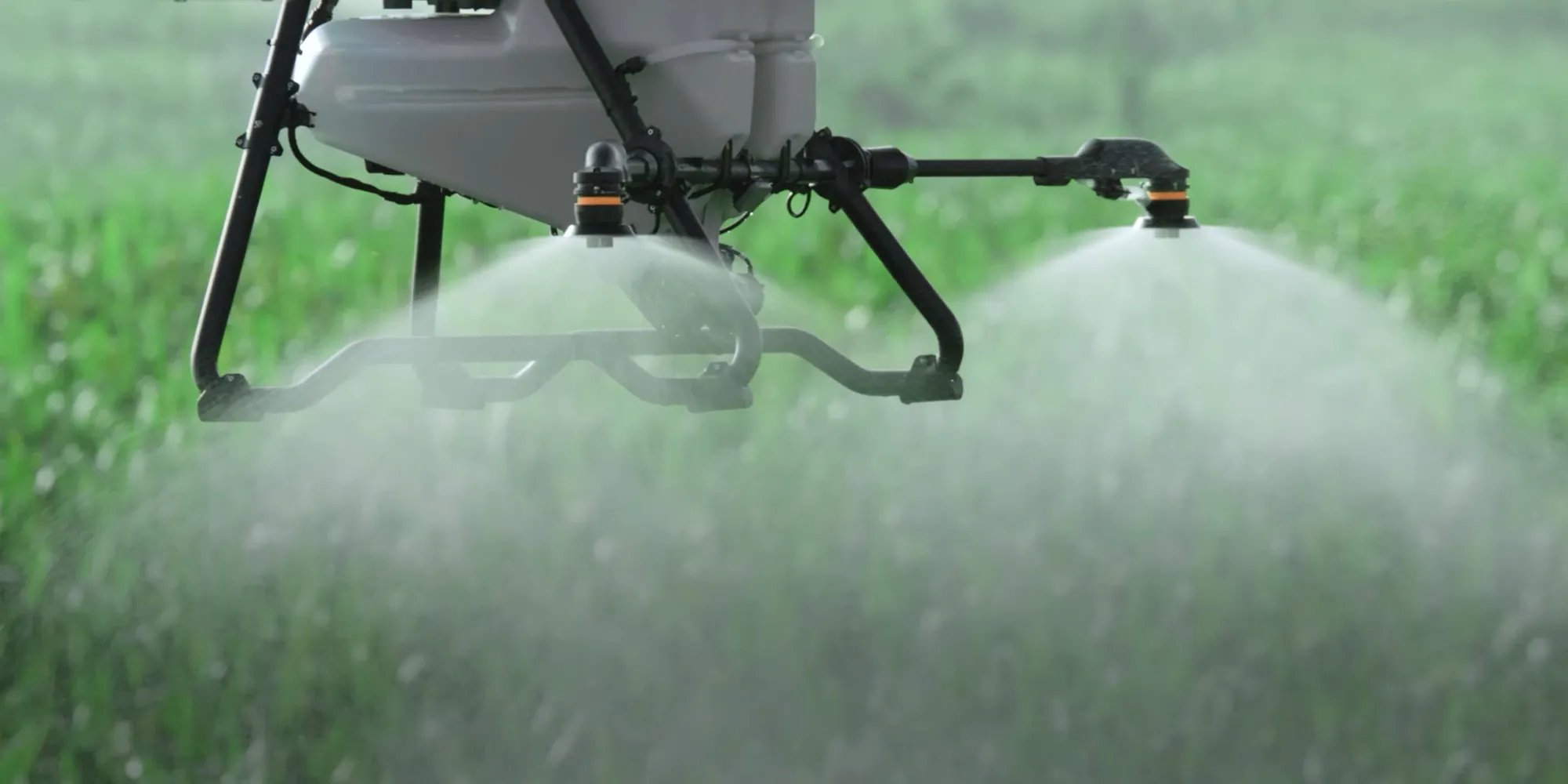
The T50 serves growers, crews and custom operators. Liquid system is 40 L nominal, 40 kg OEM maximum, with 16 L/min through two sprinklers or 24 L/min with four. Dry hopper is 75 L, 50 kg for 0.5–5 mm granules. See cover crop seeding and fertilizer spreading.
What the Agras T100 carries
The T100 suits teams with an operating plan. LS100 liquid: 100 L, 100 kg OEM maximum, 30 L/min two nozzles or 40 L/min four. LS100-DB: 100 L/90 kg; dry hopper: 150 L, 100 kg.
Legal weight limits usable capacity
Tank size alone is not usable load. Legal loaded weight can limit usable capacity on either Agras model. A loaded aircraft above 150 kg requires an SFOC. See the crop spraying page.
When should I choose a T50 instead of a T100?
Choose the T50 when its calibrated pass, useful load and battery and refill cycle fit your work window. Look closer at the T100 only when measurements show useful load or refill time is the limiting factor. Compare useful load, refill time, charging, travel, staging room and crew capacity across the full cycle.
| Decision factor | Agras T50 | Agras T100 |
|---|---|---|
| Standard liquid system | 40 L nominal, 40 kg OEM maximum | 100 L nominal, 100 kg OEM maximum in the LS100 |
| Maximum flow | 16 L/min with two sprinklers, 24 L/min with the four-sprinkler kit | 30 L/min with two nozzles, 40 L/min with four |
| Dry hopper | 75 L, 50 kg OEM maximum, 0.5–5 mm granules | 150 L, 100 kg OEM maximum |
| Site demand | A smaller payload system that can meet the work window | Transport, loading, charging, crew safety and the permitted operating weight |
Measure the cycle, not the tank
Useful work is material per full cycle. Measure material per load and full cycle including refill, changes, travel and crew time. Field area alone cannot decide. Agricultural drone chooser.
Confirm the aviation path
SpeedyDrone assesses the T100 when load or refill limits a job. Confirm site staging, transport and aviation pathway for the actual weight and aircraft. Buyers confirm loaded weight, Canadian path, tank or auger and power. See Canadian spraying rules.
Which drone fits my crop?
The crop decides the question, the timing and the access before an aircraft is chosen. SpeedyDrone lists field crop tasks such as cover crop broadcasting, fertilizer spreading and boundary mapping, and orchard tasks such as block mapping and canopy scouting. Define the block, crop stage, sensitive areas and exact task first.
Field crops and forage
Field-crop work covers cover-crop broadcasting, pasture overseeding, granular fertilizer spreading, field boundary mapping and emergence checks, with the correct spreader for the material. A T50 or T100 carries that spreader, and crop and seed biology, safe distribution, access and the establishment window decide whether the job fits. The pasture seeding page covers one common case.
Orchards and vineyards
Orchard and vineyard blocks need route checks. Mavic 3M block map plus Agras tools lets crew check obstacles, headlands and safe route. Canopy patterns need ground checks before cause. orchard and vineyard spraying.
Berries and nurseries
Berry and nursery scouting uses Mavic 3M RGB, multispectral imagery. Blocks are defined one at a time; crop, geometry, areas, crew and product change outcomes. See farm guidance.
What if I need to carry cargo instead of spray?
A heavy-lift transport drone suits a measured cargo route: a known load, a known pickup point and a known delivery point. The FlyCart 100 moves external loads and does not replace an application aircraft. The packed weight, dimensions, attachment points and the receiving crew's retrieval method come first.
Who asks about the FlyCart 100
Farms, researchers, construction crews and remote site operators ask what the FlyCart 100 carries. Load weight, dimensions and attachment points first. The receiving crew retrieval method matters. See field kits.
What to check before a trip
- Payload: DJI rates dual-battery payload at up to 85 kg under its test conditions.
- Rigging: the Flagship Winch has up to 30 m of cable and retracts at up to 1.2 m/s, and the direct-lift system includes a 10 m cable for pre-rigged loads.
- Operating limit: batteries, rigging and cargo are weighed together with the aircraft to check the operating limit.
- Route: pickup and delivery coordinates and the required trip frequency come from the job, not from the aircraft specification.
Should I buy, hire, or ask for a setup?
A decision to buy or hire compares equal outputs before choosing between ownership and contract work. Acreage alone does not settle the question: useful material per load, the full refill and charge cycle, crew time, weather rework and total ownership cost all move the answer. Put a written contractor scope beside your ownership estimate for the same work.
Buy or hire on equal outputs
A hire or buy decision compares actual hectares treated or mapped per pass, adds annualized equipment, field kit, training, insurance, licences, software, storage and maintenance, and asks for a written contractor scope covering mobilization, minimum charge, unit rate, weather terms and deliverables. The buy or hire comparison works through that arithmetic.
SpeedyDrone suggests farms under 1,000 acres can consider doing their own spraying or seeding, and above 1,000 acres the situation is looked at before advice is given. A smaller farm or occasional use can still be a good fit for scouting or a properly scoped trial.
What a configuration quote should show
A configuration quote lists component, condition and model, including aircraft, controller, payload, batteries, charger, cables, power, spares, consumables and software. T50 offers and T100 or Mavic 3M variants differ.
Where SpeedyDrone fits
The dealership is a DJI Authorized Dealer, founded in 2025, providing product advice, sales and local after-sales support for DJI Agras drones. The company assesses each contract spraying, seeding or spreading job first, quotes it, then dates it, and training runs with partner AlteX droneHUB in King, Ontario.
A buyer seeking a farm setup with an agronomist, a crop protection expert, a Transport Canada examiner, an official DJI repair centre or an official DJI training centre should look elsewhere. Pre-Owned units are inspected and quoted one by one, with paid after-sales service. The agricultural drone training and institutional purchasing pages cover bookings and public sector buying.
A setup request describes the crop, material, field and work window on the contact page for a written, itemised quote, or asks about having the job flown for you.
Sources
Frequently Asked Questions
Which drone does SpeedyDrone sell or fly for each job, and which do customers usually buy first?
SpeedyDrone matches the aircraft to the job: the Mavic 3 Multispectral for scouting and mapping, an Agras T50 or T100 for spraying and spreading, and a FlyCart 100 for cargo transport. The first purchase is recommended from the job and how often it recurs, and a handful of applications each season is compared with a contractor's quote.
Mavic 3 Multispectral or DJI Agras: mapping, application or both?
Choose the Mavic 3 Multispectral when you need repeatable imagery and ground observations to understand a field, and choose a T50 or T100 when a defined, permitted application task already exists. The two aircraft are paired only when a validated map and agronomy plan improve the way material is applied.
DJI Agras T50 vs T100 for Canadian farms, how do I choose?
DJI Agras T50 vs T100 for Canadian farms is chosen on approved operating weight, work window and crew capacity, not tank size. The T50 is a candidate when a smaller application system fits the material and field logistics, and the T100 deserves a closer look when refills remain a bottleneck after accounting for its weight, charging and handling needs.
How much acreage do I need to justify an Agras?
Acreage alone cannot justify an Agras purchase. The decision starts with the job that repeats, the field work window and the cost or capacity of your current method, then estimates useful material per load and measures the full cycle including refill, battery changes, travel and crew time.
When does SpeedyDrone suggest a farm buy its own drone rather than hire spraying?
SpeedyDrone suggests farms under 1,000 acres can consider doing their own spraying or seeding, and above 1,000 acres the specific situation is looked at before advice is given. A farm needing only a handful of applications each season compares a contractor's quote with the cost of owning and operating the kit.
Do customers ask SpeedyDrone about fixed-wing mapping drones, and what does SpeedyDrone tell them?
SpeedyDrone's mapping answer is the Mavic 3 Multispectral. Buyers asking in public forums want to know which drone types are common in agriculture, what they are most used for today, and which rotorcraft category is the most stable and widely used.