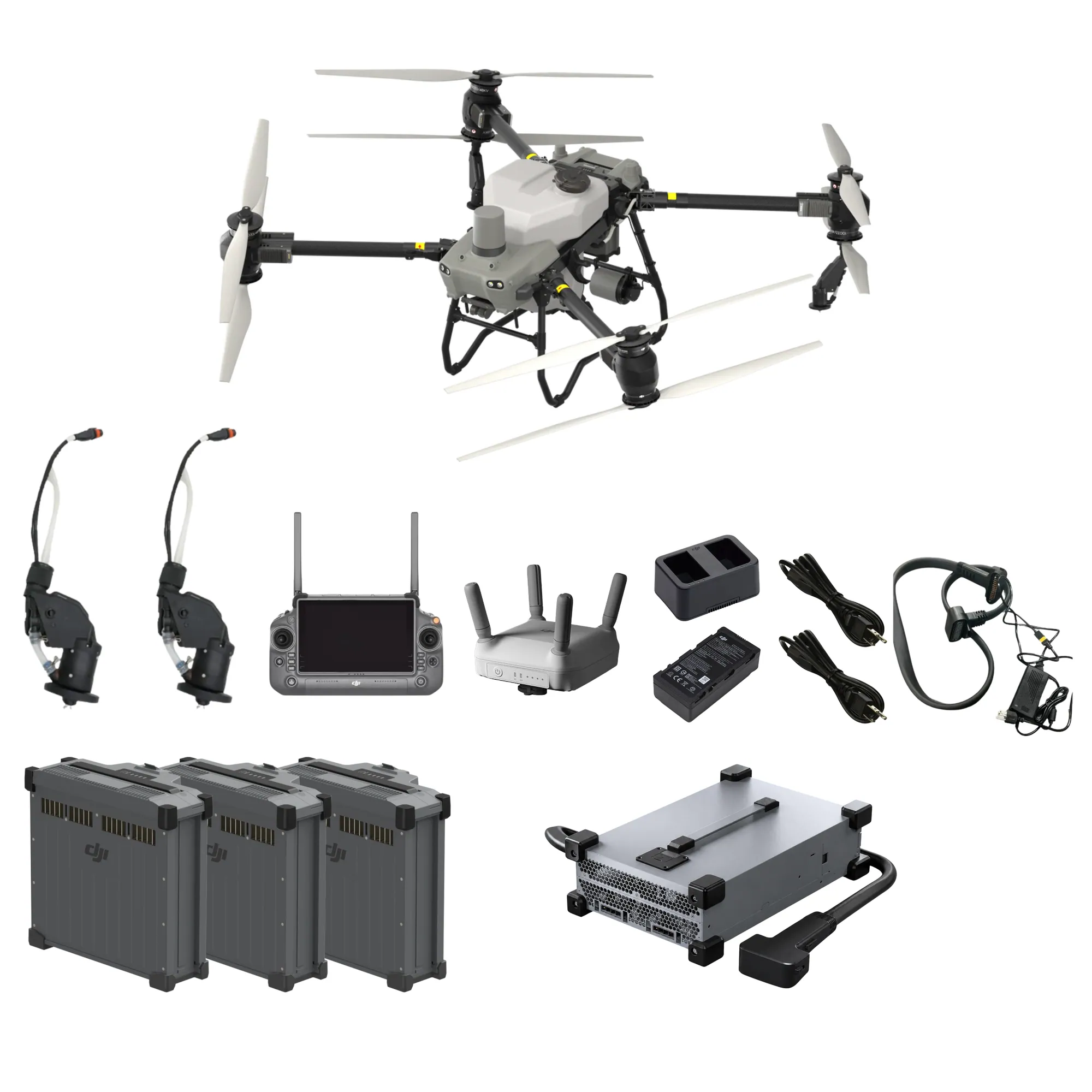
SpeedyDrone handles agricultural drone rental by project, with or without one of its pilots; the job, dates and who will fly go to a person who quotes terms for each project.
Is a full-season spray drone rental possible where you farm?
The company does not publish a full-season rental; rentals are set up by project, with or without our pilots, and a person quotes terms once we know the job, the dates and who will fly. Ask what the package includes first.
How a by-project rental is quoted
Rental terms come in a quote for the project, not as a published price. Give the job, dates and who will fly; trying an aircraft goes to a demo request. Put the quote beside buying and hiring in the buy-or-hire comparison.
What to ask for when you request a rental
A drone configuration quote should list each component with condition and model number: aircraft and controller, payload hardware, batteries, charger, cables, power source, spares, consumables, software. Confirm region-specific components, support arrangement, handover and training separately.
Licences and permits to have before you fly a rented spray drone
Yes, under Health Canada SPN2026-02, every pilot applying pesticide by drone, including a farmer on their own land, registers the drone with Transport Canada, holds a pilot certificate matching the aircraft, and holds the required provincial pesticide certification and licences.
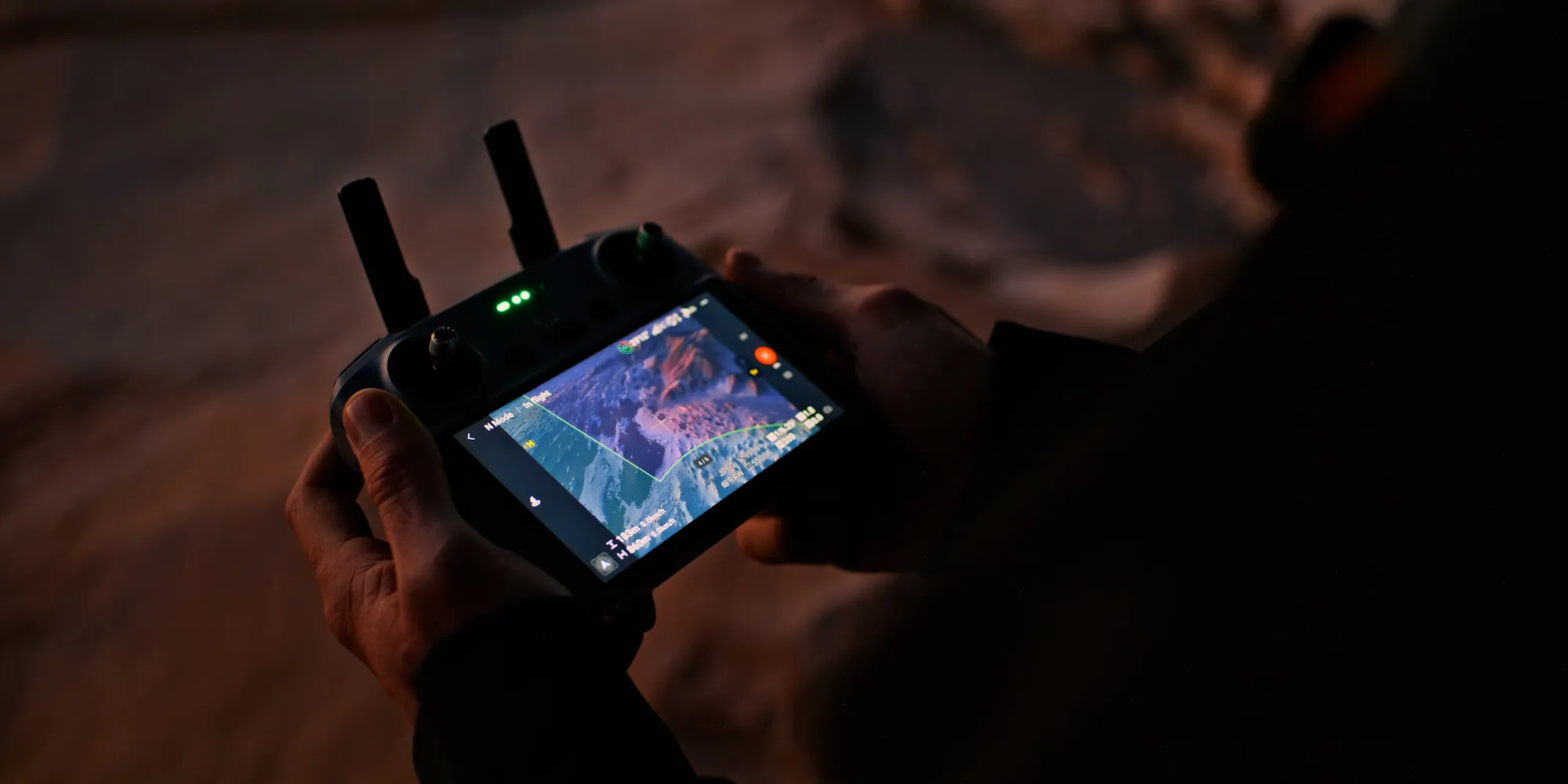
Transport Canada: registration, certificate and the 150 kg line
- SPN2026-02 requires registration and a pilot certificate matching type and size.
- A loaded T100 over 150 kg needs an SFOC.
- Allow 60 business days for a complete medium- or high-complexity SFOC.
Provincial pesticide credentials: Ontario and Québec examples
- Crew need provincial training, certification, licences, permits. Provinces may restrict further.
- Québec requires an aerial-application exam beyond E1. Ontario's O. Reg. 63/09 s.73 addresses aerial extermination.
- Readers elsewhere ask the provincial regulator. Licence checker maps aircraft, operation, province to credentials.
The order SpeedyDrone tells farmers to follow
- Check the provincial pathway and loaded weight, get certificate, apply for an SFOC, then book.
Will your product's label allow drone application?
Health Canada permits drone application when the current label has RPAS directions, or when it allows aerial application without excluding RPAS and does not say "DO NOT apply by air". A registrant can opt a product out with a label statement. Check the exact product, crop and use against the current label.
The label check and buffer zones
Under SPN2026-02, drone work uses the label's buffer zones for conventionally piloted rotary aircraft (helicopters) until drone-specific drift models exist. The spraying regulations guide sets out the full label, buffer and record rules.
What to have in hand before any pesticide job
- Send the product name, PCP registration number, current Canadian label, crop and field location.
- Ask for the applicable Ontario pesticide licence details for the business and applicator proposed for your job.
- SpeedyDrone asks for these before quoting a pesticide job.
Matching aircraft, batteries and charging to your acres
Size the spray drone setup from the full cycle (load, flight, refill and battery swap), not the spec sheet. Loaded spray drones fly roughly 7 to 12 minutes per battery.
Flight time, batteries, generator and real swath
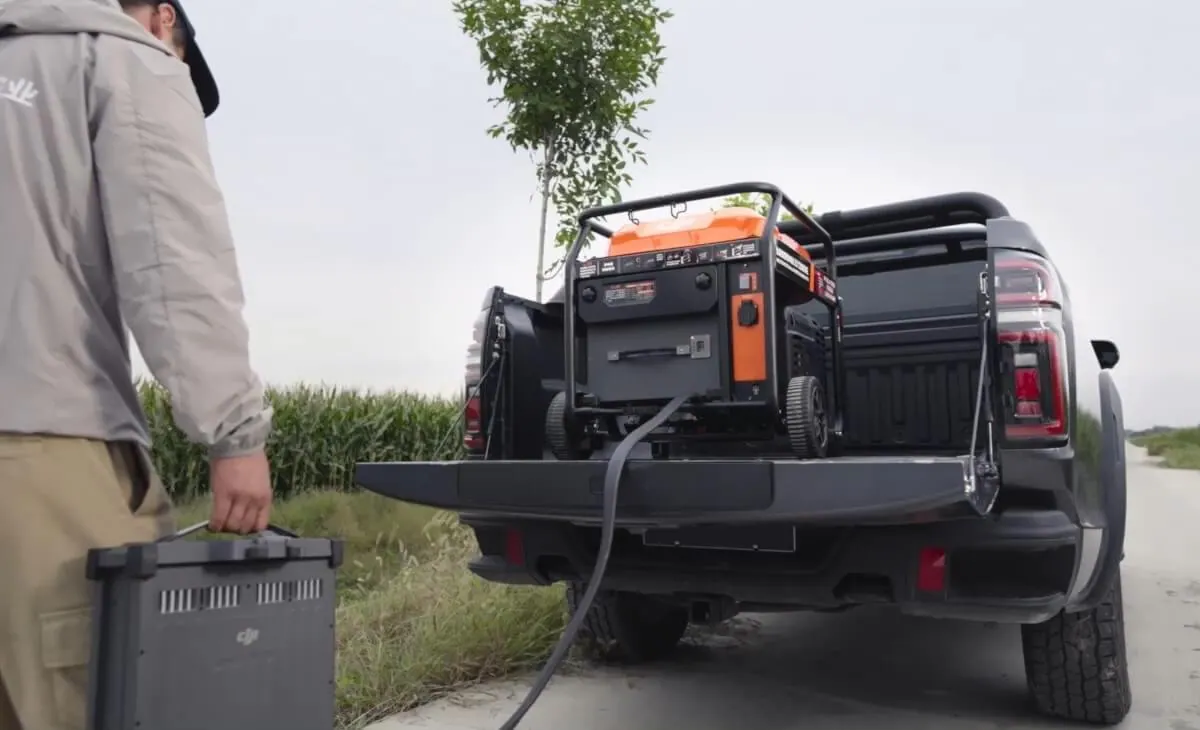
Purdue Extension PPP-154 reports heavier spray drones flying 7 to 12 minutes per battery, and continuous flying needs at least three and as many as 12 batteries, swapped at each refill, depending on the charger and generator.
Plan batteries, chargers and generators together: T50 field kits.
Worked example: acres per day at different spray volumes
The spray drone acres in this example are not a promise of output: a T50 at 40 L usable per load and 20 loads covers about 98.8 acres at 20 L/ha, 39.5 acres at 50 L/ha or 19.8 acres at 100 L/ha.
First-season surprises to plan for
SpeedyDrone raises battery rotation, refill time, weather delays and repair intake.
Rent, hire an applicator or buy: comparing the season cost
Compare renting, hiring an applicator and buying on the same acres, timing and acceptance standard. Hiring has a published per-acre price and buying has published list prices. A rental is quoted per project, so put that written quote into the comparison.
What hiring costs, with a worked example
SpeedyDrone charges C$18–22/acre, with a C$500 minimum; travel and separately quoted items are extra.
What buying starts at, and when ownership makes sense
The T50 and T100 three-battery drone packages list at C$29,999 and C$48,505 (CAD, before tax), not final; a written quote sets the price. Add charger, mixing gear and training. Farms under 1,000 acres can consider ownership. Purdue PPP-154 asks who will fly in season.
Cost lines a rental quote must cover to compare fairly
Cost drivers are travel, mobilization, downtime, payload, refill, charging, operators, cleaning, maintenance, records. A cost calculator runs the break-even.
Contract terms for research institutions and new custom-application businesses
Write contract terms for research or custom-application work before first flight: who flies, credentials, insurance, calibration, records, data deliverables and service terms. The contract names the operator, policy dates, liability limit and records you receive. Compare them with the written scope.
Operator credentials and insurance
- ☐ SpeedyDrone requires a contract pilot's credentials, aircraft documents, pesticide permissions and insurance before accepting work.
- ☐ Ask the operator's name, policy dates and liability limit. Purdue PPP-154 (U.S.) notes some pesticide agencies require proof of liability insurance before licensing.
Research plots: deposition, dose and deliverables
- ☐ Use the T50 as a candidate when measured deposition, dose and plot separation meet the protocol, and compare with a precision plot applicator on small plots.
- ☐ Specify protocol execution records and georeferenced imagery as deliverables through the research and government buying process.
Where SpeedyDrone fits, and when to look elsewhere
SpeedyDrone prioritizes growers in southern Ontario who want a project rental, a contract job or training. Growers who want a published seasonal lease in another province should compare local providers.
How SpeedyDrone works with farms and operators
Spray jobs, including Contract application jobs, follow assessment, then quote, then date, with no promised dates or acres per hour. Training runs with partner AlteX droneHUB in King, Ontario. Qualified reviewers run flight reviews. The business is a DJI Authorized Dealer, does not issue certificates, and treats a single farm as a normal customer.
Who should look elsewhere
Growers outside southern Ontario and Québec who need in-season on-site work may do better with a local applicator or lease program. Local providers can quote the same acres and dates for comparison.
SpeedyDrone asks you to send your crop, acres, field location, target dates, product details (PCP number and label for pesticides) and who will fly through the contact page, so a person can quote a project rental or assessed contract job.
Sources
- Science Policy Document SPN2026-02, Allowing pesticide application by remotely piloted aircraft systems (RPAS;
- ag.purdue.edu
- Using Remotely Piloted Aircraft Systems for pesticide application in Canada: What you need to know: Canada.ca
- Drone operation categories and pilot certificates: Overview
- Enabling the Use of Drones for Pesticides Application | Environmental Registry of Ontario
- Drones for Spraying Pesticides: Opportunities and Challenges | CFAES Knowledge Hub
- Guide to custom farmwork and short-term equipment rental | ontario.ca
- Pesticide Product Information Database: Health Canada
- Get permission for special drone operations
- Canadian Aviation Regulations
- e-Laws | Ontario.ca
- Rules governing application in agricultural environment | Gouvernement du Québec
- Pesticide Label Search: Health Canada
- Certificates for the sale and use of pesticides | Gouvernement du Québec
- Canadian Aviation Regulations
Frequently Asked Questions
How soon does SpeedyDrone reply with a quote, and how far ahead should I book an in-season job?
SpeedyDrone gives the quote timing and available dates confirmed for a job when you send location, acreage, crop, material, target rate and preferred dates as soon as the crop and application window are known. Include a field map, obstacles and water, power and vehicle access. For pesticide work it asks for the product name, PCP number and current label first.
Can a spray drone spot-spray escaped weeds late in the season?
Ohio State University Extension treats late-season spot spraying of escaped weeds as questionable: most herbicides are not labeled for spray drones and none of the post-application products has EPA approval for late-season use, with cutoffs by early to midsummer. It says spot spraying survivors can be more efficient than whole-field treatment. Operators are advised to check the label first.
What should I check on a spray drone before the season and when I store it?
Purdue Extension recommends an end-of-season inspection for frame cracks and splits, tightening or replacing parts and restocking spares. Before the season, update firmware at the shop. Calibrate each application type, correcting equipment when actual and intended rates differ by more than 5 percent. For storage, DJI's instructions require no liquid left in the flow meter, pumps or hoses.
Do farms add a drone alongside their ground sprayer or replace it?
Purdue Extension concludes drones are unlikely to replace ground rigs, spray planes or helicopters in the foreseeable future; they complement them where they fit better, since traditional equipment covers more acres per day. Purdue also notes ground rig operators may turn down small acreage as unprofitable, which is one gap a drone can fill.
How does drone spraying compare in price with aerial applicator quotes?
For a fair comparison with an aerial applicator, divide each all-in quote by treated acres and match label-required volume and completion window; published contract spraying on simple fields is C$18–22 per acre, plus C$1.50 per round-trip km and a C$500 minimum. Forty acres at C$20 is C$800; a 120 km round trip adds C$180, giving C$24.50 per treated acre.
What does a first-year budget look like for a new drone spraying business?
Published first-year planning examples run from about C$65,000 for a T50 setup to C$84,000 for a T100 setup, before tax and delivery. The T50 example totals C$64,999: a C$29,999 package, C$15,000 of field infrastructure, C$5,000 training and initial insurance, C$3,000 of PPE, calibration and spares, and a C$12,000 cash reserve. Both assume a suitable vehicle.
Can I try a spray drone before deciding to rent or buy?
SpeedyDrone runs on-farm demos for C$300 for up to 2 hours, plus travel, credited up to C$300 toward an agricultural drone bought within 30 days; group agricultural demos are free per event notice. Hiring the job, or renting by project with or without a pilot, is quoted per project once the job, dates and who will fly are known.