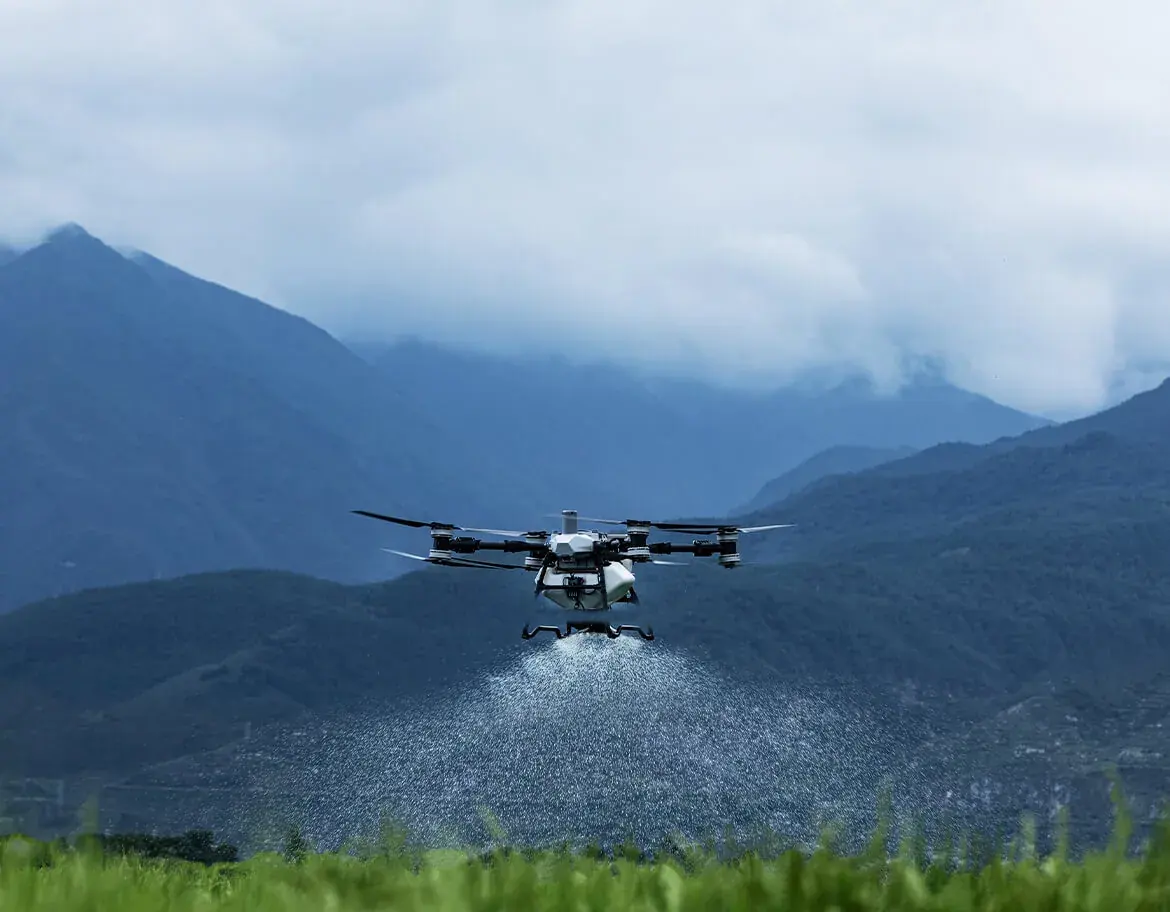
What does crop dusting mean today, and where do drones fit?
Crop dusting means aerial application of pest products. Ohio State University Extension says drone sprayers complement, not replace, ground or aerial application. SpeedyDrone runs contract spraying and seeding in southern Ontario.
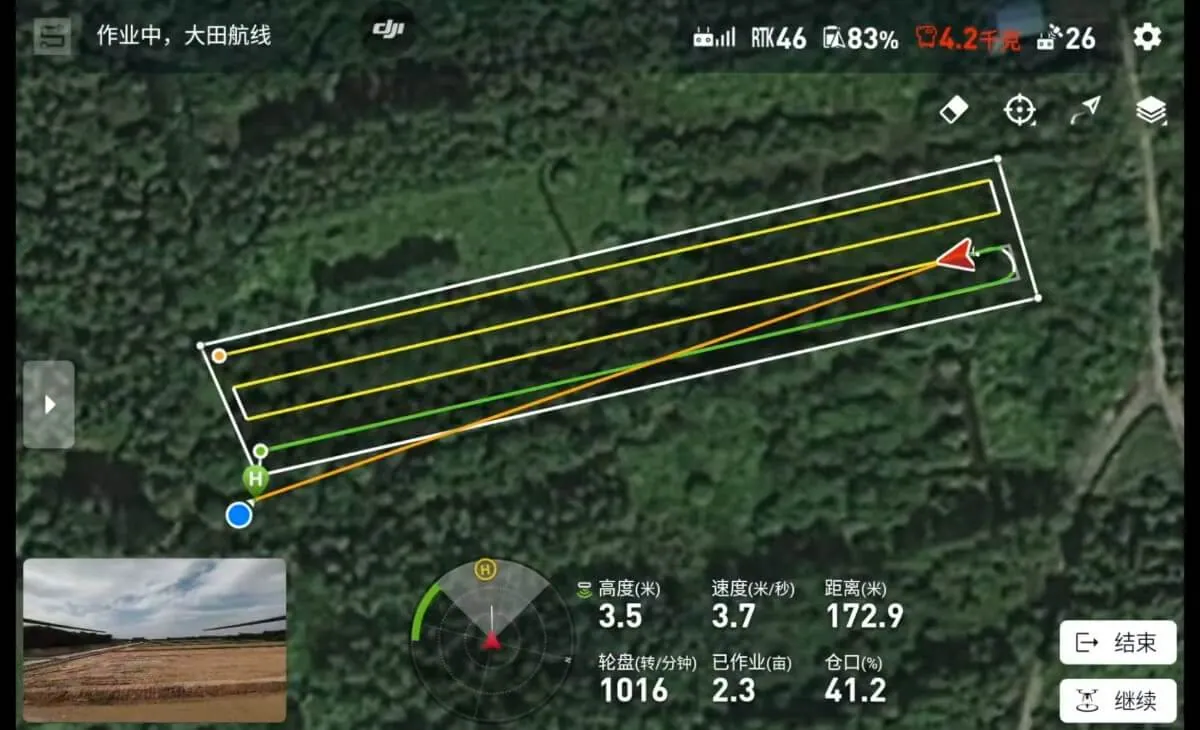
Conventional equipment still covers more acres in a day
Purdue Extension reports that ground sprayers, planes and helicopters generally cover more acres daily because they travel faster, spray wider and carry more payload. Purdue Extension concludes that drones are unlikely to replace ground rigs, spray planes or helicopters in the foreseeable future and that drones complement them where they fit better.
Drones suit targeted, small-block and time-sensitive work
Ohio State University Extension lists four reasons drone spraying is attractive: the topography or soil blocks ground equipment, aircraft are unavailable or too expensive, fields are small and irregular, and applicator exposure falls compared with backpack sprayers. Each reason describes a fit, not a replacement.
Labels and aviation checks are separate questions
A drone that can carry a tank does not make an application legal. The aircraft, the operating plan and the material are assessed independently, because a product specification, flight certificate or pesticide registration on its own does not clear the job. The crop spraying use cases follow the same split.
When does a drone beat a ground rig or plane?
Drone spraying fits wet soil where ground equipment cannot go without compaction from wheels, hilly ground instead of backpack sprayers, small fields that applicators turn down as unprofitable, and tall canopies such as fungicide after corn tasseling without crop damage, Purdue Extension says.
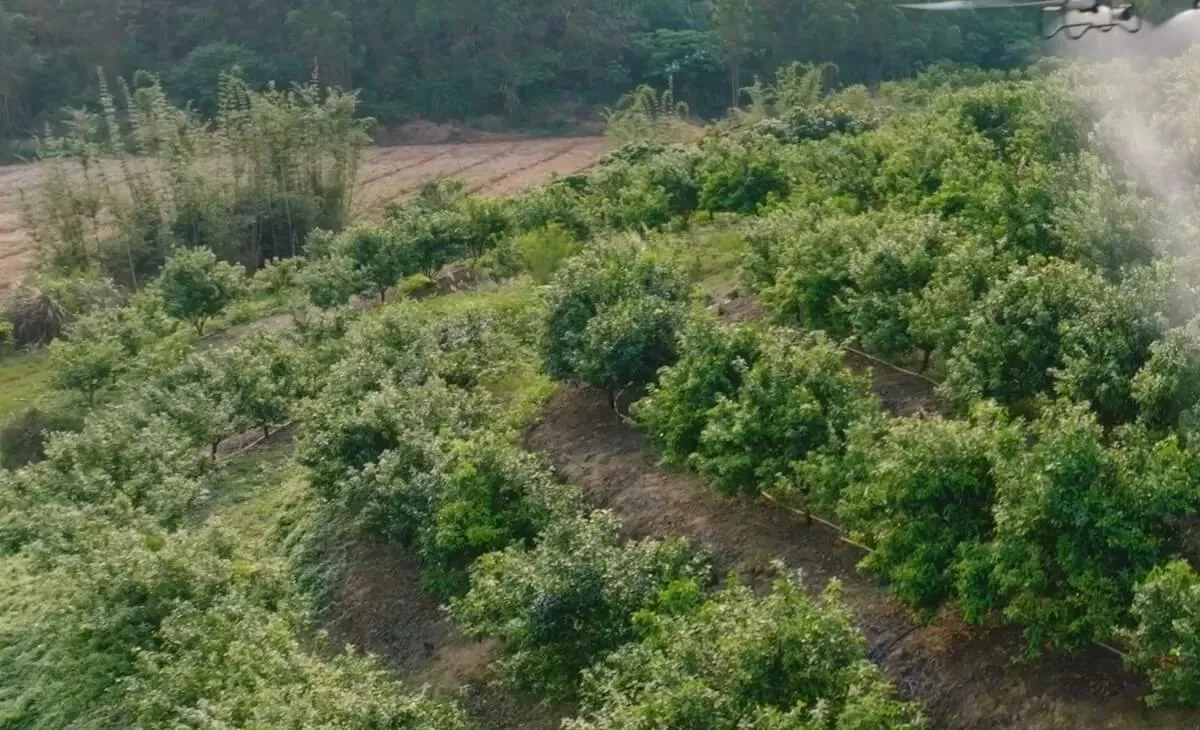
Wet ground, compaction and slopes
Spraying when soil is too wet for ground equipment avoids wheel-track compaction, and hilly ground can be treated without a person carrying a backpack up a slope. Blocks with trees add canopy questions of their own, covered on the orchard and vineyard spraying page.
Small blocks and tall canopies
Small fields that ground or aerial applicators turn down as unprofitable are one drone fit, and tall or thick canopies such as fungicide after corn tasseling can be treated without driving equipment through the crop. Mapped invasive weeds can be spot-sprayed the same way.
Where the drone case is weaker
Ground and plane work in big square fields remains a good fit, Purdue Extension notes, because efficiency and operator satisfaction still rise there as with conventional equipment. Buyers who contact SpeedyDrone want to judge canopy penetration when the plants are full size. That answer comes from a field assessment, not a specification sheet.
What are the real downsides of agricultural drones?
Agricultural drone downsides include smaller payloads and slower coverage than ground sprayers or aircraft when many acres must be covered, Purdue Extension says. The full cycle, including refill, battery changes, travel and crew time, is what to measure, not the field area on its own.
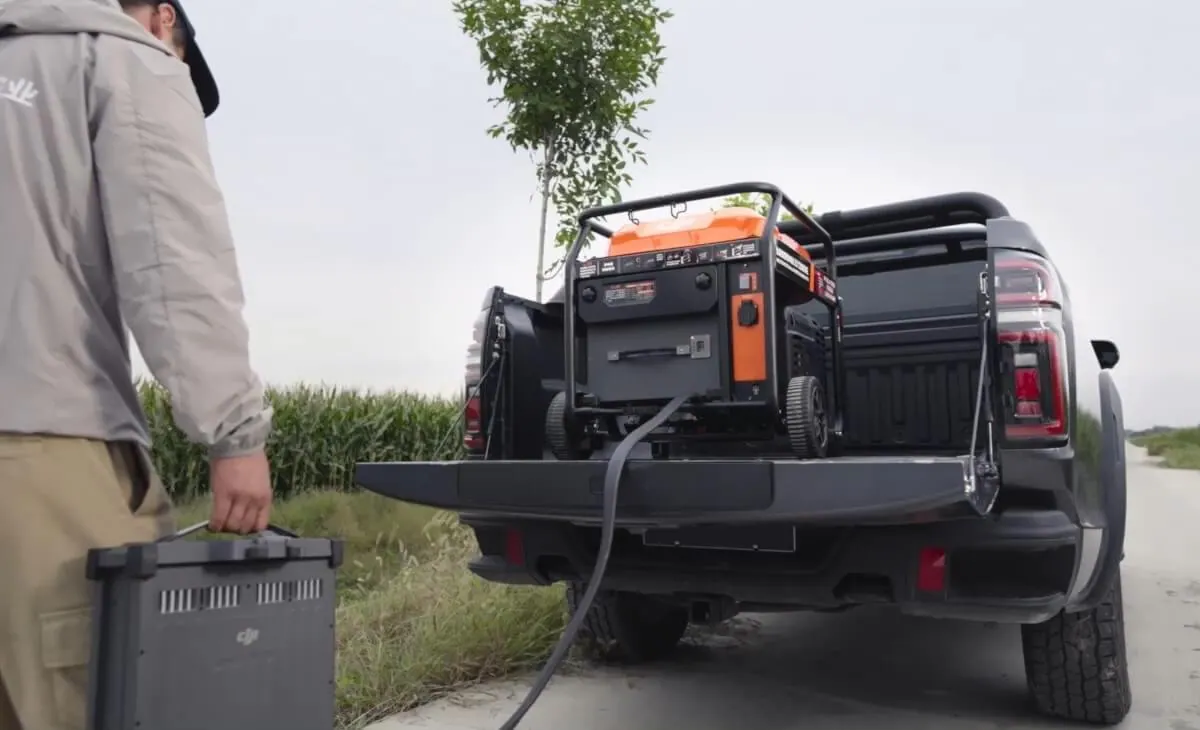
Payload, spray width and speed set daily capacity
Drone coverage limits are real: traditional aircraft and ground sprayers travel faster, spray wider and carry greater payloads, which is why they cover more acres when weather is ideal and many acres must be covered, Purdue Extension explains. Field area alone cannot settle a drone purchase decision.
Batteries, charging and refills
An ownership estimate has to add annualized equipment and field kit, training, insurance, licences, software, storage and maintenance, plus pilot and crew time, travel, power, consumables, calibration, weather rework and data processing for each job. The field kits for drones page shows what travels to the field.
Wires, dust and obstacle mapping
Purdue Extension reports that more than 90 percent of spray drone crashes came from flying with obstacle avoidance radar off or not mapping obstacles and wires first. The guidance recommends scouting power lines, pivots, towers, guy wires and branches first.
How much does custom drone work cost per acre in Canada?
Custom drone work in Canada is quoted from the assessed job: SpeedyDrone assesses contract application for spraying, seeding and granular spreading first, then quotes and dates it, lists materials, lodging and extras separately, and does not cut a label rate to meet a price.
Published U.S. figures are U.S. figures
Custom drone spraying rates in the U.S. vary by region, crop, complexity and application type, an American Farm Bureau Federation economist notes. ASDC links pressure on U.S. drone spraying rates to competition that likely squeezed operator margins.
What a fair comparison includes
A comparison should use actual hectares treated or mapped per pass, so repeat visits and partial blocks stay visible, and should compare net costs for equal outputs. The drone spraying cost calculator runs both routes on the same job.
Ask for a written scope
Custom drone work cost should be compared on the same work, timing and acceptance standard. Contracted work needs a written scope covering mobilization, minimum charge, unit rate, what materials or data processing are included, weather terms and deliverables, and net costs should be compared for equal outputs.
What can I legally spray with a drone in Canada?
A Canadian drone application is legal only when label, aviation and provincial rules allow it. Health Canada permits RPAS application where the label includes RPAS directions or permits aerial application.
The label decides the product
A label with no aerial directions, or one that prohibits aerial or RPAS use, rules out drone application, and rate, carrier volume, droplet size and buffers follow the current label. A ground-only, silent-on-aerial or expressly prohibited method does not qualify. The drone spraying rules in Canada page collects the checks.
Weight, airspace and the SFOC threshold
A flight above 150 kg actual operating weight needs an SFOC-RPAS under CAR 903.01(a). DJI lists 175 kg for the standard DJI Agras T100 spray setup and 177 kg for the four nozzle setup.
Drift, neighbours and records
Buyers in public forums ask what is sprayed and worry about drift damage. Site review covers permission, people, livestock, traffic, power lines, water and aerodromes. The spray drone licence checker shows the checks.
Is it worth it for my farm, and who is SpeedyDrone for?
Whether drone application is worth it depends on the repeating job, timing and current method cost. SpeedyDrone asks buyers to start with the repeating job, work window and current method cost.
Questions to settle before you commit
Buyers who contact SpeedyDrone ask about canopy penetration at full size and seeding rate calibration. Others say they are too small for a drone or that multispectral imagery adds little over tissue sampling.
What SpeedyDrone does
SpeedyDrone, a DJI Authorized Dealer, supplies the DJI Agras T50, DJI Agras T100 and DJI Mavic 3 Multispectral. The Toronto team compares equipment and plans a field setup. Certificate training runs with AlteX droneHUB, booked through SpeedyDrone for farm customers; an Agras purchase includes one basic handover session, and no pass is promised. For agricultural drone training, see agricultural drone training.
Who should compare another route first
A farm with a cheaper sprayer, or one where broadcast seeding costs less, may stick with its current method. A smaller farm can suit scouting or a scoped trial. See the comparison and business guide.
Describe the crop, the material, the block and the work window on the contact page, and say whether you want the job flown or want a written, itemised quote to weigh against owning. Contract work is assessed first, then quoted, then dated.
Sources
- Sources for this article include the references below.
- Ohio State University Extension, FABE-540, Drones for Spraying Pesticides
- Purdue Extension, PPP-154, The Evolution of Spray Drones
- American Farm Bureau Federation, Market Intel, Drones Taking Off in Ag
- American Spray Drone Coalition, 2025 U.S. Agricultural Spray Drone Industry Survey
- Health Canada, allowing pesticide application by RPAS
- Health Canada, using remotely piloted aircraft systems
- Canadian Aviation Regulations, section 903.01
- Canadian Aviation Regulations, section 901.43
- DJI Agras T100 specifications
- SpeedyDrone contact page
Frequently Asked Questions
What are the benefits of crop dusting with a drone?
The benefits of crop dusting with a drone are access and lower applicator exposure. Drone work reaches fields when soil is too wet for a ground rig, avoids wheel-track compaction, suits small fields applicators turn down and treats tall canopies without driving through the crop. Ohio State also lists lower contamination risk than backpack spraying.
Do people still do crop dusting?
Yes, people still do crop dusting. Purdue Extension concludes it is unlikely drones will replace ground rigs, spray planes or helicopters in the foreseeable future, and that drones complement them where they fit better. Ohio State expects drone sprayers to complement conventional application rather than replace it.
How many crop dusters crash a year?
No reliable annual crash count for crop dusters is available to quote here. What the extension guidance documents is cause rather than count: Purdue Extension reports that more than 90 percent of spray drone crashes came from flying with obstacle-avoidance radar off or from not mapping obstacles and wires before flight.
Do crop dusters make good money?
Crop dusting earnings depend on the local rate, crop mix and operating cost, and no income figure is promised here. ASDC links pressure on U.S. drone spraying rates to strong competition, including operators without a Part 137 certificate who accept lower rates, especially in the U.S. corn belt, and says this likely squeezed profit margins.
How much can you charge for crop dusting?
Crop dusting charges vary with region, crop, complexity and application type. An American Farm Bureau Federation economist notes that rates vary on those factors. ASDC links pressure on U.S. drone spraying rates to competition that likely squeezed operator margins. U.S. figures do not describe a Canadian rate.
Will a drone replace my ground sprayer or a plane?
A drone will not replace a ground sprayer or a plane in the foreseeable future, on Purdue Extension's reading. Drones complement ground rigs, planes and helicopters where they fit better. Wet ground, steep slopes, small fields and tall canopies are the fits it lists. The buy or hire comparison sets owning against contracting.